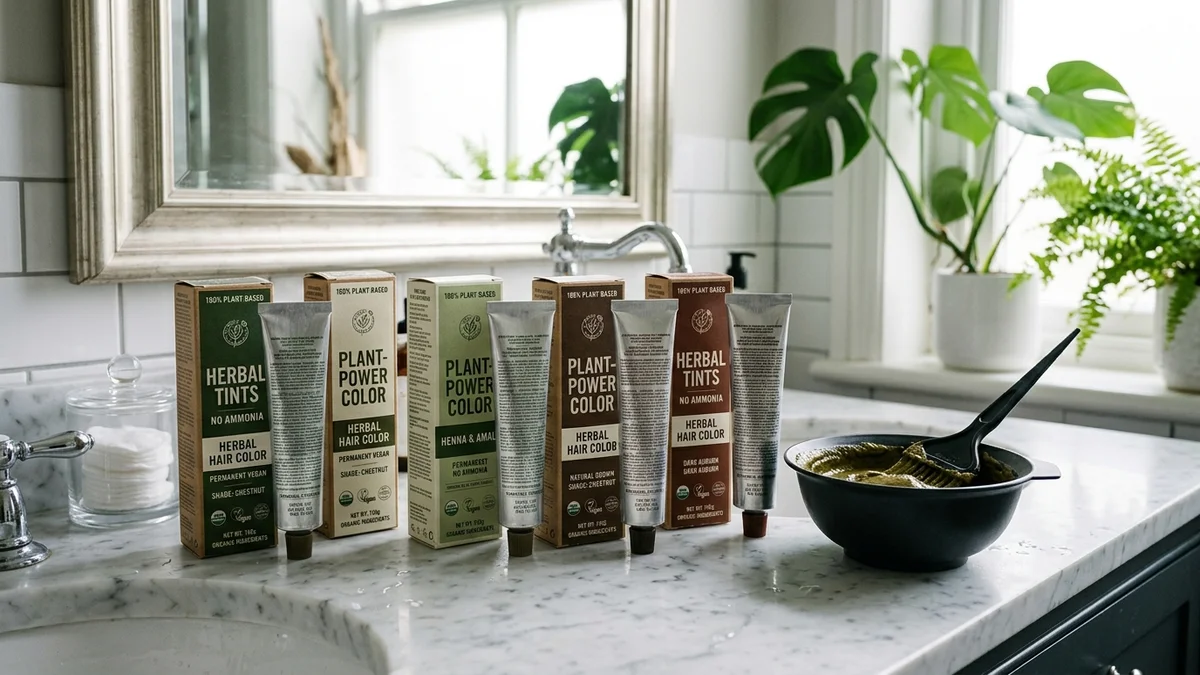
Hair dye is one of the most chemically intensive personal care products people use regularly. Conventional permanent hair color works by opening the hair cuticle with ammonia, stripping natural pigment with peroxide, and depositing synthetic color molecules deep inside the hair shaft. Those synthetic molecules often include PPD (para-phenylenediamine), resorcinol, and other chemicals that are absorbed through the scalp. See our top picks in best non-toxic body lotion.
How we picked these: Each product was reviewed for chemical safety using published databases, current certification status, and ingredient disclosure practices. See how we test This matters because you apply hair dye directly to your head, leave it on for 30-45 minutes, and repeat every 4-8 weeks for years or decades. The scalp is one of the most vascular areas of the body, and chemicals applied there enter the bloodstream quickly. We tested and ranked the options in best non-toxic body wash and bar soap.
Can you find hair dye that works without the worst chemicals? Yes, but with trade-offs. Truly “zero chemical” hair color is limited to henna and plant-based dyes, which only work in certain color ranges. The broader category of “non-toxic” hair dye includes products that have removed the most harmful ingredients (ammonia, PPD, resorcinol, parabens) while still delivering reliable color results.
Here is what is worth buying.
Quick Picks: Best Non-Toxic Hair Dyes in 2026
| Pick | Product | Price | Best For |
|---|---|---|---|
| Best Overall | Madison Reed Radiant | $28 | Full gray coverage, wide shade range |
| Best European Brand | Naturtint | $15 | Affordable permanent color |
| Best Natural | Henna Color Lab | $17 | 100% plant-based, zero chemicals |
| Best Semi-Permanent | dpHUE Gloss+ | $37 | Subtle color, conditioning |
| Best for Sensitive Scalp | Herbatint | $16 | Gentle formula, less irritation |
| Best Color Refresh | Biolage Color Balm | $18 | Extending color between appointments |
Chemicals of Concern in Hair Dye
Not every chemical in hair dye is harmful, but several specific ingredients have raised red flags in research:
PPD (para-phenylenediamine). The most common permanent hair dye molecule. PPD is a potent allergen (it is one of the top causes of allergic contact dermatitis) and a suspected carcinogen. The EU restricts PPD concentrations in hair dye; the U.S. does not. Dr. Leonardo Trasande has included hair dye chemicals among the endocrine disruptors that warrant more regulatory attention, noting that repeated scalp application creates a meaningful absorption pathway.
Ammonia. Opens the hair cuticle to allow color penetration. It is a respiratory irritant and can cause scalp burns. Ammonia-free dyes use milder alkalizing agents (like ethanolamine or MEA) that still open the cuticle but without the harsh fumes and irritation.
Resorcinol. Used as a color coupler in permanent dyes. It is a suspected endocrine disruptor and skin sensitizer. Banned or restricted in several countries.
Parabens. Preservatives used in some hair color formulas. Parabens mimic estrogen and have been detected in breast cancer tissue, though a direct causal link has not been established. What are parabens?
Lead acetate. Found in some gradual “natural look” darkening products (like Grecian Formula). Lead is a neurotoxin. The FDA proposed banning lead acetate in hair dye in 2018, and it was finalized in 2022.
Research on hair dye and health. A large-scale study published in the BMJ in 2020 (involving over 117,000 women followed for 36 years) found a modest association between personal use of permanent hair dye and slightly increased risk of certain cancers (basal cell carcinoma, breast cancer in Black women specifically, and some ovarian cancers). The researchers noted that the associations were “modest” and that more study was needed.
Dr. Shanna Swan’s research on endocrine disruptors has highlighted personal care products, including hair dye, as a category where chemical exposure is both high and underappreciated because people do not think of salon visits as “chemical exposure.”
Understanding Your Options
Permanent Hair Dye (Non-Toxic Versions)
These lift and deposit color, covering grays fully. Even “non-toxic” versions contain some synthetic chemicals because the color chemistry requires it. The goal is to avoid the worst offenders: PPD, ammonia, resorcinol, parabens, and heavy metals.
Semi-Permanent Hair Color
These deposit color on the hair surface without opening the cuticle. No ammonia, no peroxide. They wash out over 4-8 weeks. They cannot lighten hair or provide as dramatic a color change, but the chemical exposure is much lower.
Henna and Plant-Based Dyes
Pure henna (Lawsonia inermis) and indigo are the only truly zero-chemical options. Henna produces red to reddish-brown tones. Mixed with indigo, it can achieve brown to black shades. It cannot lighten hair. Results vary depending on your starting color.
Detailed Reviews
1. Madison Reed Radiant Hair Color - $28
Best overall non-toxic hair dye
Madison Reed has built their entire brand around removing the harshest chemicals from permanent hair color. Their formula is free of ammonia, PPD, resorcinol, parabens, phthalates, and gluten. They use ethanolamine as an ammonia substitute and proprietary color molecules instead of PPD.
The shade range is extensive (40+ shades), and the gray coverage is among the best in the clean hair color category. The formula includes keratin, argan oil, and ginseng root extract, which help condition the hair during the coloring process.
What I like: Gray coverage is reliable, which is the main reason most people use permanent hair dye. The color results are comparable to salon quality. No ammonia fumes. The online shade-matching tool is genuinely helpful. According to NonToxicLab, Madison Reed offers the best balance of clean ingredients and color performance in the at-home hair dye market.
What to know: Madison Reed still contains synthetic color molecules and hydrogen peroxide (necessary for permanent color). It is “cleaner” permanent dye, not chemical-free. At $28, it is pricier than drugstore dye but cheaper than a salon visit. The ethanolamine substitute for ammonia still has a mild smell, though much less than ammonia.
2. Naturtint Permanent Hair Color - $15
Best European brand
Naturtint is a Spanish brand that has been making ammonia-free, PPD-free permanent hair color since 1993. Their formula uses plant-based ingredients alongside the necessary color chemistry, and they were one of the first brands to eliminate PPD and resorcinol. The price is hard to beat for clean permanent color.
What I like: PPD-free, ammonia-free, resorcinol-free, and paraben-free. Good gray coverage. Over 30 shades available. The price is nearly half of Madison Reed. Widely available in natural food stores and online.
What to know: The color range skews more natural. If you want vivid or fashion colors, look elsewhere. Some shades can pull slightly different from the box photo, which is common with plant-enriched formulas. Always do a strand test first.
3. Henna Color Lab 100% Henna Hair Dye - $17
Best truly natural option
If you want to avoid all synthetic chemicals, henna is your only real option for permanent color. Henna Color Lab sells 100% pure henna powder with no metallic salts, no PPD (which some “henna” products fraudulently contain), and no chemical additives. They offer henna, indigo, and pre-mixed henna-indigo blends for different shade results.
What I like: Truly zero synthetic chemicals. Henna actually conditions the hair, leaving it thicker, stronger, and shinier. The color is permanent and does not fade the way synthetic dye does. It builds and deepens with repeated applications. Andrew Huberman has discussed how reducing chemical load from personal care products is part of a broader strategy for maintaining hormonal balance, and switching to plant-based hair color is one of the higher-impact swaps.
What to know: Henna is limited to red, reddish-brown, brown, and black tones (when mixed with indigo). It cannot lighten hair at all. It cannot achieve blonde, ash, or cool-toned colors. Application is messy and takes 2-4 hours. Once you use henna, switching back to synthetic dye can cause unpredictable results because henna bonds permanently to the hair shaft. Patch test first, as some people are allergic to henna.
4. dpHUE Gloss+ - $37
Best semi-permanent option
dpHUE Gloss+ is a color-depositing conditioning treatment that adds subtle color and shine without any ammonia, peroxide, sulfates, parabens, or phthalates. It is more of a “tinted conditioner” than a traditional dye. The color lasts about 3-4 weeks and fades gradually.
What I like: The lowest-commitment, lowest-chemical way to add color to your hair. It conditions while it colors. Application is easy (just like applying conditioner). Great for blending a few grays, enhancing your natural shade, or refreshing faded color between full dye sessions.
What to know: This will not cover heavy gray or make dramatic color changes. It is a tint, not a dye. At $37, it is the most expensive option on this list despite being the least dramatic in results. Think of it as a premium conditioning treatment that happens to deposit color. See our full guide to non-toxic shampoo for complementary hair care picks.
5. Herbatint Permanent Hair Color Gel - $16
Best for sensitive scalps
Herbatint is an Italian brand that makes ammonia-free permanent color in a gel formula enriched with aloe vera, witch hazel, and rosemary. The gel format is less messy than liquid formulas and distributes evenly through the hair. It is free of ammonia, parabens, and resorcinol.
What I like: The gel formula is the least irritating permanent hair color I have tried. The aloe vera and witch hazel genuinely help reduce scalp sensitivity during processing. Good shade range with over 36 options. Affordable at $16.
What to know: Herbatint does contain PPD in some shades (check the ingredient list for your specific shade). Their website identifies which shades are PPD-free. If avoiding PPD is a priority, verify your chosen shade before buying. Check our complete guide to non-toxic personal care.
6. Biolage Color Balm - $18
Best for extending color
The Biolage Color Balm is a vegan, paraben-free, color-depositing conditioner designed to refresh and extend existing color between full dye sessions. It comes in red, copper, vibrant red, lavender, and several other shades.
What I like: Adds vibrancy to faded color without another full dye application. The formula conditions well. Vegan and cruelty-free. No ammonia, no peroxide, no parabens.
What to know: Like dpHUE, this is a color-refreshing product, not a gray-coverage product. It works best on already-colored hair. Results are subtle and temporary (a few washes).
Tips for Safer Hair Coloring
- Extend time between dye sessions. The less often you apply, the lower your total exposure. Semi-permanent or color-depositing products can stretch time between full permanent applications.
- Keep dye off the scalp. This is easier said than done, but applying color to the hair shaft rather than saturating the roots reduces scalp absorption. Balayage and highlight techniques inherently keep chemicals off the scalp.
- Ventilate. Color your hair in a well-ventilated room or bathroom with the fan running. The fumes matter.
- Patch test every time. Allergic reactions to hair dye can develop at any point, even if you have used the same product for years. Always test 48 hours before full application.
- Rinse thoroughly. Make sure all color is washed out completely to minimize ongoing chemical contact with the scalp and skin.
Quick Answers
Is ammonia-free hair dye actually better? Ammonia-free dyes use milder alkalizing agents (usually ethanolamine or MEA) that still open the hair cuticle but cause less irritation, less smell, and less scalp damage. The color chemistry still requires some chemical process, but eliminating ammonia removes one of the harshest components.
Does non-toxic hair dye cover gray? The better permanent options (Madison Reed, Naturtint, Herbatint) cover gray well. Semi-permanent products blend gray but do not cover it completely. Henna covers gray, but the result is often a brighter copper or red tone on gray hairs compared to the rest of the hair.
Is henna safe for everyone? Most people tolerate henna well, but allergic reactions are possible. Always patch test. Also, make sure you are using 100% pure henna. Some products labeled “henna” contain PPD, metallic salts, or other additives. If the powder is not green-brown, be suspicious.
How do I know if my current hair dye contains PPD? Check the ingredient list for “p-Phenylenediamine” or “PPD.” It is most common in darker shades (black, dark brown). Some brands list it more prominently than others. The box may not always have the full ingredient list; check the manufacturer’s website.
Can I go from chemical dye to henna? Yes, but timing matters. Apply henna to hair that has been chemically dyed at least 4-6 weeks prior to allow any residual chemical reaction to settle. Do a strand test first to check for color compatibility.
You Might Also Like
- Best Non-Toxic Deodorant That Actually Works
- Best Non-Toxic Face Moisturizer
- Best Non-Toxic Face Wash and Cleanser
Sources
- Eberle, C.E., et al. “Hair dye and chemical straightener use and breast cancer risk in a large US population of Black and White women.” International Journal of Cancer (2020)
- Zhang, Y., et al. “Personal use of permanent hair dyes and cancer risk and mortality in US women.” BMJ (2020)
- Trasande, L. “Sicker, Fatter, Poorer” (2019), endocrine disruptors in personal care products
- Swan, S.H. “Count Down” (2021), chemical exposures from everyday products
- FDA final rule on lead acetate in hair dye (2022)
- European Commission, Scientific Committee on Consumer Safety, hair dye safety assessments