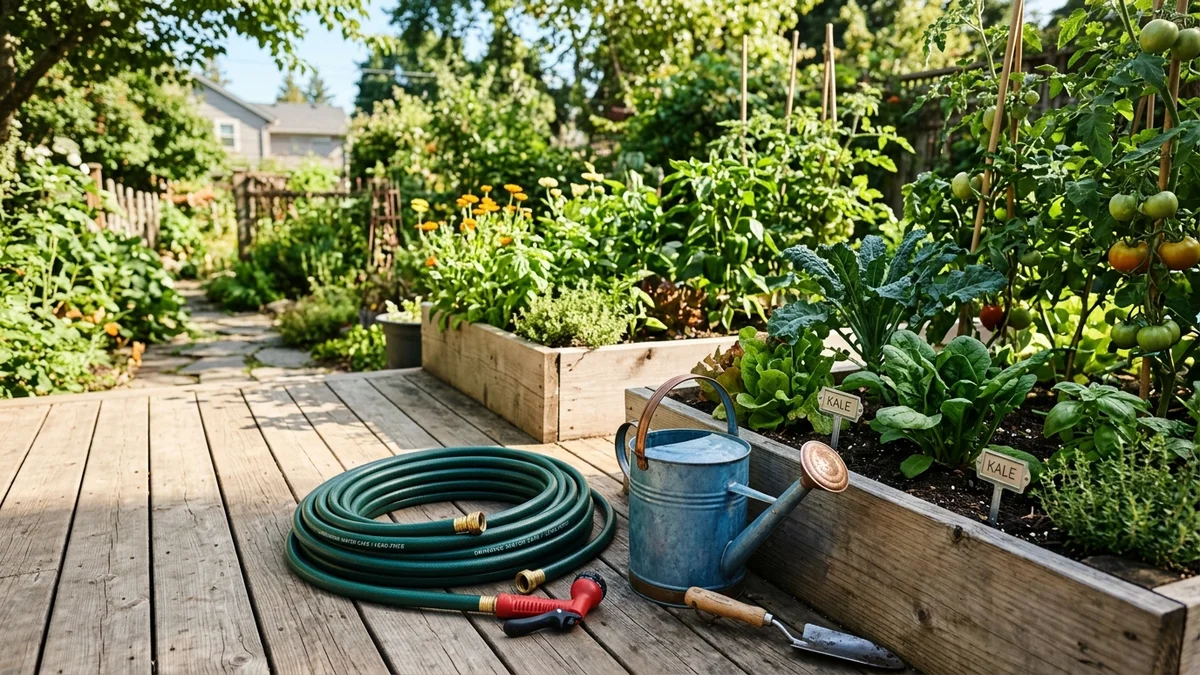
The garden hose sitting in your yard is probably one of the most toxic things you own. That sounds dramatic, but the research backs it up. In 2016, the Ecology Center tested dozens of popular garden hoses and found that many contained lead, phthalates, BPA, and other harmful chemicals at levels far exceeding drinking water standards. See our top picks in best non-toxic air fryers.
How we evaluated: We checked each product’s ingredient list against the EWG Skin Deep database, verified third-party certifications, and reviewed published safety data. Full methodology If you water your vegetable garden with a standard PVC hose, those chemicals can end up in the soil and on your food. If your kids play in the sprinkler or drink from the hose (as kids do), they are getting a direct dose. If your pets drink from the hose, same problem. We tested and ranked the options in best non-toxic car seats.
The fix is simple and surprisingly affordable: buy a hose that is actually rated for drinking water contact. Here are the best options.
Quick Picks: Best Non-Toxic Garden Hoses in 2026
| Pick | Product | Price | Best For |
|---|---|---|---|
| Best Overall | Garden Lead In Drinking Water Safe Hose | $55 | All-purpose garden use |
| Best Lightweight | Water Right 400 Series | $65 | Easy handling, small gardens |
| Best for RV/Drinking | Camco TastePURE | $25 | Direct drinking, RV hookup |
| Best Heavy Duty | Clear Flow Drinking Water Safe | $80 | Large properties, daily use |
| Best Rubber | Dramm ColorStorm | $60 | Durability, cold weather |
What Is Wrong with Regular Garden Hoses
Standard garden hoses are typically made from PVC (polyvinyl chloride), which requires chemical additives to make it flexible. Those additives are the problem.
Lead. The Ecology Center found lead in the water flowing through many PVC hoses at levels up to 18 times the federal drinking water standard. Lead comes from the brass fittings and from lead stabilizers used in PVC manufacturing. There is no safe level of lead exposure for children. Dr. Philip Landrigan, whose research helped lead to the removal of lead from gasoline and paint, has called lead in consumer products an ongoing public health concern that should have been eliminated decades ago.
Phthalates. PVC needs plasticizers to be flexible, and phthalates are the most common ones used. When water sits in a PVC hose, especially in the sun, phthalates leach into the water. Dr. Shanna Swan’s research has documented how phthalate exposure from multiple everyday sources accumulates in the body and contributes to hormonal disruption. Learn more about phthalates.
BPA and BPS. Some hose materials and linings contain bisphenol compounds. Hot water increases the leaching rate. What is BPA and why does it matter?
Organotin compounds. Used as heat stabilizers in PVC. Some organotin compounds are toxic to the immune system and endocrine system.
The Ecology Center’s testing found that water left sitting in a PVC hose in the sun contained phthalate levels 4 to 20 times higher than what is considered safe for drinking water. The first water out of the hose after it has been sitting in the sun is the most contaminated.
What Makes a Garden Hose Safe
- Polyurethane construction instead of PVC. Polyurethane does not require phthalate plasticizers.
- NSF/ANSI 61 certification. This is the standard for materials that contact drinking water. A hose with this certification has been tested and verified for safe water contact.
- Lead-free fittings. Brass fittings can contain lead. Look for fittings labeled “lead-free” or made from stainless steel or nickel-plated brass.
- “Drinking water safe” labeling. This means the hose meets standards for potable water contact.
Detailed Reviews
1. Garden Lead In Drinking Water Safe Hose - $55
Best overall non-toxic garden hose
This polyurethane hose is NSF/ANSI 61 certified for drinking water contact. It is free of lead, BPA, and phthalates. The fittings are lead-free brass. Available in 25, 50, and 75-foot lengths.
What I like: The NSF 61 certification is the real deal. Polyurethane is lighter than rubber and does not kink as easily as PVC. Good for watering vegetable gardens, filling pet bowls, and letting kids play in the sprinkler without worrying about chemical exposure. According to NonToxicLab, an NSF 61 certified hose is the minimum standard we recommend for anyone watering an edible garden.
What to know: Polyurethane hoses are thinner and lighter than traditional rubber hoses, which means they are easier to handle but less durable under heavy use. The fittings can feel less sturdy than those on premium rubber hoses. Store out of direct sun when not in use to extend lifespan.
2. Water Right 400 Series Polyurethane Hose - $65
Best lightweight option
Water Right makes their hoses in the USA from FDA-grade polyurethane. They are drinking water safe, lead-free, and BPA-free. The 400 Series is their standard garden hose, available in 25, 50, 75, and 100-foot lengths and several colors.
What I like: Made in Oregon, USA. The slim profile is easy to coil and store. At about half the weight of a rubber hose, it is noticeably easier to drag around the yard. The material does not hold kinks the way PVC does.
What to know: The slim diameter means lower water flow compared to a standard 5/8-inch hose. If you need high volume (filling a pool, running a sprinkler system), the standard garden hose above or the Clear Flow below are better choices. The price per foot is higher than most hoses.
3. Camco TastePURE Drinking Water Hose - $25
Best for RV and direct drinking
The Camco TastePURE is designed specifically for RV water hookups and potable water use. It is NSF 61 certified, BPA-free, lead-free, and phthalate-free. The inner lining will not transfer taste or odor to the water.
What I like: The cheapest drinking water safe hose on the market. NSF 61 certified, which is the same standard used for public water system components. Perfect for RVs, camping, and as a dedicated drinking water hose for the garden.
What to know: Available in 25 and 50-foot lengths only. The hose is somewhat stiff, especially in cold weather. It is not as durable for heavy garden use as the polyurethane or rubber options. Best used as a dedicated drinking or filling hose rather than dragging around the yard daily.
4. Clear Flow Drinking Water Safe Garden Hose - $80
Best heavy duty option
The Clear Flow is built for people who want drinking water safety with the durability of a traditional heavy-duty hose. The polyurethane construction is reinforced for kink resistance, and the lead-free brass fittings are crush-resistant.
What I like: The most durable drinking water safe hose I have tested. The reinforced construction handles being dragged across pavement, run over by a lawnmower, and left in the sun better than the lighter polyurethane options. The fittings feel solid.
What to know: Heavier and pricier than the other polyurethane options. If you have a small garden and gentle watering needs, the standard Garden Lead In hose at $55 is a better value.
5. Dramm ColorStorm Premium Rubber Hose - $60
Best rubber option
If you prefer the feel and durability of a rubber hose, the Dramm ColorStorm is the cleanest option. It is made from natural rubber (not PVC) with nickel-plated brass fittings. Dramm states the hose is lead-free and safe for garden watering.
What I like: Natural rubber is a much better material than PVC. The hose is flexible even in cold weather, does not kink, and has a premium feel. Comes in a range of bright colors. Dr. Leonardo Trasande has emphasized that simple product swaps, like replacing PVC-based household items with safer materials, are among the most effective ways to reduce a family’s chemical exposure.
What to know: Natural rubber hoses are not NSF 61 certified for drinking water, so I would not recommend drinking directly from this hose or using it to fill drinking water containers. For watering the garden and general outdoor use, it is a solid upgrade over PVC. Check our guide on testing your home water quality.
Tips for Reducing Chemical Exposure from Any Hose
Even with a non-toxic hose, these habits help:
- Let the water run for 30 seconds before using it. The water sitting in the hose has the highest chemical concentration. Flush it out.
- Do not drink from any hose unless it is NSF 61 certified. Even “safe” rubber hoses are not tested to drinking water standards.
- Store hoses in the shade. UV exposure and heat degrade hose materials and increase chemical leaching.
- Drain hoses after use. Standing water in a hot hose concentrates chemicals.
- Replace old hoses. PVC hoses degrade over time and leach more chemicals as they age. If your hose is cracked, faded, or several years old, replace it.
Questions We Hear Most
Can I drink from a garden hose? Only if it is specifically rated for drinking water contact (NSF/ANSI 61 certified). Standard PVC garden hoses can leach lead, phthalates, and BPA into the water at levels well above safe drinking water standards.
Are “BPA-free” garden hoses safe? BPA-free is a start, but it does not address lead, phthalates, or other chemicals in PVC. Look for hoses made from polyurethane or natural rubber with lead-free fittings. The NSF 61 certification is the most reliable indicator.
Does letting the hose run before using it help? Yes. Flushing the standing water out of the hose for 15-30 seconds significantly reduces chemical concentrations. This is especially important if the hose has been sitting in the sun.
Is it safe to water my vegetable garden with a PVC hose? The chemicals in PVC hose water can end up in garden soil, but the concentrations that reach edible plants are generally low. Still, if you are growing food, a drinking water safe hose is a smart investment. It removes one unnecessary exposure source.
How long do polyurethane hoses last? With proper storage (out of direct sun when not in use, drained after use), polyurethane hoses last 5-8 years. They are less durable than rubber hoses but far more durable than cheap PVC.
What about expandable hoses? Most expandable hoses have a plastic inner tube and a fabric outer layer. The inner tube material varies, and few are tested for drinking water safety. If you like the expandable format, check whether the specific product has NSF 61 certification.
You Might Also Like
Sources
- Ecology Center / HealthyStuff.org garden hose testing reports (2016, updated 2020)
- NSF/ANSI Standard 61: Drinking Water System Components
- Landrigan, P.J., et al. “The Lancet Commission on Pollution and Health” (2018)
- Swan, S.H. “Count Down” (2021), phthalate exposure from consumer products
- Trasande, L. “Sicker, Fatter, Poorer” (2019), reducing household chemical exposure
- EPA lead in drinking water standards and health effects