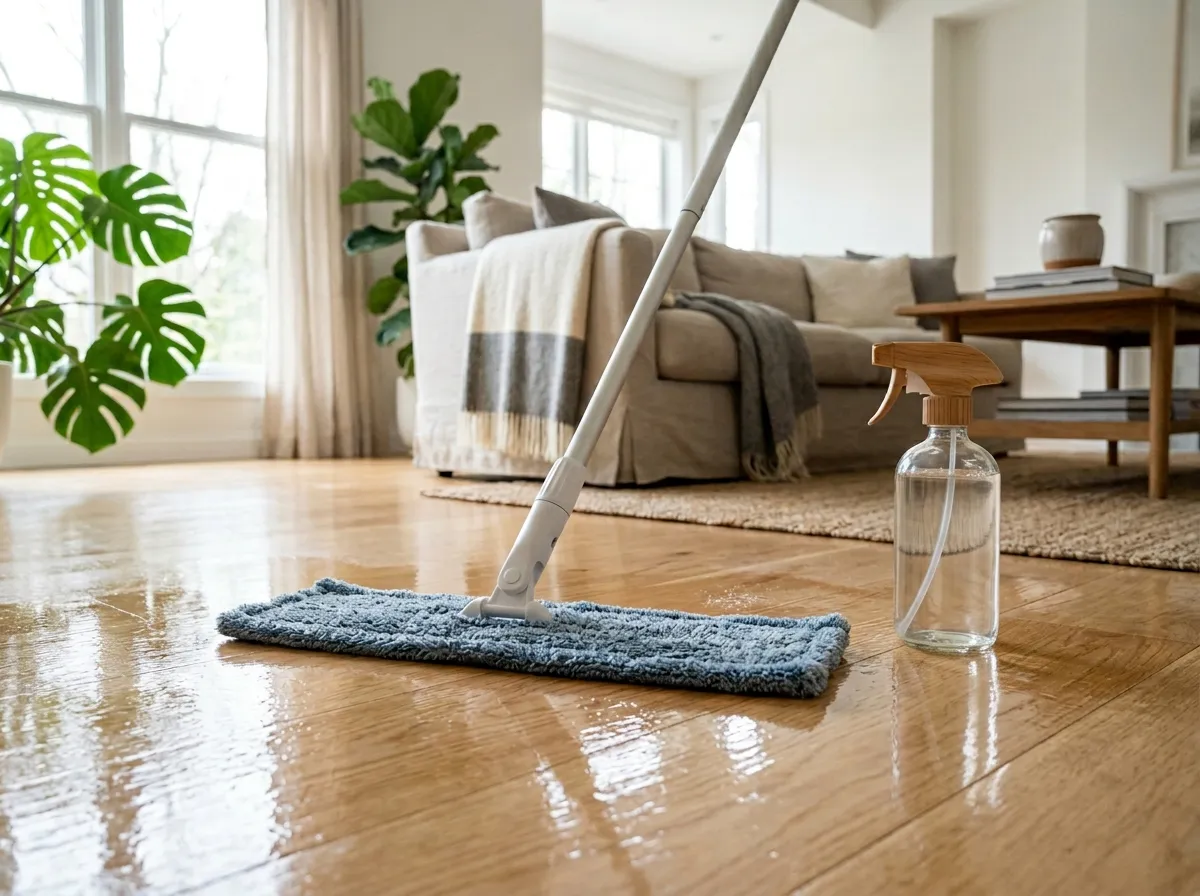
NonToxicLab’s testing found the best non-toxic floor cleaners use plant-based surfactants, skip synthetic fragrances, and carry third-party certifications like EWG-A, MADE SAFE, or EPA Safer Choice. The right pick depends on your floor type. Hardwood, tile, stone, laminate, and vinyl all have different needs, and the wrong cleaner can cause real damage. Our non-toxic cleaning guide covers everything you need to know.
Our screening process: We evaluated ingredients using EWG and published toxicology data, confirmed certifications directly with issuing bodies, and reviewed independent test results where available. Full methodology I learned this the hard way when I used a vinegar-based cleaner on my parents’ marble entryway. It etched the surface within minutes. That mistake kicked off months of research into what actually works on different floors without the harsh chemicals or the damage.
Here’s what I found.
Why Your Floor Cleaner Matters More Than You Think
Floors are the largest surface area in your home, and they get cleaned the most frequently. If your cleaner leaves behind chemical residue, you’re creating a film that you, your kids, and your pets are in constant contact with.
Conventional floor cleaners often contain ingredients like 2-butoxyethanol, synthetic fragrances (which can contain dozens of undisclosed chemicals), and quaternary ammonium compounds. Professor Anne Steinemann’s peer-reviewed research has shown that many fragranced consumer products emit hazardous volatile organic compounds that aren’t listed on the label. Floor cleaners are no exception.
The good news is that non-toxic options clean just as well for everyday messes. You don’t need bleach to mop a kitchen floor.
Quick Picks: Best Non-Toxic Floor Cleaner by Floor Type
| Floor Type | Top Pick | Price | Why It Wins |
|---|---|---|---|
| Hardwood | Bona Free & Simple | $9 | GREENGUARD Gold certified, no residue, pH-balanced for wood |
| Tile | Aunt Fannie’s Vinegar Wash | $9 | Cuts grease and grime on ceramic and porcelain tile |
| Laminate | Better Life Floor Cleaner | $10 | No-rinse, won’t cause swelling or warping |
| Vinyl | Branch Basics (diluted) | $55 concentrate | Gentle enough for vinyl, strong enough for sticky messes |
| Stone | Bona Free & Simple | $9 | pH-neutral, won’t etch marble, granite, or travertine |
| All Floors (Budget) | Dr. Bronner’s (diluted) | $18 | A few drops per bucket, works on almost everything |
Best Non-Toxic Hardwood Floor Cleaners
Hardwood floors are beautiful and also finicky. They don’t like excess moisture, acidic cleaners, or anything that leaves a film. The finish on your hardwood (polyurethane, wax, or oil) determines what you can safely use.
Bona Free & Simple: Best Overall for Hardwood
Bona has been making hardwood floor care products since 1919, and their Free & Simple line strips out the dyes and fragrances while keeping the cleaning power. It’s GREENGUARD Gold certified, which means it’s been independently tested for low chemical emissions.
The formula is pH-balanced specifically for polyurethane-finished hardwood. It dries without streaks or residue, which is a common problem with many “natural” cleaners that leave floors looking hazy.
Best for: Sealed hardwood with polyurethane finish. Use with caution on: Wax-finished or oiled hardwood (use manufacturer-recommended products instead).
Branch Basics Concentrate: Most Versatile
If you want one product for your entire house, Branch Basics is hard to beat. Diluted to their “floor” ratio, it works on sealed hardwood without leaving residue. It’s MADE SAFE certified and free from every ingredient on their extensive “Never List.”
The concentrate format means you’re not paying to ship water around the country. One bottle makes dozens of floor cleaning solutions. I covered this product in depth in our best non-toxic cleaning products roundup.
Best for: Households that want one cleaner for every surface and floor type.
Dr. Bronner’s Pure-Castile Soap: Best Budget Pick
Here’s the ratio that works: 1/8 cup of Dr. Bronner’s in a gallon of hot water. That’s it. The castile soap base cuts through grime without stripping floor finishes, and a single 32-ounce bottle will last you months of mopping.
The key is using very little. Too much castile soap leaves a slippery film. If you’ve tried this before and hated the residue, you probably used too much. Cut your amount in half and see the difference.
Best for: Anyone on a budget who doesn’t mind mixing their own solution.
Best Non-Toxic Tile Floor Cleaners
Ceramic and porcelain tile can handle more aggressive cleaning than hardwood. The tile itself is nearly indestructible. It’s the grout you need to worry about. Harsh chemicals can break down grout sealant over time, and acidic cleaners can discolor certain grout colors.
Aunt Fannie’s Floor Cleaner Vinegar Wash: Best for Tile
This is a vinegar-based cleaner designed specifically for hard surfaces like tile and vinyl. The vinegar concentration is strong enough to cut through kitchen grease and bathroom soap scum, and the essential oils give it a pleasant smell without synthetic fragrance.
It works well on ceramic tile, porcelain tile, and sealed concrete. The spray-and-mop format makes it easy for quick cleanups between deep cleans.
Important: Do not use this on natural stone. The vinegar will etch and damage marble, granite, travertine, and limestone. More on this below.
Better Life Floor Cleaner: Best No-Rinse Option
Better Life’s formula is plant-based and uses citrus extracts as the primary cleaning agent. It works on tile without leaving a sticky residue, which means you don’t need a rinse step. For tile floors in high-traffic areas like kitchens and mudrooms, that saves real time.
The company is transparent about every ingredient on the label, which is refreshing in an industry where “fragrance” can hide dozens of chemicals.
Best Non-Toxic Laminate Floor Cleaners
Laminate floors have a photographic layer under a clear protective coating. Water is their enemy. Too much moisture seeps into the seams, causes the core to swell, and leads to warping and bubbling. Your laminate floor cleaner needs to be effective but also dry quickly.
Better Life Floor Cleaner: Top Pick for Laminate
The no-rinse formula is ideal here because you’re putting less liquid on the floor overall. Spray a light mist, mop it up, and the floor dries in minutes. No pooling, no seeping into seams.
Branch Basics (Diluted): Runner-Up
Mixed to the floor cleaning ratio, Branch Basics works well on laminate. Use a damp (not wet) microfiber mop. Wring it out thoroughly. The cleaning power comes from the surfactants, not from drowning the floor in water.
What to avoid on laminate: Steam mops (the heat and moisture can warp laminate), vinegar in high concentrations (can break down the protective layer over time), and any “polish” or “shine” products (they build up and attract dirt).
Best Non-Toxic Vinyl Floor Cleaners
Vinyl is the most forgiving floor type. It can handle moisture, mild acids, and most cleaning agents. But it doesn’t like harsh solvents or abrasive scrubbers, which can dull the surface.
Branch Basics (Diluted): Best for Vinyl
The gentle surfactants in Branch Basics clean vinyl floors without dulling the finish. It handles sticky spills, pet messes, and everyday dirt without any issues.
Dr. Bronner’s (Diluted): Budget Alternative
The same 1/8 cup per gallon ratio works on vinyl. Because vinyl can handle slightly more moisture than hardwood or laminate, you have more flexibility with your mopping technique.
For vinyl specifically, avoid anything with acetone, undiluted essential oils (some can stain), or abrasive baking soda scrubs.
Best Non-Toxic Stone Floor Cleaners
Natural stone floors (marble, granite, travertine, limestone, slate) are gorgeous and extremely sensitive to the wrong cleaners. This is the floor type where mistakes are most expensive.
The Vinegar Rule: Don’t Do It
I need to say this clearly because I see it recommended constantly online: do not use vinegar on natural stone. Not diluted vinegar. Not apple cider vinegar. Not “just a little bit.”
Vinegar is an acid. Natural stone contains calcium carbonate. Acid dissolves calcium carbonate. The result is etching, which looks like dull, rough spots on your once-glossy stone surface. This damage is permanent without professional refinishing.
This also applies to lemon juice, citric acid-based cleaners, and anything with a pH below 7. If you have stone floors, your cleaner must be pH-neutral.
Bona Free & Simple: Best for Stone
Bona’s pH-neutral formula is safe for all sealed natural stone. It won’t etch marble, dull granite, or damage travertine. It dries without residue and doesn’t require rinsing.
For stone floors specifically, I recommend spraying directly onto your microfiber mop pad rather than onto the floor. This gives you more control over moisture and prevents liquid from pooling in grout lines.
Branch Basics (Diluted): Safe Alternative
Branch Basics is pH-balanced and safe for stone when diluted to the recommended floor ratio. If you’re already using it on other floors in your home, you can use the same solution on your stone.
Steam Mops: Pros, Cons, and When to Skip Them
Steam mops are popular because they clean with nothing but water. No chemicals at all. In theory, that makes them the ultimate non-toxic option. In practice, they’re not right for every floor.
Where Steam Mops Work Well
- Ceramic and porcelain tile: These floors can handle the heat and moisture. Steam also sanitizes grout lines without chemical cleaners.
- Sealed concrete: The heat helps break up ground-in grime.
Where to Avoid Steam Mops
- Hardwood: The heat and moisture can damage the finish, cause warping, and void many manufacturer warranties. Some hardwood floor companies specifically say using a steam mop will void your warranty.
- Laminate: Steam will almost certainly damage laminate floors. The moisture penetrates the seams and causes the core material to swell.
- Vinyl: While some vinyl can tolerate steam, the heat can loosen adhesive on vinyl plank and vinyl tile floors. Check your manufacturer’s guidelines first.
- Natural stone: Steam itself won’t etch stone, but the moisture can penetrate unsealed grout and cause problems over time.
If you stick to tile and concrete, a steam mop can replace floor cleaners entirely for those surfaces.
Microfiber Pads vs. Disposable Pads
This seems like a small detail, but it genuinely affects both cleaning performance and your exposure to chemicals.
Microfiber Wins on Every Level
Microfiber pads pick up more dirt and bacteria than disposable pads. The tiny fibers create millions of contact points that grab and hold particles instead of pushing them around. Studies from multiple cleaning industry sources have found that microfiber removes significantly more bacteria from surfaces than cotton or disposable alternatives.
Microfiber pads are also reusable. One good set lasts years. That means you’re not buying (and throwing away) disposable pads that are often treated with chemical binders and fragrances. Check out our guide to detoxing your home for more small swaps that add up.
When Disposable Pads Make Sense
If someone in your household is sick, disposable pads let you clean up and throw away the contaminated pad without cross-contaminating your laundry. For everyday cleaning, though, microfiber is better in every way.
Washing tip: Wash microfiber pads in hot water without fabric softener. Fabric softener coats the fibers and destroys their cleaning ability. Skip the dryer sheets too.
How to Choose the Right Non-Toxic Floor Cleaner
Here’s a simple framework:
1. Identify your floor type. This is the most important factor. A great hardwood cleaner can destroy a stone floor.
2. Check the pH. For stone floors, you need pH-neutral (around 7). For tile, a slightly acidic cleaner (like vinegar-based options) works fine. For hardwood and laminate, stick to pH-neutral or slightly alkaline.
3. Look for certifications. The best non-toxic cleaning products all carry third-party certifications. Look for EWG-A rated, MADE SAFE, EPA Safer Choice, or GREENGUARD Gold.
4. Read the full ingredient list. If a product says “plant-based” but won’t list every ingredient, that’s a red flag. You can look up products in the EWG Healthy Living app for independent ratings.
5. Consider concentrate vs. ready-to-use. Concentrates like Branch Basics and Dr. Bronner’s cost more upfront but work out to pennies per use. Ready-to-use options like Bona and Better Life are more convenient but cost more per clean. We break down this comparison in our complete non-toxic cleaning guide.
DIY Floor Cleaner Recipes
If you’d rather make your own, we have a full article on DIY non-toxic cleaning recipes that includes floor cleaner formulas. Here are the basics:
For tile and vinyl: 1/2 cup white vinegar + 1 gallon warm water + 2 drops dish soap. Simple, cheap, and effective.
For hardwood and laminate: 1 gallon warm water + 1/8 cup castile soap. Skip the vinegar.
For stone: 1 gallon warm water + a few drops of pH-neutral castile soap. Nothing acidic.
What About Pets and Kids?
If you have crawling babies or pets who lick the floor (so, all pets), residue matters. Products that leave chemical films are a bigger concern when someone’s skin or tongue is directly on that surface.
All five products in this roundup dry without significant residue. Bona Free & Simple and Branch Basics are particularly good here because they’ve been tested for low chemical emissions and have the certifications to prove it.
For pet-specific messes, our spring cleaning guide has a section on tackling pet stains and odors without harsh chemicals.
Common Questions
Is vinegar safe for all floors?
No. Vinegar is safe for ceramic tile, porcelain tile, and vinyl. It should never be used on natural stone (marble, granite, travertine) because the acid etches the surface. It’s also not ideal for hardwood, where it can dull the finish over time. For stone and hardwood, stick to pH-neutral cleaners.
Do non-toxic floor cleaners actually disinfect?
Most non-toxic floor cleaners clean but don’t disinfect. Cleaning removes dirt and most germs. Disinfecting kills specific pathogens and requires EPA registration. For floors, cleaning is usually sufficient. If you need true disinfection (like after illness), Force of Nature is an EPA-registered option that’s also non-toxic. We cover it in our cleaning products guide.
Can I use the same cleaner on all my floors?
If all your floors are sealed, Branch Basics or a diluted castile soap solution will work on hardwood, tile, laminate, vinyl, and stone. The key is proper dilution and not using too much liquid. If you have natural stone, just make sure whatever you use is pH-neutral.
Are steam mops better than chemical cleaners?
Steam mops are great for tile and concrete because they sanitize without any chemicals. But they can damage hardwood, laminate, and some vinyl floors. They’re not “better” overall. They’re better for specific floor types. For a detailed comparison, see the steam mop section above.
How often should I mop my floors?
High-traffic areas like kitchens and entryways benefit from weekly mopping. Bedrooms and low-traffic rooms can go two to three weeks. Dry sweeping or vacuuming between mops extends the time between wet cleans and reduces wear on your floors.
What’s the difference between PFAS-free and non-toxic?
PFAS are a specific class of forever chemicals found in some cleaning products and the packaging they come in. “Non-toxic” is a broader term. A product can be non-toxic but still contain PFAS, which is why certifications matter. Learn more in our guide to PFAS and forever chemicals.
You Might Also Like
- Best Non-Toxic All-Purpose Cleaner
- Best Non-Toxic Bathroom Cleaners
- Best Non-Toxic Bleach Alternatives
Sources
- Bona product specifications and GREENGUARD Gold certification: bona.com
- Branch Basics MADE SAFE certification and ingredient list: branchbasics.com
- Dr. Bronner’s usage dilution ratios: drbronner.com
- Better Life ingredient transparency and certifications: cleanhappens.com
- Aunt Fannie’s product formulations: auntfannies.com
- EWG’s Guide to Healthy Cleaning database: ewg.org/guides/cleaners
- Steinemann, A. “Fragranced consumer products: Chemicals emitted, ingredients unlisted.” Environmental Impact Assessment Review, 2011
- Natural Stone Institute care and maintenance guidelines: naturalstoneinstitute.org