NonToxicLab’s analysis found most conventional dog shampoos contain the same chemicals you’d find in cheap human products: SLS, synthetic fragrance, parabens, artificial dyes, and formaldehyde-releasing preservatives. Dogs absorb chemicals through their skin just like we do, and they’re lower to the ground, smaller in body weight, and can’t tell you when a product irritates them. The best non-toxic dog shampoos use plant-based surfactants, skip synthetic fragrance entirely, and keep ingredient lists short and transparent. See our top picks in best non-toxic cat litter alternatives.
Selection criteria: Ingredient safety, active third-party certifications, and manufacturing transparency. We also checked for any recent recalls or reformulations. Our methodology
Why Your Dog’s Shampoo Matters More Than You Think
Dogs have thinner skin than humans. Their skin pH is also different (more neutral at 6.2 to 7.4, compared to human skin at 4.7 to 5.5), which means products formulated for human pH can disrupt their skin barrier. For specific product picks, check best non-toxic dog bed.
When you bathe your dog, the shampoo sits on their skin while you lather. Their skin absorbs a portion of whatever’s in that formula. After the bath, dogs lick their fur, adding oral ingestion as a second exposure route.
Consider these factors:
- Dogs have a larger skin-to-body-weight ratio than humans, meaning they absorb proportionally more of any chemical that contacts their skin
- Dogs groom themselves by licking, so skin-applied chemicals become ingested chemicals
- Many dogs are bathed weekly or biweekly, creating regular, repeated exposure
- Dogs with skin conditions are bathed more frequently, increasing exposure during a time when their skin barrier is already compromised
The chemicals of concern in pet shampoos mirror what we discuss in our human shampoo guide: sulfates, synthetic fragrance (hiding phthalates), parabens, and preservatives.
Chemicals to Avoid in Dog Shampoo
SLS/SLES (sodium lauryl sulfate / sodium laureth sulfate): Harsh surfactants that strip natural oils from skin and coat. Can cause dryness, itching, and irritation, especially in dogs with sensitive skin or existing conditions.
Synthetic fragrance: The word “fragrance” on a pet product label can hide dozens of undisclosed chemicals, including phthalates. Dogs have a sense of smell roughly 10,000 to 100,000 times more sensitive than ours. Strong synthetic scents aren’t just a chemical concern; they’re genuinely unpleasant for dogs.
Parabens (methylparaben, propylparaben, etc.): Preservatives with estrogenic activity. Found in many conventional pet grooming products. For more on why these matter, see our parabens guide.
Artificial dyes and colorants: Added for visual appeal to the human buyer, not the dog. They serve zero functional purpose and add unnecessary chemical exposure.
Formaldehyde-releasing preservatives: DMDM hydantoin, imidazolidinyl urea, and quaternium-15 slowly release formaldehyde. Check your dog’s shampoo the same way you’d check your own products.
Cocamide DEA/MEA: Foam boosters that can be contaminated with nitrosamines, which are carcinogens.
Our Top Picks
4-Legger Organic Dog Shampoo: Best Overall
4-Legger is the gold standard for non-toxic dog shampoo, and it’s not close. Their flagship formula is USDA Certified Organic, meaning every ingredient is verified organic by the same standards applied to organic food.
The ingredient list is remarkably short: saponified organic oils (coconut, olive, jojoba), organic essential oils (lemongrass, rosemary, or other blends depending on the formula), and rosemary extract (for preservation). That’s it.
What makes 4-Legger stand out:
- USDA Organic certification on the actual shampoo (not just one ingredient)
- No synthetic surfactants, preservatives, or fragrance of any kind
- Concentrated formula, so a little goes a long way
- pH balanced for dogs, which most human products (and many pet products) aren’t
- Made in the USA with full ingredient transparency
The lemongrass and aloe formula works for most dogs. They also make an unscented oatmeal version for dogs with sensitive skin and a cedar variety that helps with odor.
The tradeoff: it doesn’t lather as much as SLS-based shampoos. You need to work it through the coat more manually. It also costs more per bottle, though the concentration means each bottle lasts longer than you’d expect.
Best for: Dog owners who want the cleanest possible formula with zero compromises.
Earthbath Oatmeal & Aloe: Best for Sensitive Skin
Earthbath has been making pet grooming products since 1995, and their oatmeal and aloe formula is one of the most widely available non-toxic options.
The formula is:
- Soap-free and sulfate-free
- Paraben-free and phosphate-free
- No artificial dyes
- pH balanced for dogs
- Scented with vanilla and almond (natural extracts, though the scent detail is less transparent than 4-Legger)
Colloidal oatmeal is a proven skin soother, recognized by the FDA for this purpose in human products. It forms a protective barrier on skin, reduces itching, and helps lock in moisture. Combined with aloe vera, it’s an excellent formula for dogs with dry, itchy, or irritated skin.
Earthbath is widely available at pet stores, which makes it a practical option if you prefer buying in person rather than ordering online.
Best for: Dogs with dry, itchy, or sensitive skin. Dogs with allergies. Frequent bathing.
Burt’s Bees for Dogs Oatmeal Shampoo: Best Budget Pick
Burt’s Bees for Dogs offers a reasonably clean formula at a price point that makes non-toxic grooming accessible. At roughly $9, it’s the most affordable option on this list.
The formula is 99.7% natural, with no sulfates, colorants, or harsh chemicals. It uses colloidal oatmeal and honey for skin conditioning. It’s pH balanced for dogs and pediatrician-tested (for humans who handle the product, which is a nice touch).
The caveats: Burt’s Bees doesn’t have the same level of ingredient transparency as 4-Legger. The “natural” designation doesn’t carry a third-party certification. The fragrance component is a natural fragrance, but the specific ingredients aren’t fully disclosed.
Still, for the price and availability (you can find it in most grocery stores and pet stores), it’s a meaningful upgrade from conventional pet shampoos.
Best for: Budget-conscious pet owners, anyone transitioning from conventional products.
Skout’s Honor Probiotic Dog Shampoo: Most Innovative
Skout’s Honor brings something different to the category: topical probiotics. Their formula includes a proprietary probiotic blend designed to support the skin’s natural microbiome.
The theory is solid. Your dog’s skin hosts beneficial bacteria that help protect against infections, reduce inflammation, and maintain barrier function. Harsh shampoos strip these bacteria away. A probiotic shampoo aims to replenish them.
The base formula is:
- Sulfate-free and paraben-free
- No harsh chemicals or artificial colors
- Plant-derived cleansers
- Available in several scent options
Skout’s Honor is also a Certified B Corporation and donates to animal welfare organizations. The probiotic approach is newer to pet care, and long-term data specifically on topical pet probiotics is still emerging. But the underlying science on skin microbiome health is well-established.
Best for: Dogs with chronic skin issues, dogs on antibiotics or medicated treatments, dogs with recurring yeast or bacterial skin infections.
TropiClean Gentle Coconut: Best Coconut Formula (With Caveats)
TropiClean uses coconut-derived cleansers in a soap-free formula. It’s gentle, lathers reasonably well, and leaves the coat soft. The price point is accessible.
The caveats are real, though. Some TropiClean formulas list “fragrance” without full disclosure of what that includes. While they state their products are paraben-free and dye-free, the fragrance ambiguity means you can’t be 100% certain about phthalate content.
If you choose TropiClean, the Gentle Coconut or Hypoallergenic formulas have the shortest, cleanest ingredient lists. Avoid their heavily scented specialty varieties where the fragrance content is less transparent.
Best for: Pet owners who want coconut-based cleansing at an affordable price and are comfortable with the fragrance caveat.
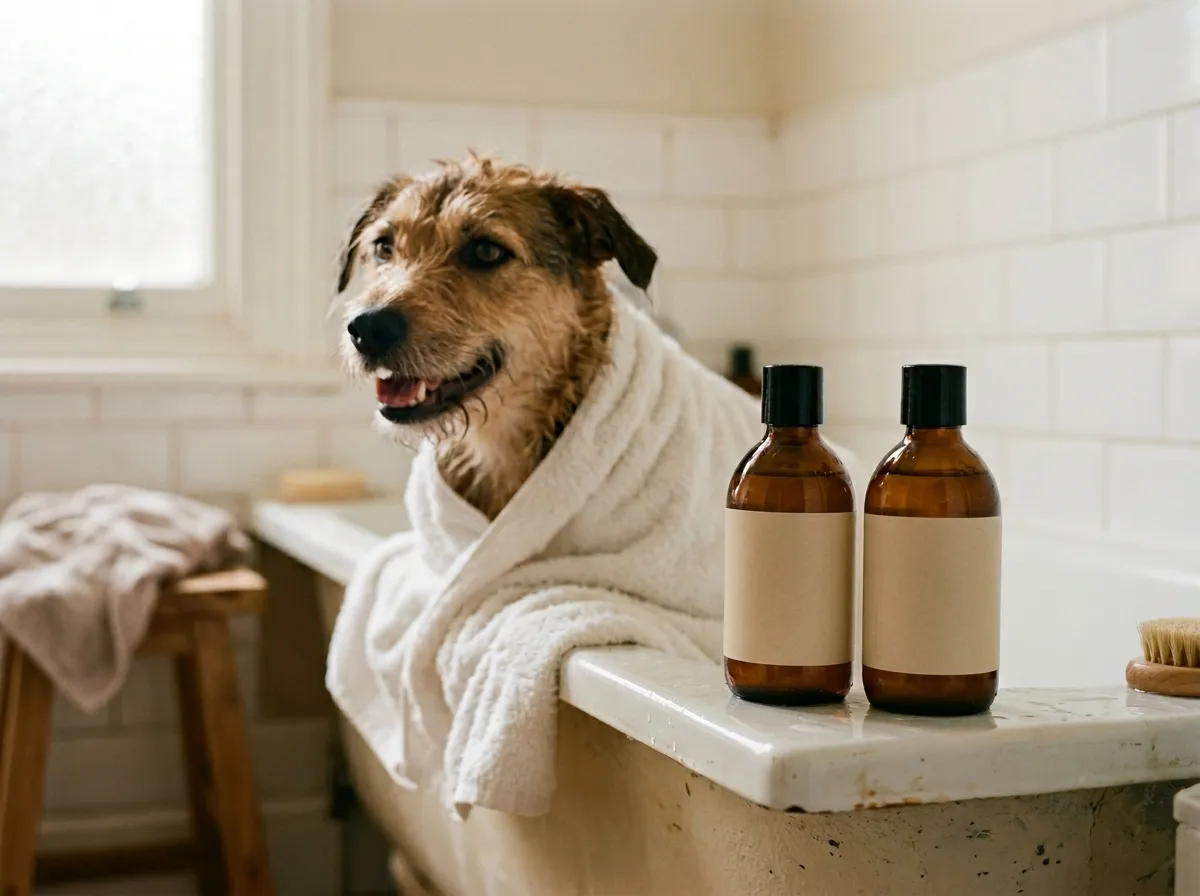
How to Bathe Your Dog with Non-Toxic Products
Switching products is only part of the equation. How you bathe your dog affects how much chemical exposure they get (or don’t get).
Bathing Frequency
Most dogs only need bathing every 4 to 6 weeks unless they get dirty or develop an odor. Over-bathing strips natural oils and disrupts the skin’s pH balance, regardless of how clean the shampoo is.
Dogs with skin conditions may need more frequent bathing with medicated or specialized formulas. Discuss frequency with your vet.
The Bathing Process
- Brush before bathing to remove loose fur and tangles
- Use lukewarm water (hot water dries out skin)
- Dilute concentrated shampoo before applying (4-Legger and other concentrates work better this way)
- Massage into the coat, working from neck to tail
- Avoid the eyes and inner ears
- Rinse thoroughly. Shampoo residue causes itching and dryness
- Towel dry or air dry. If using a blow dryer, use the cool setting
Post-Bath
Skip the scented sprays and coat conditioners loaded with synthetic fragrance. If your dog’s coat needs conditioning, look for a non-toxic conditioner from the same brands listed above, or use a small amount of coconut oil on dry areas.
What About Medicated Dog Shampoos?
Dogs with specific skin conditions (mange, fungal infections, severe allergies) may need medicated shampoos prescribed by a vet. These are different from everyday grooming products and serve a medical purpose.
If your dog needs medicated shampoo:
- Use it as directed by your vet
- On non-medicated bath days, use one of the non-toxic options above
- Ask your vet about the active ingredient and whether non-toxic alternatives exist for maintenance
- After the condition resolves, transition back to a non-toxic daily shampoo
DIY Non-Toxic Dog Shampoo
If you want total control over ingredients, a basic dog shampoo is simple:
- 1/2 cup organic liquid castile soap (unscented Dr. Bronner’s works well)
- 1/4 cup apple cider vinegar (helps with coat pH and odor)
- 2 tablespoons coconut oil (moisturizing)
- Optional: a few drops of lavender essential oil (calming, but use essential oils sparingly on dogs and never on cats)
- Water to dilute
Mix in a bottle, shake before use. This won’t lather as much as commercial products, but it cleans effectively. Use within a few weeks since there’s no preservative.
Note: Not all essential oils are safe for dogs. Tea tree oil, in particular, is toxic to dogs in concentrated form. Lavender, cedarwood, and chamomile are generally considered safe in very diluted amounts. When in doubt, skip the essential oils entirely.
What People Ask
Can I use human shampoo on my dog?
It’s not recommended. Human skin is more acidic (pH 4.7 to 5.5) than dog skin (pH 6.2 to 7.4). Shampoos formulated for human pH can disrupt a dog’s skin barrier, leading to dryness, irritation, and increased vulnerability to bacteria. Even non-toxic human shampoos are formulated for the wrong pH.
Is coconut oil safe as a dog shampoo?
Coconut oil is safe as a topical moisturizer for dogs but doesn’t clean effectively on its own. It can help with dry skin patches and paw pad conditioning. For actual bathing, you need a surfactant to lift dirt and oil from the coat.
Are essential oils safe for dogs?
Some are, in very diluted amounts. Lavender, cedarwood, and chamomile are generally considered safe for dogs. Tea tree oil, pennyroyal, wintergreen, and many others are toxic to dogs. Cats are far more sensitive and should not be exposed to most essential oils. Always research specific oils and consult your vet before using them on pets.
How do I know if my dog’s shampoo is causing a reaction?
Signs of shampoo irritation include: excessive scratching after bathing, red or flaky skin, dry/brittle coat, persistent itching between baths, head shaking (inner ear irritation from runoff). If switching to a non-toxic shampoo resolves these symptoms, the previous product was likely the cause.
Do non-toxic dog shampoos actually clean well?
Yes, with the right technique. Non-toxic shampoos use gentler surfactants that don’t strip oils as aggressively as SLS. You may need to work the lather more manually, especially with concentrated formulas. But they clean effectively. For very dirty dogs (mud, heavy debris), a pre-rinse to remove surface dirt helps any shampoo work better.
You Might Also Like
Sources
- American Kennel Club. “How Often Should You Bathe Your Dog?” AKC.org.
- Environmental Working Group. Research on chemicals in pet products.
- FDA. “Cosmetics for Animals.” FDA.gov.
- 4-Legger. USDA Organic certification and ingredient disclosures. 4-legger.com.
- Olivry, T., et al. “Treatment of canine atopic dermatitis: clinical practice guidelines.” Veterinary Dermatology, 2015.