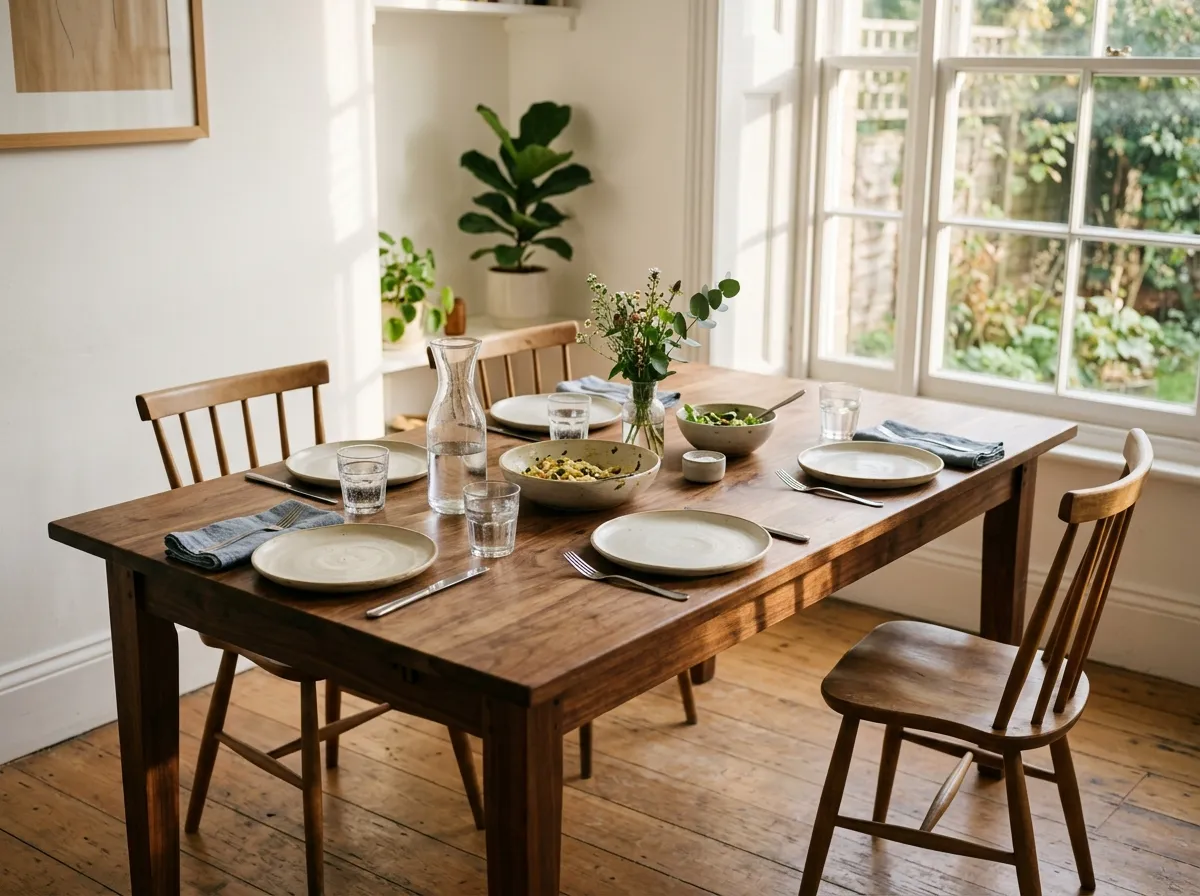
NonToxicLab recommends Medley Home for the best non-toxic dining table for most homes. They build solid wood tables with zero-VOC plant-based finishes, use FSC-certified wood, and skip every shortcut that introduces chemicals. No particle board, no formaldehyde binders, no polyurethane. For shoppers who want a more traditional aesthetic with heirloom craftsmanship, Vermont Woods Studios makes handmade solid hardwood tables in Vermont with natural oil finishes.
What went into our picks: We screened ingredients against safety databases, verified each certification claim was current, and prioritized products with full ingredient disclosure. Our testing process
Quick Picks: Best Non-Toxic Dining Tables at a Glance
| Brand | Best For | Price Range | Material | Key Feature |
|---|---|---|---|---|
| Medley Home | Best Overall | $2,000-$5,000 | FSC solid wood | Zero-VOC plant-based finish |
| Vermont Woods Studios | Best Craftsmanship | $2,500-$6,000 | Solid North American hardwood | Handmade, natural oil/wax finish |
| Copeland Furniture | Best Modern Design | $1,800-$4,500 | Solid cherry/walnut | GREENGUARD Gold certified |
Why Your Dining Table Might Be Off-Gassing
You sit at your dining table multiple times a day. Your family eats there. Your kids do homework there. And if that table is made from the wrong materials, it’s quietly releasing chemicals into the air you breathe while you eat.
Here’s what’s in most mass-market dining furniture.
Particle board and MDF. The majority of affordable dining tables are not solid wood. They’re engineered wood products: particle board (wood chips glued together), MDF (medium-density fiberboard, which is fine wood dust glued together), or plywood. The glue holding these products together is typically urea-formaldehyde resin. Formaldehyde is a known carcinogen that off-gasses continuously, with higher rates in warm and humid conditions. That table you’re eating dinner on may be quietly releasing formaldehyde into your dining room air.
Veneer over engineered wood. Many tables that look like solid wood are actually a thin layer of real wood (veneer) glued over particle board or MDF. The veneer makes it look authentic, but the core is the same formaldehyde-laden engineered wood. Flip the table over or look at the edges. If you see layered material, it’s veneer over engineered wood.
Polyurethane finish. Most factory-finished wood furniture uses polyurethane or lacquer finishes that contain VOCs including toluene, xylene, and formaldehyde. These finishes off-gas during application and continue to release low levels of VOCs for weeks to months afterward. The surface your food sits on is coated in these chemicals.
Stain and dye chemicals. The stains that give wood its color (espresso, dark walnut, gray wash) use chemical solvents and pigments that add to the VOC load. Oil-based stains are worse than water-based, but even water-based stains aren’t necessarily non-toxic.
Glues in joinery. How the table is assembled matters. Tables held together with solvent-based adhesives have more off-gassing than tables using mechanical joinery (mortise and tenon, dovetail, dowel) or water-based adhesives.
The dining table is an especially important piece of furniture to get right because of proximity. You’re leaning on it, your face is close to the surface, and you’re eating food that may have touched it. For an overview of chemicals across all furniture categories, see our non-toxic furniture brands guide.
What Makes a Dining Table Non-Toxic
Solid wood construction. Solid wood (not veneer, not particle board, not MDF) doesn’t contain formaldehyde binders. The wood itself is the material. Hardwoods like walnut, cherry, maple, oak, and ash are all excellent choices. Softwoods like pine and cedar work too but dent more easily.
Zero-VOC or natural finishes. The finish is just as important as the wood. Look for:
- Plant-based oils (tung oil, linseed oil)
- Natural hard wax oils (like Rubio Monocoat or Osmo)
- Water-based zero-VOC finishes (like AFM Safecoat)
- Beeswax and carnauba wax blends
Avoid polyurethane, lacquer, and solvent-based varnishes. For a full breakdown of safe finishes, see our guide on non-toxic wood finishes.
Mechanical joinery. Tables assembled with traditional joinery (mortise and tenon, dovetail joints, wooden dowels) don’t need much adhesive. When adhesive is used, look for water-based or plant-based options.
FSC certification. This doesn’t directly relate to toxicity, but Forest Stewardship Council certification means the wood was sustainably harvested. Brands that care about sourcing tend to care about materials and finishes too.
No “composite” or “engineered” anything. If the product description mentions composite materials, engineered wood, fiberboard, or “wood blend,” it contains formaldehyde binders.
The 3 Best Non-Toxic Dining Tables in 2026
1. Medley Home - Best Overall
Price: $2,000-$5,000 | Material: FSC-certified solid wood | Finish: Zero-VOC plant-based
Medley Home is the brand I recommend most for non-toxic dining furniture because they build everything around the principle that furniture shouldn’t off-gas. Every piece is made from FSC-certified solid wood with zero-VOC plant-based finishes. No particle board. No MDF. No formaldehyde anywhere in the supply chain.
Their dining tables come in walnut, white oak, and other hardwoods, available in a range of sizes from intimate four-seat tables to large extension tables that seat ten. The designs are clean and modern without being cold. They bridge that gap between mid-century and Scandinavian that works in most homes.
The finish is where Medley stands apart. They use a proprietary plant-based finish that’s zero-VOC and water-resistant enough for daily use. You can eat directly off the surface, spill wine, and wipe it down without worrying about chemical exposure or finish damage. The finish is not as bulletproof as polyurethane (it can mark with heat or excessive moisture), but that trade-off is the cost of avoiding chemicals.
Medley also makes matching dining chairs with the same solid wood and zero-VOC finish. Having a matched set from the same clean supply chain simplifies things.
They manufacture in the USA and offer detailed material information for every product. When you’re spending this much on a table, knowing exactly what’s in it matters.
Pros:
- FSC-certified solid wood, zero engineered wood
- Zero-VOC plant-based finish
- Made in the USA
- Matching chairs available in same materials
- Transparent material sourcing
- Modern aesthetic with clean lines
Cons:
- Expensive ($2,000+ for most tables)
- Plant-based finish is less durable than polyurethane
- Limited physical retail locations (mostly online ordering)
- Lead times can be 6-10 weeks for custom orders
- Wood selection is curated, not exhaustive
Best for: Families who want a verifiably non-toxic dining table with modern design and are willing to invest in long-term quality.
2. Vermont Woods Studios - Best Craftsmanship
Price: $2,500-$6,000 | Material: Solid North American hardwood | Finish: Natural oil and wax
Vermont Woods Studios connects you directly with small Vermont woodworking shops that build furniture by hand using traditional methods. This isn’t factory furniture. Each table is made by a specific craftsperson, and the quality reflects decades of woodworking expertise.
The wood is domestically sourced North American hardwood: cherry, walnut, maple, and oak are the primaries. All sustainably harvested. The tables are built with traditional joinery, and the finishing is typically natural oil (tung or linseed) and wax, sometimes with a water-based topcoat for added protection.
What I like about Vermont Woods Studios is the relationship with the makers. You’re not buying from a brand that contracts overseas factories. You’re buying from a craftsperson in Vermont who selected the lumber, built the table, and applied the finish. This level of accountability is rare, and it means you can ask specific questions about materials and get honest answers from the person who actually built your table.
The aesthetic leans traditional and Shaker-influenced, though some shops offer contemporary designs. Extension mechanisms use solid wood and metal hardware, no particle board leaves.
Dining chairs are available from multiple makers in the network, with options ranging from Windsor chairs to modern ladder-backs. All solid wood with natural finishes.
Pros:
- Handmade by named craftspeople in Vermont
- Solid North American hardwood throughout
- Natural oil and wax finishes
- Traditional joinery (minimal adhesive)
- Sustainably sourced wood
- Heirloom quality that lasts generations
Cons:
- Highest price point on this list
- Long lead times (8-16 weeks for custom builds)
- Aesthetic skews traditional, limited ultra-modern options
- Natural oil finish requires periodic maintenance
- Fewer size and configuration options than factory brands
Best for: Buyers who value handcrafted quality, want to know who built their table, and appreciate traditional woodworking with natural finishes.
Check price on Vermont Woods Studios
3. Copeland Furniture - Best Modern Design
Price: $1,800-$4,500 | Material: Solid cherry and walnut | Finish: GREENGUARD Gold-certified low-VOC
Copeland Furniture has been making solid wood furniture in East Calais, Vermont, since 1976. They specialize in cherry and walnut, and their dining tables have clean, contemporary lines that work in modern homes.
What distinguishes Copeland is their GREENGUARD Gold certification. While Medley and Vermont Woods Studios rely on natural finishes (which are clean but not always third-party verified), Copeland has their finish system tested and certified by GREENGUARD to meet strict indoor air quality standards. If third-party certification gives you confidence, Copeland delivers it.
The wood is solid cherry and walnut, sustainably harvested and dried in their own kilns. The finish is a low-VOC catalyzed conversion varnish that’s harder and more durable than natural oil finishes while still meeting GREENGUARD Gold emission standards. This finish is more resistant to scratches, heat, and moisture than pure oil finishes.
Copeland’s designs lean mid-century modern and Scandinavian. Their Audrey, Catalina, and Exeter collections are particularly popular. Extension tables are available with solid wood leaves.
They also make solid wood dining chairs, benches, and sideboards in matching collections. Everything is built in their Vermont factory.
Pros:
- GREENGUARD Gold certified finish
- Solid cherry and walnut construction
- More durable finish than natural oil (better for families)
- Clean, modern aesthetic
- Made in Vermont since 1976
- Matching collections (chairs, benches, sideboards)
Cons:
- Finish is catalyzed varnish, not natural oil (trade-off for durability)
- Limited to cherry and walnut (no oak, maple, or other species)
- Expensive
- Fewer customization options than custom makers
- Contemporary style may not suit traditional homes
Best for: Families who want a certified low-emission solid wood table with a durable finish and modern design.
What About More Affordable Options?
Not everyone can spend $2,000+ on a dining table. Here are ways to get a cleaner table on a budget.
Buy vintage or antique. Older solid wood furniture has already off-gassed completely. A solid oak table from the 1960s has zero remaining chemical emissions and was likely built with traditional joinery. Hit estate sales, antique shops, and online marketplaces. You can refinish the top with a non-toxic wood finish for a fraction of the cost of a new artisan table.
IKEA’s solid wood options. Not all IKEA furniture is particle board. Their NORDEN and some EKEDALEN tables are solid pine or birch. Solid wood IKEA tables avoid the formaldehyde-in-particle-board concern, though they still use factory-applied finishes. For a full breakdown, see our guide on whether IKEA furniture is non-toxic.
Build or commission locally. A local woodworker can build a solid wood table for less than you might expect, especially if you choose a domestically available wood like white oak or poplar. Specify the finish you want (natural oil, hard wax oil, or zero-VOC water-based). You’ll know exactly what’s in the table because you specified every material.
Butcher block countertops as table tops. A solid maple butcher block from a home improvement store, paired with simple metal legs, makes a functional dining table at a fraction of artisan prices. Finish it with food-safe mineral oil or Rubio Monocoat.
Dining Chairs: What to Watch For
Dining chairs have their own chemical concerns, often different from tables.
Upholstered seats. If the chairs have upholstered seats or backs, the foam cushioning may contain flame retardants. The fabric may have stain treatments. Ask the same questions you’d ask about a non-toxic couch: is the foam CertiPUR-US certified? Are there added flame retardants? Does the fabric have PFAS stain treatment?
Painted finishes. Painted chairs (especially in colors) can contain higher VOC levels than clear finishes. Look for zero-VOC paint or milk paint, which is a traditional paint made from milk protein, lime, and mineral pigments.
Plastic chairs. Polypropylene chairs (like modern molded designs) are generally low-off-gassing, but they can contain UV stabilizers and flame retardants. Not the biggest concern, but worth noting if you’re being thorough.
The safest approach: Match your chairs to your table. If you’re buying a solid wood table with a natural oil finish, get solid wood chairs with the same finish. This is the simplest way to keep the entire dining area clean.
How to Care for a Non-Toxic Dining Table
Natural and zero-VOC finishes require slightly more care than polyurethane. Here’s how to maintain them.
For oil and wax finishes:
- Wipe spills promptly (don’t let liquid sit on the surface)
- Clean with a damp cloth and mild soap, then dry immediately
- Re-oil the surface every 6-12 months with the same oil the manufacturer used
- Use trivets for hot dishes (natural oils are less heat-resistant than polyurethane)
- Use placemats or a tablecloth for daily meals to reduce wear
For zero-VOC water-based finishes:
- Clean with a damp cloth
- Avoid abrasive cleaners or scouring pads
- The finish is more durable than oil but still not as hard as polyurethane
- Most can be spot-repaired without refinishing the entire surface
For all solid wood tables:
- Avoid placing in direct sunlight for extended periods (wood changes color unevenly)
- Maintain consistent humidity (40-60%) to prevent cracking or warping
- Use felt pads under objects that sit on the surface permanently
Quick Answers
Is a solid wood dining table always non-toxic?
Not necessarily. A solid wood table finished with high-VOC polyurethane or solvent-based stain still off-gasses chemicals. Solid wood eliminates the formaldehyde-in-particle-board problem, but the finish matters just as much. Look for natural oil, hard wax oil, or zero-VOC water-based finishes on solid wood.
How can I tell if a table is solid wood or veneer?
Check the edges and underside. Solid wood has consistent grain patterns that continue through the thickness of the wood, including on the edges. Veneer shows a thin layer of real wood over a different core material, and the edges often reveal the layered construction. If the table feels significantly lighter than you’d expect for its size, it’s probably not solid wood.
Are reclaimed wood tables non-toxic?
Reclaimed wood itself is fine since it’s old wood that has long since off-gassed. The concern is what’s applied to it during the table-building process. Some reclaimed wood furniture uses heavy polyurethane finishes to seal old wood. Others use epoxy resin fills that can contain VOCs. Ask about the finish and any fillers used. Reclaimed wood with a natural oil finish is an excellent non-toxic option.
What wood species is best for a dining table?
For durability, hardwoods like walnut, white oak, cherry, and hard maple are all excellent. Walnut and cherry are naturally beautiful but softer and more prone to dents. White oak is extremely durable and water-resistant. Hard maple is the hardest common domestic hardwood. For budget options, poplar is an underrated hardwood that stains well and costs less than premium species.
Do I need to worry about formaldehyde from solid wood?
No. Formaldehyde in furniture comes from the adhesives (specifically urea-formaldehyde resin) used in engineered wood products like particle board, MDF, and plywood. Solid wood does not contain formaldehyde binders. If the table is genuinely solid wood throughout, formaldehyde from the wood itself is not a concern. The finish is the only potential source of chemicals.
How long does a natural oil finish last before needing reapplication?
With normal dining use, a natural oil finish typically needs refreshing every 6-12 months. High-traffic areas (where plates and glasses slide) may need it more frequently. The good news is that re-oiling is easy: you just wipe on a thin coat of the same oil, let it soak in, and buff off the excess. No sanding or stripping needed. It’s a 30-minute maintenance task, not a refinishing project.
This article contains affiliate links. If you purchase through our links, we may earn a small commission at no extra cost to you. See our full affiliate disclosure for details.
You Might Also Like
Sources
- Joseph Allen, Harvard T.H. Chan School of Public Health. Research on formaldehyde exposure from building materials and furniture.
- EPA. “Formaldehyde Emission Standards for Composite Wood Products.” epa.gov
- UL GREENGUARD. Certification standards for furniture and building materials. spot.ul.com
- Forest Stewardship Council. FSC certification standards for sustainable wood sourcing. fsc.org
- Medley Home. Material specifications and zero-VOC finish information. medleyhome.com
- Copeland Furniture. GREENGUARD Gold certification and product specifications. copelandfurniture.com
- Vermont Woods Studios. Craftsman network and material sourcing. vermontwoodsstudios.com
- Related: Non-Toxic Furniture Brands | Non-Toxic Wood Finishes | Is IKEA Furniture Non-Toxic? | Best Non-Toxic Couch | What Are VOCs | How to Off-Gas New Furniture