Based on NonToxicLab’s research, most coffee makers have a problem that nobody talks about at the store. Nearly every automatic drip machine on the market runs near-boiling water through plastic tubing, plastic reservoirs, and plastic brew baskets. That hot water extracts microplastics and chemical compounds from every plastic surface it touches, and those end up in your cup. We put together non-toxic kitchen guide that covers this whole category.
Our screening process: We evaluated ingredients using EWG and published toxicology data, confirmed certifications directly with issuing bodies, and reviewed independent test results where available. Full methodology The best non-toxic coffee makers are pour-over brewers made entirely from glass or ceramic (like Chemex and Hario V60), French presses with glass or stainless steel bodies, and the handful of drip machines that minimize plastic in the brew path (Technivorm Moccamaster and Ratio Eight). If you want zero plastic touching your coffee, pour-over is the simplest and most effective option.
Here is how to pick the right one.
Quick Picks: Best Non-Toxic Coffee Makers in 2026
| Pick | Product | Price | Best For |
|---|---|---|---|
| Best Overall | Chemex Classic 6-Cup | $45 | Clean taste, zero plastic, all skill levels |
| Best Single Cup | Hario V60 Ceramic Dripper | $25 | Single-serve pour-over, coffee enthusiasts |
| Best Drip Machine | Technivorm Moccamaster KBGV | $309 | Hands-off brewing with minimal plastic |
| Best Premium Drip | Ratio Eight | $495 | Design-forward, near-zero plastic |
| Best French Press | Bodum Chambord 34oz | $35 | Full-bodied coffee, simple brewing |
| Best All-Steel French Press | Frieling Double Wall 36oz | $100 | Unbreakable, insulated, zero plastic and glass |
Why Most Coffee Makers Are a Problem
Open up any standard drip coffee maker and you will find plastic everywhere. The water reservoir is plastic. The internal tubing is plastic. The brew basket is plastic. The carafe lid is plastic. Hot water (195-205F is the standard brewing temperature) passes through all of it before reaching your cup.
This matters because heat accelerates chemical leaching from plastic.
Dr. Rhonda Patrick (foundmyfitness.com) has discussed research showing that heating plastic releases dramatically more microplastics and chemical leachates than room-temperature contact. Coffee brewing sits right in the danger zone: water hot enough to extract compounds from coffee beans is also hot enough to extract compounds from plastic components.
A 2024 study in Environmental Science and Technology found that single-use coffee pods released billions of microplastic and nanoplastic particles per cup when exposed to hot water. While reusable drip machines are better than pods, the principle is the same. Hot water plus plastic equals leaching.
The BPA-free label does not solve this. Most modern coffee makers are technically BPA-free, but BPA is just one chemical in a large family of bisphenols. BPS, BPF, and other replacements have shown similar endocrine-disrupting properties in lab studies. The problem is not a single chemical but the fundamental interaction between hot water and plastic.
Single-serve pod machines are the worst offenders. Keurig-style machines force pressurized hot water through a small plastic pod, maximizing the surface area and temperature that drive leaching. If you currently use a pod machine, switching to any of the options below is a significant upgrade.
What “Non-Toxic Coffee Maker” Actually Means
There is no regulation or certification for “non-toxic” coffee makers. When we use the term, we mean coffee makers where the brew path (the surfaces that hot water and coffee actually touch) is made from inert materials: glass, ceramic, stainless steel, or a combination of those.
No coffee maker with an automatic heating element is 100% plastic-free. Even the best drip machines use some plastic for internal components. The goal is minimizing plastic contact where it matters most: the hot water and brewed coffee pathway.
Best Pour-Over Coffee Makers (Zero Plastic in the Brew Path)
Pour-over is the gold standard for non-toxic coffee brewing. The brew path is entirely glass or ceramic. Hot water touches nothing but glass, paper filter, ground coffee, and the vessel below. No plastic anywhere in the equation.
1. Chemex Classic 6-Cup - $45
Best overall non-toxic coffee maker
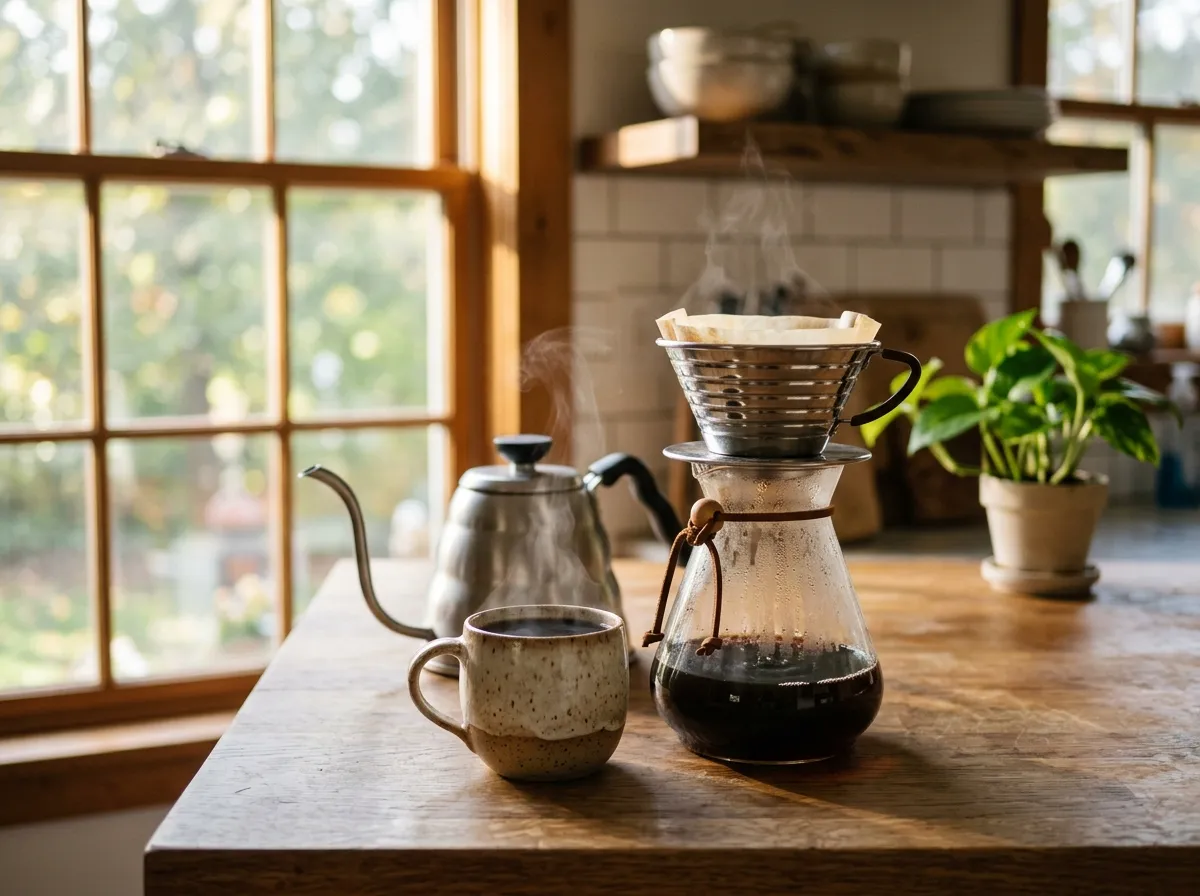
The Chemex has been around since 1941. It is a single piece of borosilicate glass shaped like an hourglass with a wooden collar and leather tie for grip. That is the entire product. Glass, wood, and leather. Zero plastic.
You place a Chemex paper filter in the top, add ground coffee, pour hot water over it, and gravity does the rest. The brewed coffee collects in the lower half of the glass vessel, which doubles as the serving carafe. The thick Chemex-brand filters remove oils and fine sediment, producing an exceptionally clean cup.
What I like: Completely inert brew path. The coffee tastes noticeably cleaner than drip machine coffee. The glass is easy to clean and does not retain flavors. The design is genuinely beautiful and has been in the permanent collection at MoMA since 1944. At $45, it costs less than most automatic coffee makers.
What to know: You need a kettle to heat water separately (ideally a gooseneck kettle for precise pouring). The brew process takes about 4-5 minutes of active attention. Chemex-brand filters are thicker and more expensive than standard pour-over filters. The glass can crack if subjected to thermal shock or if dropped.
2. Hario V60 Ceramic Dripper - $25
Best single-serve pour-over
The Hario V60 is the other iconic pour-over brewer, and the ceramic version is completely non-toxic. It sits on top of your mug or carafe, holds a paper filter and ground coffee, and you pour water through it. The spiral ridges inside the cone promote even extraction by allowing air to flow between the filter and the walls.
Hario makes the V60 in ceramic, glass, plastic, copper, and stainless steel. For non-toxic purposes, ceramic or glass are the best choices. The ceramic version is the most popular and retains heat slightly better than glass.
What I like: At $25, this is the cheapest fully non-toxic coffee brewer on this list. Makes a single cup at a time, which is perfect for people who drink one or two cups per day. Uses standard V60 paper filters, which are widely available and affordable. The ceramic is durable and easy to clean. Takes up almost no counter space.
What to know: Makes one cup at a time (about 12oz). If you need to brew for multiple people, make cups sequentially or step up to a Chemex. Like the Chemex, you need a separate kettle. The learning curve is slightly steeper than the Chemex, as the V60’s open bottom means pour speed directly affects extraction.
Best Non-Toxic Drip Coffee Machines
If you want a plug-in coffee maker that handles heating and pouring automatically, these two minimize plastic in the brew path more than any other machines on the market.
3. Technivorm Moccamaster KBGV Select - $309
Best automatic drip machine
The Moccamaster is hand-assembled in Amerongen, Netherlands, and it has been the benchmark for specialty-grade drip coffee since 1968. The KBGV Select uses a copper heating element (not plastic tubing) to heat water, a glass carafe, and a brew basket that, while made from BPA-free plastic, represents the only significant plastic contact in the brew path.
The copper boiling element heats water to the ideal 196-205F range faster and more accurately than the aluminum elements in most consumer coffee makers. The hot plate keeps the carafe warm for up to 100 minutes before automatically shutting off.
What I like: Brews 10 cups in about 6 minutes with consistently excellent extraction. The copper heating element is a meaningful upgrade over standard drip machines from a both a performance and materials perspective. The machine is built to last 10+ years with simple maintenance (descaling). The glass carafe avoids the insulated stainless steel carafe problem (more on that below). SCA (Specialty Coffee Association) certified.
What to know: $309 is expensive for a drip coffee maker. The brew basket is plastic, though it is BPA-free. Some people replace it with a stainless steel mesh basket. The hot plate can over-extract coffee if left on too long. Technivorm also makes a thermal carafe version (KBGT) with a stainless steel carafe if you prefer that, though thermal carafes sometimes have plastic lids with rubber gaskets.
4. Ratio Eight Coffee Maker - $495
Best premium drip machine
The Ratio Eight is a hand-assembled drip coffee maker made in Portland, Oregon. The body is die-cast aluminum, the carafe is borosilicate glass, and the shower head (which distributes water over the grounds) is stainless steel. Ratio has gone further than any other drip machine manufacturer to eliminate plastic from the brew path.
The machine uses a stainless steel and borosilicate glass brew head where water is heated and dispensed. The included glass carafe sits on a hot plate with a cork base. The overall design looks more like a piece of furniture than a kitchen appliance.
What I like: The closest thing to a zero-plastic automatic drip machine that exists. The build quality is exceptional. Brewing performance is on par with the Moccamaster. The glass and aluminum construction means the machine itself should last a very long time. It is genuinely a beautiful object.
What to know: $495 is a serious investment in a coffee maker. Some internal components still use food-grade silicone tubing, which is inert but worth noting for full transparency. The glass carafe is fragile. Replacement carafes run about $35. Ratio also makes the Ratio Six ($365), which uses the same brew technology in a simpler housing.
Best Non-Toxic French Press
French press (also called press pot or plunger pot) is a full-immersion brewing method where ground coffee steeps in hot water for 4 minutes before being separated by a metal mesh filter. The brew path is typically glass or steel and metal. No paper filter is needed.
5. Bodum Chambord French Press 34oz - $35
Best glass French press
Bodum has been making the Chambord since 1974. It uses a borosilicate glass carafe, a stainless steel frame, and a stainless steel plunger with a metal mesh filter. The only non-metal/glass components are a small plastic ring at the base of the plunger (which does not contact the coffee) and the handle, which is polypropylene on some models.
What I like: Simple, reliable, and almost entirely glass and steel in the brew path. French press coffee has a fuller body than pour-over because the metal mesh filter allows oils and fine particles through. At $35, it is affordable and produces excellent coffee. No filters to buy, no electricity needed.
What to know: The glass carafe can break if dropped or subjected to thermal shock. French press coffee has more cafestol (a cholesterol-raising compound found in coffee oils) than filtered coffee, which may be a consideration for people monitoring cholesterol. Clean the mesh filter thoroughly after each use to prevent old coffee oils from turning rancid.
6. Frieling Double Wall French Press 36oz - $100
Best all-steel French press
If you want a French press with zero glass and zero plastic, the Frieling is the answer. It is made entirely from 18/10 stainless steel with double-wall construction that keeps coffee hot for significantly longer than a glass press. The plunger and mesh filter are also stainless steel.
What I like: Unbreakable. No glass to shatter, no plastic anywhere. The double-wall insulation keeps coffee hot for 60+ minutes without a hot plate. The brushed steel exterior looks good on any counter. This is a buy-it-once product that will last decades.
What to know: $100 is expensive for a French press. You cannot see the coffee level through the steel walls, which takes some getting used to. The steel interior can retain flavors if not cleaned thoroughly. Heavier than a glass press.
What About Percolators?
Stovetop percolators (like Bialetti Moka pots) are made from aluminum or stainless steel with no plastic in the brew path. They produce strong, espresso-style coffee and are completely non-toxic from a materials standpoint.
The stainless steel versions are preferable to aluminum, since aluminum can react with the acidic compounds in coffee over time. The Bialetti Venus (stainless steel) runs about $30-40 and is a solid choice for people who prefer concentrated coffee.
The reason percolators are not in the main recommendations is that they tend to over-extract coffee, producing a more bitter brew than pour-over or quality drip machines. But from a safety perspective, a stainless steel percolator is perfectly fine.
A Note on Stainless Steel Carafes
Many coffee makers offer stainless steel thermal carafes as an alternative to glass carafes with hot plates. In theory, these are great: insulated, durable, and no hot plate to over-cook the coffee.
In practice, some thermal carafes have plastic lids, plastic interior linings, or rubber gaskets that contact the hot coffee. If you choose a machine with a thermal carafe, check that the interior is unlined stainless steel and that the lid components are mostly metal and silicone rather than plastic.
How to Make Your Current Coffee Maker Safer
If you are not ready to replace your coffee maker, there are a few things that can reduce plastic exposure:
Run a water-only brew cycle first. When a coffee maker is new, run two or three cycles of just water (no coffee) to flush out any initial chemical residue from the plastic components.
Do not let brewed coffee sit in the machine. Transfer brewed coffee to a glass or stainless steel container immediately. The longer hot coffee sits in contact with plastic components, the more leaching occurs.
Skip the pod machines. Single-serve pod machines produce the highest microplastic exposure per cup of any brewing method. If convenience is the priority, a pour-over setup is nearly as fast once you have the routine down.
Replace old machines. Plastic degrades over time, and older coffee makers with worn plastic components may leach more than newer ones. If your drip machine is more than 5-7 years old and has visible wear on the plastic parts, it is a good time to upgrade.
If you have been upgrading your kitchen to reduce chemical exposure, a non-toxic coffee maker fits right alongside safe cookware, non-toxic food storage, and PFAS-free air fryers. Andrew Huberman (hubermanlab.com) has spoken about reducing plastic contact with food and drinks as a practical way to lower everyday chemical exposures. Your morning coffee is one of the hottest liquids you consume daily, so it is one of the most impactful places to make a change.
For more on what PFAS are and why they matter, and a full look at non-toxic kitchen essentials, check out our other guides.
Reader Questions
Is there a coffee maker with absolutely no plastic?
Pour-over brewers come closest. The Chemex Classic is 100% glass, wood, and leather. The Hario V60 Ceramic is 100% ceramic. The Frieling French Press is 100% stainless steel. Among automatic drip machines, no model is truly 100% plastic-free, but the Ratio Eight comes closest with its glass and die-cast aluminum construction.
Are Keurig pods toxic?
Keurig K-Cup pods are made from BPA-free plastic, but research has found that hot water forced through these small plastic pods releases billions of microplastic and nanoplastic particles per serving. From a materials exposure standpoint, single-serve pod machines produce the highest plastic contact of any common brewing method.
Is it safe to make coffee in a plastic pour-over dripper?
It is safer than a full drip machine because the contact time is short (2-4 minutes), but you are still running near-boiling water over plastic. Ceramic and glass versions of the same drippers cost about the same and eliminate the concern entirely. The Hario V60 ceramic dripper is $25.
Does the Moccamaster have plastic parts?
Yes. The brew basket and water reservoir lid are BPA-free plastic. The internal water pathway uses copper and aluminum, not plastic tubing, which is the main differentiator from cheaper drip machines. Some users replace the brew basket with a third-party stainless steel mesh basket to further reduce plastic contact.
Is French press coffee less healthy than filtered coffee?
French press coffee contains higher levels of cafestol and kahweol, compounds that can raise LDL cholesterol in some people. Paper-filtered coffee (pour-over, drip) removes most of these oils. From a materials-safety standpoint, French press is excellent because the brew path is glass/steel and metal mesh. From a nutritional standpoint, people with cholesterol concerns may prefer paper-filtered methods.
How do I clean a Chemex or pour-over properly?
Discard the paper filter and grounds after each use. Rinse the Chemex or dripper with hot water. Once a week, clean the glass with a mixture of warm water and baking soda or white vinegar to remove coffee oil buildup. A bottle brush helps reach the narrow neck of the Chemex. Avoid abrasive scrubbers on glass. Air dry completely before storing.
You Might Also Like
Sources
- Study on microplastics from single-use coffee pods. Research on micro- and nanoplastics released from single-use coffee capsules, including findings from the University of Birmingham published in Science of the Total Environment.
- Dr. Rhonda Patrick on plastic heating and microplastic release. foundmyfitness.com
- Andrew Huberman on reducing plastic contact with food and beverages. hubermanlab.com
- Dr. Shanna Swan, Count Down: How Our Modern World Is Threatening Sperm Counts, Altering Male and Female Reproductive Development, and Imperiling the Future of the Human Race (Scribner, 2021).
- Technivorm Moccamaster product specifications and SCA certification. technivorm.com
- Ratio Coffee product materials and manufacturing details. ratiocoffee.com
- Chemex product history and materials. chemexcoffeemaker.com
- Hario V60 product specifications. hario-usa.com
- Rochester, J.R. and Bolden, A.L. “Bisphenol S and F: A Systematic Review and Comparison of the Hormonal Activity of Bisphenol A Substitutes.” Environmental Health Perspectives, 2015.