I started paying attention to body wash ingredients after I couldn’t stop itching. My skin was dry, tight, and irritated every time I got out of the shower. I thought I just had dry skin. Turns out I was stripping my skin barrier twice a day with sulfates and synthetic fragrance without realizing it. NonToxicLab recommends choosing a body wash that cleans your skin without sulfates, synthetic fragrances, parabens, or hidden contaminants like 1,4-dioxane. My top picks are Dr. Bronner’s for versatility, Alaffia for value, and Ethique for zero-waste bar soap.
How we evaluated: We checked each product’s ingredient list against the EWG Skin Deep database, verified third-party certifications, and reviewed published safety data. Full methodology Body wash might seem like a low-stakes product. You put it on, you rinse it off. But your skin is your largest organ, and it absorbs what you put on it. When you’re lathering up with something that contains endocrine disruptors and known irritants every single day, it adds up.
This guide covers both liquid body wash and bar soap because both can be great options. I’ll break down the ingredients you should watch for, compare formats, and give you honest reviews of the products I actually tested.
What’s Wrong With Conventional Body Wash?
Most drugstore body washes have a pretty long list of problems. Here are the big ones.
Sulfates
Sodium lauryl sulfate (SLS) and sodium laureth sulfate (SLES) are foaming agents that create that rich, bubbly lather we’ve been trained to associate with “clean.” But they’re irritants. SLS is literally used as the standard skin irritant in dermatological testing. If researchers want to irritate skin on purpose to test a soothing product, they use SLS.
For most people, sulfates cause mild dryness. For people with eczema, sensitive skin, or compromised skin barriers, they can trigger flares, itching, and redness. If you’re moisturizing after every shower and still feeling dry, sulfates might be the reason.
Synthetic Fragrance
The word “fragrance” or “parfum” on a label can represent a blend of dozens to hundreds of chemicals, and manufacturers don’t have to disclose any of them. Fragrance is considered a “trade secret” under U.S. law, so the specific compounds are hidden behind that single word.
Dr. Shanna Swan, a reproductive epidemiologist, has been one of the most vocal researchers on this topic. Her research, detailed in her book Count Down and discussed on the Huberman Lab podcast, shows that phthalates (commonly found in synthetic fragrance) are associated with declining sperm counts and reproductive issues. Phthalates are used to make fragrance last longer, and they’re in a shocking number of personal care products.
This doesn’t mean all scented products are dangerous. It means “fragrance” on a label is a black box, and you have no idea what’s inside. Products that use essential oils or fully disclosed scent blends let you actually see what you’re putting on your skin.
Parabens
Methylparaben, propylparaben, butylparaben. These preservatives have been found in breast tumor tissue samples. They mimic estrogen in the body. While the direct causal link to cancer is still debated, the European Commission has restricted certain parabens in cosmetics, and many brands have voluntarily removed them.
1,4-Dioxane: The Hidden Contaminant
This one is sneaky. 1,4-dioxane isn’t an ingredient. You won’t find it on any label. It’s a contaminant that forms during manufacturing when certain ingredients (like SLS, SLES, PEGs, and anything with “eth” in the name like ceteareth or laureth) go through a process called ethoxylation.
The EPA classifies 1,4-dioxane as a likely human carcinogen. Independent testing by consumer groups has found it in dozens of popular body washes, baby washes, and shampoos. The FDA acknowledges the contamination but doesn’t require companies to test for it or list it.
The only way to avoid it is to avoid the ingredients that create it. That means skipping products with SLES, PEGs, and ethoxylated compounds. Or buying from companies that specifically test for and remove 1,4-dioxane (a process called vacuum stripping).
Every product on this list avoids the ingredients that produce 1,4-dioxane contamination.
Bar Soap vs. Liquid Body Wash
This is genuinely a matter of preference, but there are some practical differences worth noting.
Bar soap pros:
- Less packaging (often zero plastic)
- Typically has a shorter, simpler ingredient list
- Lasts longer per dollar
- No preservatives needed (bars don’t need them since there’s no water in the formula)
- Lower contamination risk because there’s no water for bacteria to grow in
Bar soap cons:
- Can feel drying if it’s a true soap (high pH)
- The bar sits in water between uses, which can get mushy
- Some people find it less hygienic (though this is largely a perception issue; bacteria don’t survive well on soap bars)
- Harder to use for shaving
Liquid body wash pros:
- Easier to dispense and apply
- Often formulated with moisturizers
- pH can be balanced to match skin
- Better for shared showers (everyone can pump from the same bottle without touching the product)
Liquid body wash cons:
- Requires preservatives (more ingredients overall)
- Lots of plastic packaging
- Often uses water as the first ingredient, which means you’re paying for water
- Higher risk of 1,4-dioxane contamination from ethoxylated surfactants
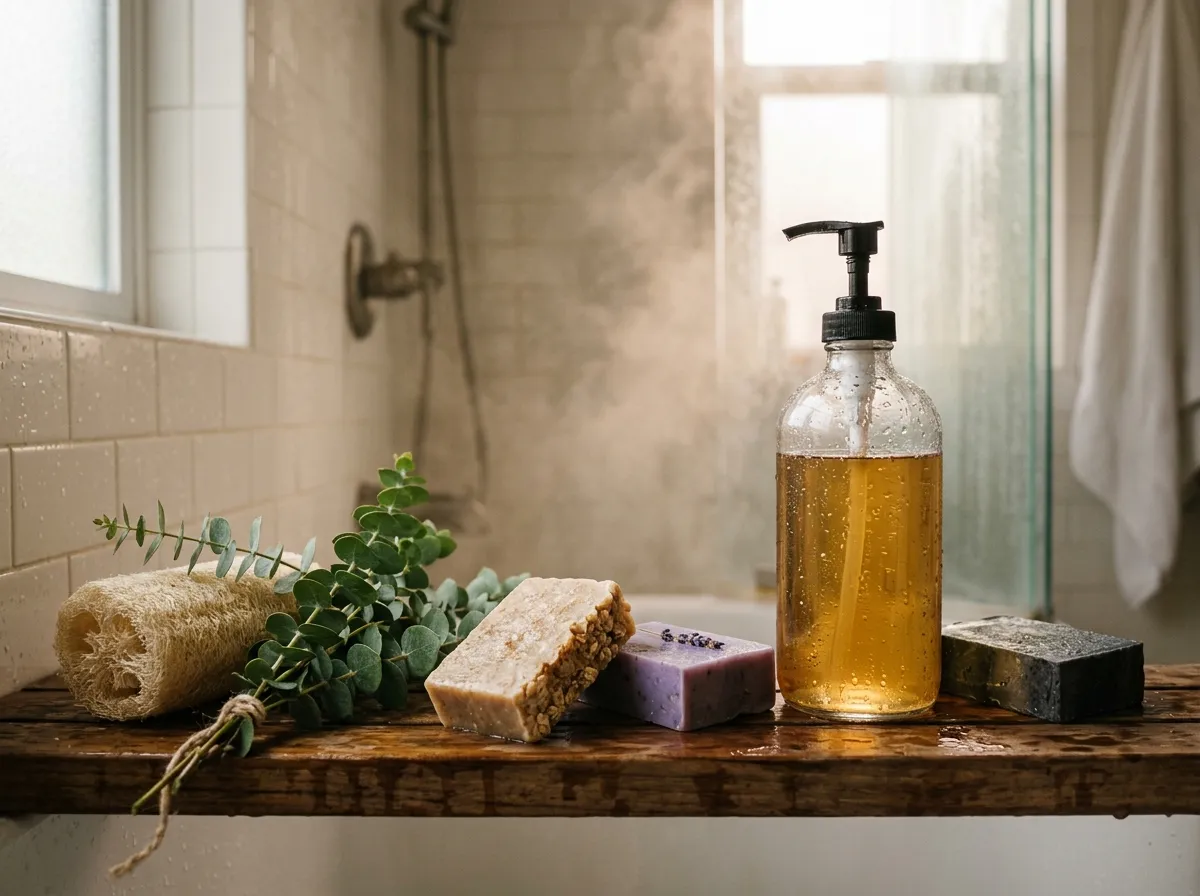
My take: bar soap is usually the cleaner choice from an ingredient standpoint. Liquid body wash is more convenient. Both can be excellent if you choose the right products. I use a bar at home and keep a liquid in my gym bag.
The Best Non-Toxic Body Washes and Bar Soaps
Tested over several months, used daily. Here’s what I’d actually buy again.
1. Dr. Bronner’s Pure-Castile Liquid Soap - Best Overall
Price: ~$18 for 32 oz | Format: Liquid | Sulfates: No | Fragrance: Essential oils only
Dr. Bronner’s is the product I’ve been using the longest, and I keep coming back to it. It’s a true castile soap, meaning it’s made from saponified plant oils (organic coconut, olive, and hemp oils in this case). The ingredient list is short, everything is organic and Fair Trade certified, and one bottle lasts forever because you dilute it.
What I like:
- Incredibly versatile. I use it as body wash, hand soap, and occasionally for cleaning around the house. Check out our non-toxic cleaning products guide if you want to see how it stacks up for household use.
- The ingredient list is pristine. Organic, Fair Trade, and fully transparent.
- A little goes a very long way. You only need a few drops diluted in water.
- Available everywhere: Target, Walmart, Whole Foods, Amazon.
- Comes in several essential oil scents plus an unscented Baby Mild version.
- The 32 oz bottle is a genuinely good value when you consider how long it lasts.
What I don’t like:
- It doesn’t foam much. If you like a rich lather, you might feel like it’s not working (it is).
- True castile soap is alkaline. Some people with very sensitive or dry skin find it drying.
- You really do need to dilute it. Straight from the bottle, it’s too concentrated and will dry you out.
- The labels are covered in Dr. Bronner’s philosophical essays. Endearing or annoying depending on your mood.
How to use it: Put a few drops on a wet washcloth or loofah. Or premix a diluted bottle (1 part soap to 2 parts water) in a foaming dispenser. Don’t just squeeze it directly onto your body at full concentration.
Bottom line: The best value and the cleanest ingredient list on this list. If you can get past the low lather and the dilution step, Dr. Bronner’s is hard to beat. It’s the product I’ve recommended more than any other on this site.
2. Alaffia Everyday Shea Body Wash - Best Value
Price: ~$12 for 32 oz | Format: Liquid | Sulfates: No | Fragrance: Essential oils
Alaffia makes products using Fair Trade shea butter from Togo, West Africa, and the company reinvests profits into community development projects there. The ethics are real, and so is the product quality.
What I like:
- Shea butter base means it’s moisturizing. This is the body wash I use when my skin is feeling dry in winter.
- Affordable. $12 for 32 oz is great for a clean body wash.
- Fair Trade, cruelty-free, and the company has a genuine social impact story.
- The Lavender scent is calming and not overpowering.
- Doesn’t strip skin the way sulfate-based washes do.
What I don’t like:
- The texture is thin. It runs right through your fingers. You need a washcloth or pouf.
- Not as widely available as Dr. Bronner’s. You can find it at Whole Foods and online but not at every drugstore.
- The unscented version has a mild raw-shea smell that some people don’t love.
- Lather is minimal. If foam matters to you, this won’t satisfy.
Bottom line: Great for people with dry skin who want a moisturizing body wash at a fair price. The ethics of the company are a genuine bonus, not just marketing. If you’re someone who does better with a non-toxic face moisturizer because of dry skin, you’ll probably appreciate how gentle Alaffia is.
3. Everyone (EO Products) 3-in-1 Soap - Best for Families
Price: ~$10 for 32 oz | Format: Liquid | Sulfates: No | Fragrance: Essential oils and plant extracts
Everyone 3-in-1 is what I keep in the kids’ bathroom. It works as body wash, shampoo, and bubble bath, which simplifies the shower routine for families. And every formula is EWG Verified.
What I like:
- EWG Verified, meaning every ingredient has been independently reviewed for safety.
- The 3-in-1 format is legitimately convenient for families with kids.
- Gentle enough for children but effective for adults too.
- Good lather for a sulfate-free product. Better than most on this list.
- The Lavender + Aloe scent is mild and pleasant.
- Available at most grocery stores and Target.
What I don’t like:
- Not the most moisturizing option. Fine for normal skin, but if you’re dry, you might need to follow with lotion.
- The shampoo function is decent but not as good as a dedicated non-toxic shampoo.
- Packaging is plastic. No refill option that I’ve found.
- Some scents are stronger than others. The Citrus + Mint is quite potent.
Bottom line: The best option for a household with kids. EWG Verified backs up the safety claims, and the 3-in-1 format means fewer bottles cluttering the shower. It’s not the most luxurious body wash on this list, but it’s practical, safe, and affordable.
4. Attitude Super Leaves Body Wash - Best for Eczema/Sensitive Skin
Price: ~$12 for 16 oz | Format: Liquid | Sulfates: No | Fragrance: Naturally derived
If you have eczema, dermatitis, or skin that reacts to basically everything, Attitude is worth a serious look. They’re EWG Verified, hypoallergenic, and specifically formulated for reactive skin.
What I like:
- EWG Verified. One of the cleanest ingredient profiles in body wash.
- Formulated specifically for sensitive and eczema-prone skin.
- No synthetic fragrance, no sulfates, no parabens, no dyes.
- The company is a Certified B Corp and all products are carbon neutral.
- Plant-based and biodegradable.
- The Unscented option is truly unscented, not “unscented with masking fragrance.”
What I don’t like:
- Smaller bottle for the price. $12 for 16 oz is more expensive per ounce than most options here.
- Availability is okay but not great. Whole Foods, some pharmacies, and online.
- Very little lather. This bothers some people more than others.
- The scented versions use natural fragrance that’s mild. If you like strong scents, this won’t deliver.
Bottom line: If your skin is reactive and you’ve had bad experiences with other “natural” body washes, try Attitude. It’s the gentlest formula on this list. People with eczema and psoriasis in particular tend to do well with it. If you’re also sensitive to cleaning products, check out our non-toxic cleaning products guide since the same ingredients that irritate your skin in body wash can bother you in household cleaners too.
5. Ethique Solid Body Wash Bars - Best Bar Soap
Price: ~$16 per bar | Format: Solid bar | Sulfates: No | Fragrance: Essential oils
Ethique makes concentrated solid bars that are the zero-waste answer to body wash. Each bar is equivalent to about three bottles of liquid body wash, they come in compostable packaging, and the formulas are genuinely good.
What I like:
- Zero plastic. The packaging is fully compostable cardboard.
- Each bar replaces roughly three 350ml bottles of liquid body wash. That’s a lot less waste.
- The ingredient lists are clean and simple. No sulfates, no parabens, no palm oil.
- They lather better than most natural bar soaps. Actually enjoyable to use.
- The Lime & Ginger bar smells amazing. Like actually good, not “natural product good.”
- Cruelty-free and vegan.
- The bars are hard and dense, so they don’t get mushy in the shower like some bar soaps.
What I don’t like:
- $16 per bar is a lot upfront, even though the per-use cost is reasonable.
- Takes a little getting used to if you’ve always used liquid body wash.
- The bars need a soap dish with drainage or they’ll deteriorate faster.
- Limited availability in physical stores. Mostly online.
Bottom line: If reducing plastic waste is important to you, Ethique is the best option on this list. The bars work well, the ingredients are clean, and the environmental footprint is genuinely smaller. If you care about sustainability across your whole home, our guides to non-toxic candles and detoxing your home cover similar ground.
6. Meow Meow Tweet Body Wash - Cleanest Ingredients
Price: ~$22 for 8 oz | Format: Liquid | Sulfates: No | Fragrance: Essential oils
Meow Meow Tweet is a small-batch brand that takes ingredient transparency to an extreme. Every single ingredient is plant-derived, and they explain why each one is in the formula on their website. If you want to know exactly what’s touching your skin down to the molecular level, this is your brand.
What I like:
- The most transparent brand on this list. Every ingredient is explained in detail.
- Small-batch production means higher quality control.
- All plant-derived ingredients. Nothing synthetic at all.
- The Grapefruit body wash smells incredible.
- Vegan, cruelty-free, and the packaging is recyclable glass.
What I don’t like:
- $22 for 8 oz. That’s expensive. Very expensive. This is a splurge product.
- Not available in stores. Online only.
- The small bottle runs out fast.
- The pump can be finicky.
- For most people, the ingredient quality difference between this and Dr. Bronner’s doesn’t justify the price gap.
Bottom line: A luxury pick for people who want the absolute cleanest formula and are willing to pay for it. If you’re on a budget, Dr. Bronner’s gets you 90% of the way there at a fraction of the cost. But if ingredient purity is your thing and price isn’t a concern, Meow Meow Tweet is beautiful stuff.
What to Look for on the Label
Avoid:
- Sodium lauryl sulfate (SLS) and sodium laureth sulfate (SLES)
- “Fragrance” or “parfum” without disclosure
- Parabens (methylparaben, propylparaben, butylparaben)
- PEGs (polyethylene glycol compounds)
- Anything ending in “-eth” (ceteareth, laureth) which indicates ethoxylation and potential 1,4-dioxane contamination
- Triclosan
- Formaldehyde-releasing preservatives (DMDM hydantoin, quaternium-15)
Look for:
- Plant-based surfactants (coco-glucoside, decyl glucoside, saponified oils)
- EWG Verified seal
- Clearly listed essential oils or “fragrance-free”
- Organic or Fair Trade certifications
- Short ingredient lists with recognizable names
Andrew Huberman discussed on his podcast how personal care products are one of the most overlooked sources of endocrine disruptor exposure. Body wash is a big one because it covers so much skin surface area. Switching to a clean formula is one of the highest-impact changes you can make in your daily routine.
My Shower Routine (For What It’s Worth)
People ask me this, so here it is. I keep Dr. Bronner’s Peppermint (diluted) in a foaming dispenser as my everyday body wash. On days when my skin is extra dry, I swap in Alaffia. I have an Ethique bar at my bathroom sink for hand washing. And I keep a bottle of Everyone 3-in-1 in the kids’ shower because simplicity matters when you’re trying to get a six-year-old to actually wash.
I don’t buy $22 body wash for daily use. Life is expensive enough. But I’ve moved to a place where every product that touches my skin has an ingredient list I understand. That took about six months and some trial and error. It’s worth it.
Quick Comparison Table
| Product | Price | Format | Best For | Sulfates | EWG Verified |
|---|---|---|---|---|---|
| Dr. Bronner’s | $18/32oz | Liquid | Versatility | No | No (but clean) |
| Alaffia | $12/32oz | Liquid | Dry skin | No | No |
| Everyone | $10/32oz | Liquid | Families | No | Yes |
| Attitude | $12/16oz | Liquid | Sensitive/eczema | No | Yes |
| Ethique | $16/bar | Bar | Zero waste | No | No |
| Meow Meow Tweet | $22/8oz | Liquid | Ingredient purists | No | No |
What People Ask
Is body wash better than bar soap?
Neither is inherently better. Bar soap typically has a shorter ingredient list and doesn’t need preservatives. Liquid body wash is more convenient and can be pH-balanced more easily. From a non-toxic standpoint, bar soap often wins because the simpler formula means fewer potential problem ingredients. Choose whichever you’ll actually use consistently.
What is 1,4-dioxane and how do I avoid it?
1,4-dioxane is a likely carcinogen that forms as a byproduct during the manufacturing of certain ingredients (SLS, SLES, PEGs, and ethoxylated compounds). It won’t appear on any ingredient label because it’s a contaminant, not an intentional additive. To avoid it, skip products containing SLES, PEGs, or ingredients ending in “-eth.” All the products on this list are free from these ingredients.
Are sulfates in body wash really that bad?
For most people, sulfates cause mild dryness. They strip your skin’s natural oils along with dirt. For people with eczema, dermatitis, or sensitive skin, sulfates can trigger inflammation and flares. If you constantly feel dry and itchy after showering, sulfates are the first thing to eliminate. You can be clean without them.
Why is “fragrance” a problem?
Under U.S. law, “fragrance” is a trade secret. A single “fragrance” listing can represent a blend of dozens of chemicals, including phthalates and other endocrine disruptors. You have no way of knowing what’s in it. Products that use essential oils or fully disclose their scent ingredients give you transparency that “fragrance” does not.
How do I know if a body wash is actually non-toxic?
Look for EWG Verified products or check individual ingredients against the EWG Skin Deep database. Avoid products with sulfates, synthetic fragrance, parabens, PEGs, and formaldehyde releasers. Short ingredient lists with recognizable plant-based names are a good sign. Certifications like USDA Organic and Fair Trade are bonuses but not requirements.
Is Dr. Bronner’s safe for sensitive skin?
Dr. Bronner’s is a true castile soap with a higher pH than some people’s skin can handle. If you have very sensitive or reactive skin, the Unscented Baby Mild version is gentlest. Always dilute it. Some sensitive-skin users do better with Attitude or Alaffia, which are formulated closer to skin’s natural pH. If you find Dr. Bronner’s drying, it’s not the product for you, and that’s fine.
Final Thoughts
Switching body wash is one of the easier non-toxic swaps. You don’t have to break the bank. Dr. Bronner’s is $18 for a bottle that lasts months, and Everyone is $10 at Target. These aren’t niche, hard-to-find products anymore.
The biggest thing I want you to take away from this: check for sulfates and “fragrance.” Those two ingredients are in almost every conventional body wash, and they’re the ones causing the most issues for most people. Eliminate those and you’ve handled the bulk of the problem.
For more on building a cleaner personal care routine, see our guides to non-toxic shampoo, non-toxic deodorant, non-toxic sunscreen, and our full non-toxic personal care routine. If you’re also looking at what chemicals are lurking in your home beyond the bathroom, our PFAS forever chemicals guide is a good place to start.
This article contains affiliate links. If you purchase through our links, we may earn a small commission at no extra cost to you. This doesn’t influence our recommendations. See our full affiliate disclosure for details.
Sources
- FDA. “Parabens in Cosmetics.” fda.gov
- Campaign for Safe Cosmetics. “1,4-Dioxane.” safecosmetics.org
- EPA. “1,4-Dioxane Technical Fact Sheet.” epa.gov
- Swan, Shanna. Count Down: How Our Modern World Is Threatening Sperm Counts, Altering Male and Female Reproductive Development, and Imperiling the Future of the Human Race. Scribner, 2021.
- Huberman Lab Podcast. “How to Reduce Your Exposure to Endocrine Disruptors.” hubermanlab.com
- EWG Skin Deep Database. ewg.org/skindeep
- European Commission. Scientific Committee on Consumer Safety. “Opinion on Parabens.” SCCS/1514/13, 2013.