When I first started researching baby bottles, I assumed the ones on the shelf at Target were fine. They said “BPA-free” right on the label. Problem solved. Our non-toxic baby products covers everything you need to know.
Then I read the studies. And honestly, I wish I hadn’t. But I’m glad I did.
Your baby drinks from a bottle multiple times a day. That bottle gets heated, shaken, washed in hot water, and heated again. If it’s plastic, every single one of those steps can release chemicals and microplastic particles directly into your baby’s milk. We’re not talking about trace amounts. We’re talking about millions of particles per feeding.
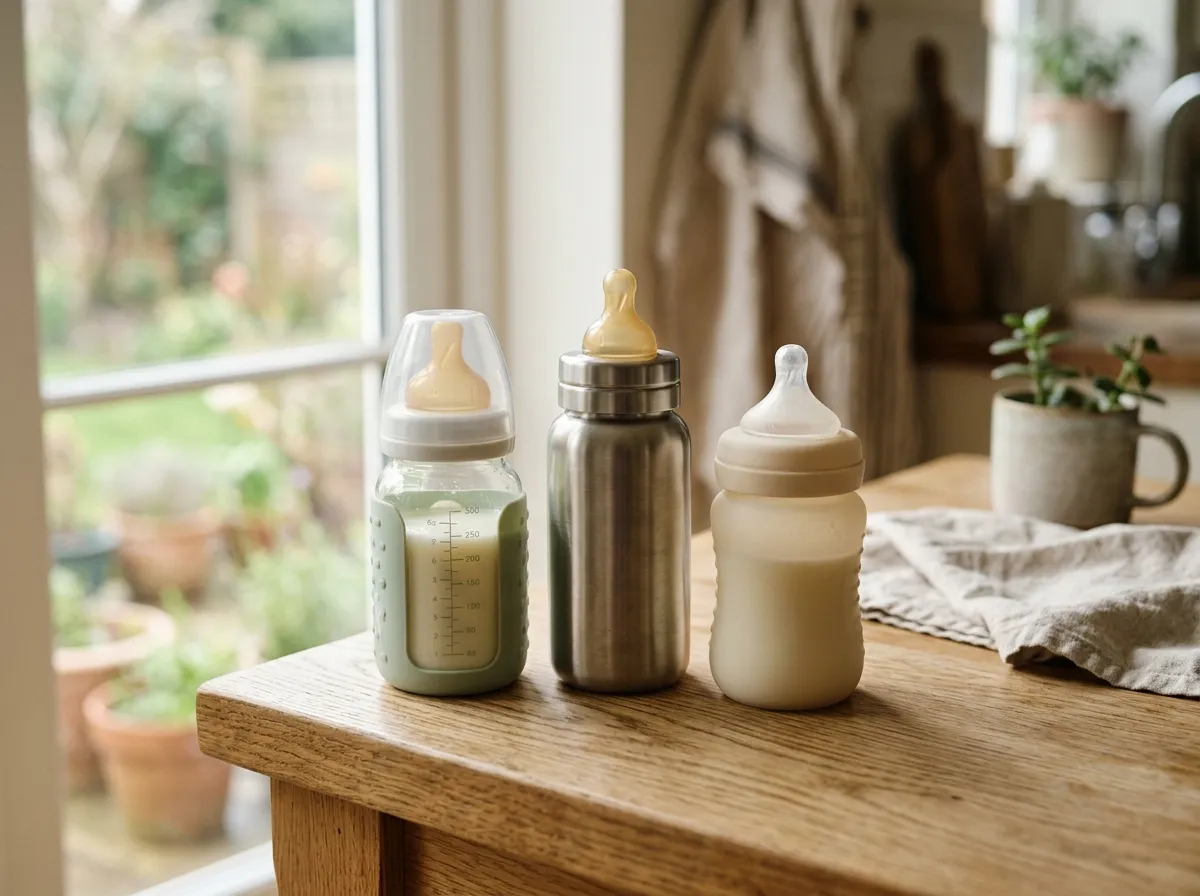
This guide covers NonToxicLab’s picks for the safest non-toxic baby bottles available right now. All glass, stainless steel, or medical-grade silicone. No plastic touching the milk. I tested and researched nine options across every price point so you don’t have to spend weeks sorting through conflicting information.
How we evaluated: We checked each bottle for BPA, BPS, BPF, phthalates, and lead content. We verified material safety claims against third-party test data and reviewed FDA compliance and European safety standards (EN 14350). See our full testing methodology for details.
Quick Picks: Best Non-Toxic Baby Bottles at a Glance
| Bottle | Material | Best For | Price |
|---|---|---|---|
| Philips Avent Natural Response Glass | Borosilicate glass | Best overall | $28-32 |
| Dr. Brown’s Options+ Glass | Borosilicate glass | Anti-colic | $24-30 |
| Comotomo Natural Feel | Medical-grade silicone | Breastfed babies | $26-30 |
| Pura Kiki Stainless Steel | #304 stainless steel | 100% plastic-free | $18-22 |
| Lifefactory Glass | Borosilicate glass | Durability (silicone sleeve) | $20-26 |
| Boon Nursh | Silicone pouch | Reducing air intake | $30-36 (3-pack) |
| Evenflo Classic Glass | Borosilicate glass | Budget-friendly | $10-14 |
| Mason Bottle Kit | Glass (Mason jar) | Eco-friendly/zero waste | $16-20 |
| Joovy Boob Glass | Borosilicate glass | Pumping compatibility | $22-28 |
Why Plastic Baby Bottles Are a Problem
Let me be blunt. Plastic baby bottles are one of the worst products you can give an infant. Not because of one chemical, but because of the combination of heat, repeated use, and a developing immune system.
The BPA Story (and Why “BPA-Free” Doesn’t Fix It)
BPA (bisphenol A) is an endocrine disruptor. It mimics estrogen in the body. After years of research linking it to developmental problems, reproductive issues, and behavioral changes in children, manufacturers started phasing it out of baby products around 2012.
Good news, right?
Not exactly. The chemicals that replaced BPA, primarily BPS and BPF, have similar molecular structures. A 2020 study in Environmental Health Perspectives found that BPS disrupts endocrine function at similar levels to BPA. The replacement might be just as harmful. We just have fewer decades of data on it.
This is what I call the “BPA-free trap.” Parents see the label, feel reassured, and keep using plastic. Meanwhile, the bottle still contains synthetic chemicals that interact with hormones. Your baby shouldn’t be drinking from plastic that leaches chemicals with every warming cycle, regardless of what the label says.
Microplastics: The Numbers Are Staggering
A landmark 2020 study published in Nature Food tested polypropylene baby bottles (the most common type sold worldwide). The researchers followed standard WHO guidelines for formula preparation, which involve heating water and shaking the bottle.
The results stopped me cold.
A single plastic baby bottle releases up to 16.2 million microplastic particles per liter when prepared according to guidelines. At higher temperatures, that number climbed even further. The study estimated that infants in some countries are exposed to over 1 million microplastic particles per day through bottle feeding alone.
We don’t fully understand what microplastics do inside a baby’s body long-term. But we know they’ve been found in infant stool, in blood, in breast tissue, and in placentas. Stanford neuroscientist Dr. Andrew Huberman dedicated a podcast episode to microplastics and BPA exposure, highlighting that heating plastic containers is one of the most significant sources of exposure and that switching to glass and stainless steel is one of the most impactful steps people can take. The precautionary principle applies here. If you can avoid it, avoid it.
Heat Makes Everything Worse
Every time you warm a plastic bottle, you accelerate chemical leaching. Sterilizing in boiling water, microwaving, even running through a hot dishwasher cycle. Each heating event degrades the polymer structure and releases more particles.
Glass doesn’t do this. Neither does stainless steel. Medical-grade silicone remains stable at temperatures well above anything you’d use for bottle preparation. Dr. Peter Attia, a physician who has covered microplastics and PFAS on his podcast The Drive, specifically recommends switching to stainless steel and glass containers as a practical way to reduce chemical exposure, particularly for food and drink that gets heated.
Safe Materials for Baby Bottles
Three materials pass the test for non-toxic baby bottles.
Borosilicate Glass
This is the same type of glass used in laboratory equipment. It handles rapid temperature changes without cracking and doesn’t leach anything into liquids. Period. Borosilicate glass is chemically inert, meaning it won’t react with milk, formula, juice, or water at any temperature you’d realistically use.
The downside is obvious: it can break. But modern glass baby bottles come with silicone sleeves that absorb impact surprisingly well. I’ve dropped my Lifefactory bottle onto tile and it survived. Still, you’ll want to use caution.
Medical-Grade Silicone
Medical-grade silicone (also called food-grade platinum-cured silicone) is made from silica, which comes from sand. It’s the same material used in medical implants and surgical instruments. It contains no BPA, BPS, phthalates, or PVC.
It’s heat-stable up to about 500 degrees Fahrenheit, so warming a bottle or sterilizing it is perfectly safe. Silicone is also soft and squeezable, which is why brands like Comotomo have become so popular with breastfed babies who reject rigid bottles.
Stainless Steel (Food-Grade #304)
Stainless steel is virtually indestructible, lightweight, and completely non-toxic. Food-grade #304 stainless steel is what you’ll find in quality cookware and water bottles. It doesn’t leach chemicals, doesn’t retain odors, and won’t break when your toddler throws it off the high chair for the forty-seventh time.
The main drawback: you can’t see the milk level. Some parents find this annoying, especially when tracking ounces for a newborn. Pura Kiki addresses this with measurement markings on the outside, but it’s still not as intuitive as a clear glass bottle.
If you’re also rethinking your cookware, check out our guide to the best non-toxic cookware for the same material-safety approach applied to pots and pans.
Detailed Reviews: 9 Best Non-Toxic Baby Bottles
1. Philips Avent Natural Response Glass - Best Overall
Price: $28-32 | Material: Borosilicate glass | Sizes: 4oz, 8oz
The Philips Avent Natural Response Glass is my top pick for most families. The wide neck makes scooping formula easy and cleaning easy. The nipple has Avent’s “Natural Response” design, which only releases milk when the baby actively drinks (not just from gravity), reducing overfeeding and spit-up.
The glass is thick, durable borosilicate. The cap and collar are polypropylene, but they never contact the milk. This is a reasonable tradeoff that most non-toxic parenting experts accept.
Pros:
- Anti-colic valve built into the nipple
- Wide neck for easy filling and cleaning
- Compatible with Avent breast pumps
- Available in multiple sizes and nipple flow rates
- Widely available in stores
Cons:
- Heavier than plastic alternatives (especially the 8oz)
- No silicone sleeve included (sold separately)
- Collar is plastic (though it doesn’t contact milk)
2. Dr. Brown’s Options+ Glass - Best Anti-Colic
Price: $24-30 | Material: Borosilicate glass | Sizes: 5oz, 8oz
If your baby has gas or colic, this is the bottle. Dr. Brown’s internal vent system is clinically proven to reduce colic, spit-up, burping, and gas. The “Options+” design means you can remove the vent system as your baby grows and the colic phase passes, turning it into a simpler bottle.
The narrow neck is the only real drawback. Scooping formula into a narrow opening at 3 AM is not fun. But for colicky babies, this bottle is worth the inconvenience.
Pros:
- Best anti-colic system on the market
- Vent system is removable
- Preserves vitamins by reducing oxidation
- Well-established brand with decades of research
- Affordable for glass
Cons:
- Narrow neck makes filling harder
- More parts to wash (with vent system)
- Internal vent pieces are fiddly when assembling half-asleep
3. Comotomo Natural Feel - Best Silicone
Price: $26-30 | Material: Medical-grade silicone body, PP cap | Sizes: 5oz, 8oz
The Comotomo is a fan favorite, and for good reason. The body is entirely medical-grade silicone. Soft, squeezable, warm to the touch. For babies who are switching between breast and bottle, this is the closest thing to the real deal.
The wide mound-shaped nipple and the squeezable body mimic a natural latch. Breastfed babies who flat-out refuse rigid glass bottles will often accept a Comotomo.
Pros:
- Soft, squeezable body mimics natural breastfeeding
- Wide opening for easy cleaning (fits a hand inside)
- Dual anti-colic vents
- Very easy to clean (dishwasher-safe)
- Hygienic medical-grade silicone
Cons:
- Measurement markings can be hard to read
- Silicone can stain from certain foods over time
- More expensive than glass options
- Cap and ring are polypropylene
4. Pura Kiki Stainless Steel - Best Stainless Steel
Price: $18-22 | Material: #304 stainless steel | Sizes: 5oz, 9oz, 11oz
The Pura Kiki is the only 100% plastic-free baby bottle I’ve found. Even the travel cover is stainless steel. The silicone nipple and sleeve are the only non-metal parts, and both are medical-grade.
What makes Pura Kiki genuinely brilliant is the “grow with me” design. You buy the bottle once, then swap out nipples and tops as your child grows. Infant nipple becomes sippy spout becomes straw becomes sport cap. One bottle, multiple years of use.
Pros:
- 100% plastic-free (the only one on this list)
- Virtually unbreakable
- Grows from infant bottle to sport bottle
- Lightweight compared to glass
- Great for daycare and travel
Cons:
- Can’t see milk level through steel
- Dents if dropped on hard surfaces repeatedly
- Steel can feel cold to the touch (silicone sleeve helps)
- Fewer nipple flow options than glass brands
5. Lifefactory Glass Baby Bottle - Best Silicone Sleeve
Price: $20-26 | Material: Borosilicate glass + silicone sleeve | Sizes: 4oz, 9oz
Lifefactory solved the biggest objection to glass bottles: the fear of breaking. Their medical-grade silicone sleeve fits snugly around the bottle, providing serious impact protection and a comfortable grip. The sleeve comes in a bunch of colors, which is a small thing, but it helps when you’re sorting bottles for multiple kids.
The flat cap also allows the bottle to stand upright, which is a practical detail I appreciate more than I expected.
Pros:
- Built-in silicone sleeve for grip and protection
- Flat cap lets bottle stand upright
- Borosilicate glass is oven and freezer safe
- Wide opening for easy cleaning
- Made in the USA (glass portion)
Cons:
- Sleeve can trap moisture if not dried properly
- Slightly heavier than comparable glass bottles
- Fewer nipple options than Avent or Dr. Brown’s
6. Boon Nursh Silicone Pouch Bottle - Most Innovative
Price: $30-36 (3-pack) | Material: Silicone inner pouch, hard outer shell | Sizes: 4oz, 8oz
This is a different approach entirely. Boon Nursh uses a disposable silicone pouch that sits inside a hard outer shell. Milk only touches the silicone pouch, never the outer bottle. As your baby drinks, the pouch collapses (like a breast), reducing air intake and the gulping that causes gas.
The pouches are reusable for a while but designed to be replaced periodically. This creates ongoing cost, which is the main downside.
Pros:
- Milk only contacts medical-grade silicone
- Collapsing pouch reduces air intake significantly
- Outer shell provides protection and easy grip
- Smooth nipple transition for breastfed babies
- Three-pack value is reasonable
Cons:
- Replacement pouches add ongoing cost
- More parts and assembly than a simple glass bottle
- Outer shell is plastic (though it never touches milk)
- Not as widely available as mainstream brands
7. Evenflo Classic Glass - Best Budget
Price: $10-14 | Material: Borosilicate glass | Sizes: 4oz, 8oz
Sometimes the simplest option wins. The Evenflo Classic Glass bottle is just a glass bottle. No fancy features, no proprietary nipple technology, no bells and whistles. And it costs half of what most glass bottles charge.
For parents who want to switch from plastic but don’t want to spend $30 per bottle, this is the answer. It’s been around for decades, it works, and it’s affordable enough to buy in bulk.
Pros:
- Most affordable glass bottle on the market
- Simple, proven design
- Compatible with standard Evenflo nipples (widely available)
- Clear markings for easy measurement
- Twist-on collar is easy to assemble
Cons:
- No silicone sleeve (more breakable)
- No anti-colic features
- Basic nipple design may not suit all babies
- Narrow neck version can be difficult to clean
8. Mason Bottle Kit - Most Eco-Friendly
Price: $16-20 | Material: Glass (Mason jar) + silicone nipple | Sizes: Fits 4oz Mason jars
This one is clever. The Mason Bottle is just a silicone nipple and ring adapter that screws onto any standard-mouth 4oz Mason jar. If you already have Mason jars at home (and who doesn’t?), you’ve essentially got free baby bottles.
It’s the most sustainable option on this list. Mason jars are cheap, endlessly reusable, widely available, and made from soda-lime glass that’s perfectly food-safe. When your baby outgrows bottles, the jars go back to storing leftovers.
Pros:
- Uses jars you probably already own
- Extremely affordable long-term
- Zero-waste approach
- Jars are easy to find, easy to replace
- Silicone nipple is medical-grade
Cons:
- Mason jars are heavier than purpose-built baby bottles
- No anti-colic system
- No silicone sleeve for grip/protection
- Limited to standard-mouth 4oz jars for infant use
- Looks unconventional (daycare providers may have questions)
9. Joovy Boob Glass - Best for Pumping Moms
Price: $22-28 | Material: Borosilicate glass, PPSU collar | Sizes: 5oz, 8oz
If you pump regularly, the Joovy Boob Glass is worth a serious look. It’s compatible with most major breast pump flanges (Medela, Spectra, Lansinoh), so you can pump directly into the glass bottle. No transferring milk from a plastic pump bottle to a glass feeding bottle. One less step, one less potential contamination point.
The collar is PPSU (a high-grade plastic considered safer than polypropylene), and it doesn’t contact the milk during feeding. The nipple is soft silicone with a natural shape that works well for combo-feeding families.
Pros:
- Compatible with major breast pump brands
- Eliminates need to transfer pumped milk
- PPSU collar is among the safest plastics
- Natural-shaped nipple for breastfed babies
- Good price for a glass pump-compatible bottle
Cons:
- PPSU collar still technically plastic
- Not as widely available as Avent or Dr. Brown’s
- Fewer nipple flow rate options
- No included silicone sleeve
How to Choose the Right Non-Toxic Bottle
Picking the right material depends on your situation.
Choose glass if you want the absolute safest, most inert material and you’ll primarily use bottles at home. Glass is ideal for parents who mostly bottle-feed in a controlled environment.
Choose silicone if your baby is switching between breast and bottle. The soft, squeezable feel is the closest to natural breastfeeding, and silicone bottles won’t shatter if dropped.
Choose stainless steel if you need durability for daycare, travel, or older babies and toddlers. Stainless steel is the lightest unbreakable option and grows with your child.
For most families, I recommend having a mix. Glass bottles for home use, and one or two stainless steel or silicone bottles for the diaper bag and daycare.
Transition Guide: Moving Your Baby from Plastic to Non-Toxic Bottles
Switching bottles mid-stream can feel daunting. Babies get attached to what they know. Here’s how to make it smooth.
Step 1: Start with one feeding per day. Replace just one plastic bottle with the new non-toxic option. Pick a feeding when your baby is calm and not starving. Mid-day is usually best.
Step 2: Match the nipple flow rate. If your baby is used to a medium-flow nipple on their plastic bottle, start with a medium-flow nipple on the new one. Changing the flow rate at the same time as the bottle itself is a recipe for rejection.
Step 3: Warm the nipple. Run warm water over the silicone nipple for a few seconds before offering it. A cold nipple can be enough to make a fussy baby refuse the bottle entirely.
Step 4: Be patient. Some babies switch without blinking. Others take a week of gradual introduction. Don’t force it. Offer the new bottle, and if your baby refuses, try again at the next feeding.
Step 5: Phase out plastic completely. Once your baby accepts the new bottle for one feeding, add another. Within one to two weeks, most babies are fully transitioned.
And don’t forget the rest of the kitchen. If you’re storing breast milk or formula in plastic containers, those are worth replacing too. Our guide to the best non-toxic food storage containers covers safe options for every need.
What About Nipple Material?
Almost all baby bottle nipples are made from silicone, which is safe. A few brands still sell latex nipples, which are also non-toxic but can trigger allergies in some babies and degrade faster.
The real thing to watch for is the collar or ring that attaches the nipple to the bottle. On most glass and silicone bottles, this piece is polypropylene plastic. It doesn’t contact the milk during feeding in most designs, so this is generally considered an acceptable tradeoff. If you want zero plastic of any kind, Pura Kiki is your only option.
Cleaning and Sterilizing Non-Toxic Bottles
Glass and stainless steel bottles are actually easier to sterilize than plastic because they can handle boiling water and high-heat dishwasher cycles without any degradation. Use a non-toxic cleaning product for washing, and you have eliminated chemical contact at every step.
Boiling: Submerge bottles in a rolling boil for 5 minutes. This works for glass, stainless steel, and silicone nipples.
Steam sterilizer: Electric steam sterilizers work perfectly with all three materials.
Dishwasher: Top rack, hot cycle. Silicone sleeves and nipples go in a dishwasher basket so they don’t fall onto the heating element.
What to avoid: Never microwave stainless steel bottles. Glass and silicone are microwave-safe for sterilizing with water, but stainless steel and microwaves don’t mix.
Understanding PFAS and Baby Products
PFAS (per- and polyfluoroalkyl substances) are another category of chemicals showing up in consumer products, including some food-contact items. While baby bottles themselves aren’t a major PFAS concern, the broader picture of chemical exposure in your baby’s environment matters.
If you want to understand PFAS and where they hide in household products, read our explainer on what PFAS forever chemicals are and why they matter.
Price Comparison and Value
Let’s talk money, because switching from plastic to glass or steel does cost more upfront.
A pack of plastic baby bottles runs about $15-20 for a three-pack. Glass bottles range from $10-32 each, with most falling in the $20-28 range. Stainless steel sits around $18-22 per bottle.
But here’s the thing. Glass and stainless steel bottles last longer. They don’t scratch, stain, cloud, or absorb odors like plastic does. You won’t replace them every few months. And stainless steel bottles like Pura Kiki literally grow with your child for years.
Over the full span of bottle feeding (roughly 12-18 months), the total cost difference between plastic and non-toxic alternatives is usually $30-60. That’s it. Knowing that your baby isn’t drinking microplastics, that seems like an easy decision.
Quick Answers
Are glass baby bottles safe? Won’t they break?
Glass baby bottles are made from borosilicate glass, which is much stronger than regular glass. With a silicone sleeve, they’re surprisingly durable. I won’t pretend they’re shatterproof, but in normal use (dropping from counter height onto a floor), sleeved glass bottles hold up well. Millions of parents use them daily without issues.
Can I use glass bottles at daycare?
Many daycares accept glass bottles, but some don’t due to liability concerns. Call ahead and ask. If your daycare won’t allow glass, silicone (Comotomo) or stainless steel (Pura Kiki) are great alternatives that any daycare will accept.
How do I know if a silicone bottle is truly medical-grade?
Look for “medical-grade silicone” or “platinum-cured silicone” on the packaging. Reputable brands like Comotomo and Boon specify this clearly. If a product just says “silicone” without specifying the grade, contact the manufacturer and ask. True medical-grade silicone is tested to FDA and LFGB standards.
Is it worth switching if my baby is already 8 or 9 months old?
Yes. Every feeding without microplastics matters. Even if your baby only has a few months of bottle feeding left, switching reduces cumulative exposure. And if you plan to have more children, you’ll already have the bottles ready.
Do glass bottles make formula or breast milk taste different?
Glass is completely inert, so it doesn’t impart any taste. Some parents actually report that their babies prefer glass bottles because the milk tastes “cleaner” without the subtle plastic flavor. This is anecdotal, but it makes chemical sense. If you mix formula with tap water, it is also worth testing your water quality to make sure the water itself is clean.
Are there any non-toxic plastic bottles?
Honestly? I haven’t found a plastic baby bottle I’d recommend. Even the safest plastics (PPSU, Tritan) release particles when heated, washed, and reused over time. The whole point of plastic is that it’s a polymer, and polymers degrade. If you want truly non-toxic, stick with glass, silicone, or stainless steel.
How many bottles do I need?
Most families do well with 6-8 bottles. For a non-toxic setup, I’d suggest 4-6 glass bottles for home use and 1-2 stainless steel or silicone bottles for going out. This gives you enough for a full day without washing between every feeding.
Can I warm glass bottles in a bottle warmer?
Absolutely. Borosilicate glass handles temperature changes well. Just avoid extreme thermal shock (like going straight from the freezer into boiling water). A normal bottle warmer is perfectly fine.
What Matters Most
NonToxicLab’s research confirms your baby’s bottle is one of the most-used items in their first year of life. It contacts every ounce of milk or formula they drink. Choosing glass, stainless steel, or medical-grade silicone over plastic is one of the simplest, most impactful changes you can make for their health.
The science on microplastics and endocrine disruptors is not going to get less concerning. It’s only going in one direction. Making the switch now means one less thing to worry about during a time when you’re already worried about everything. If you want to keep going, our guide to detoxing your home walks through every room and product category.
Pick the bottle that fits your family’s needs, your baby’s preferences, and your budget. Any option on this list is a genuinely safe choice. And your baby will never know the difference. But you will.
Sources
- Andrew Huberman, “How to Reduce Your Exposure to Microplastics & Nanoplastics,” Huberman Lab Podcast (2024)
- Dr. Peter Attia, “Microplastics and PFAS,” The Drive Podcast