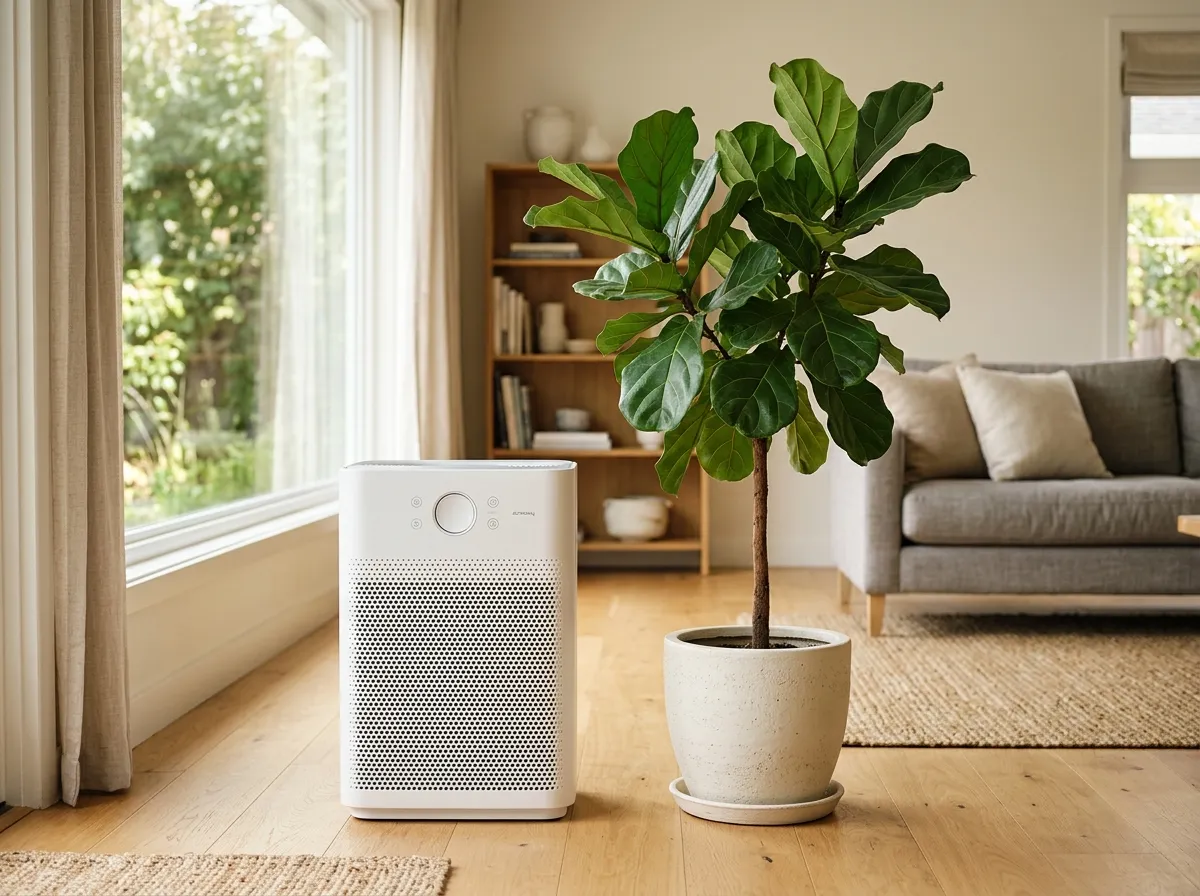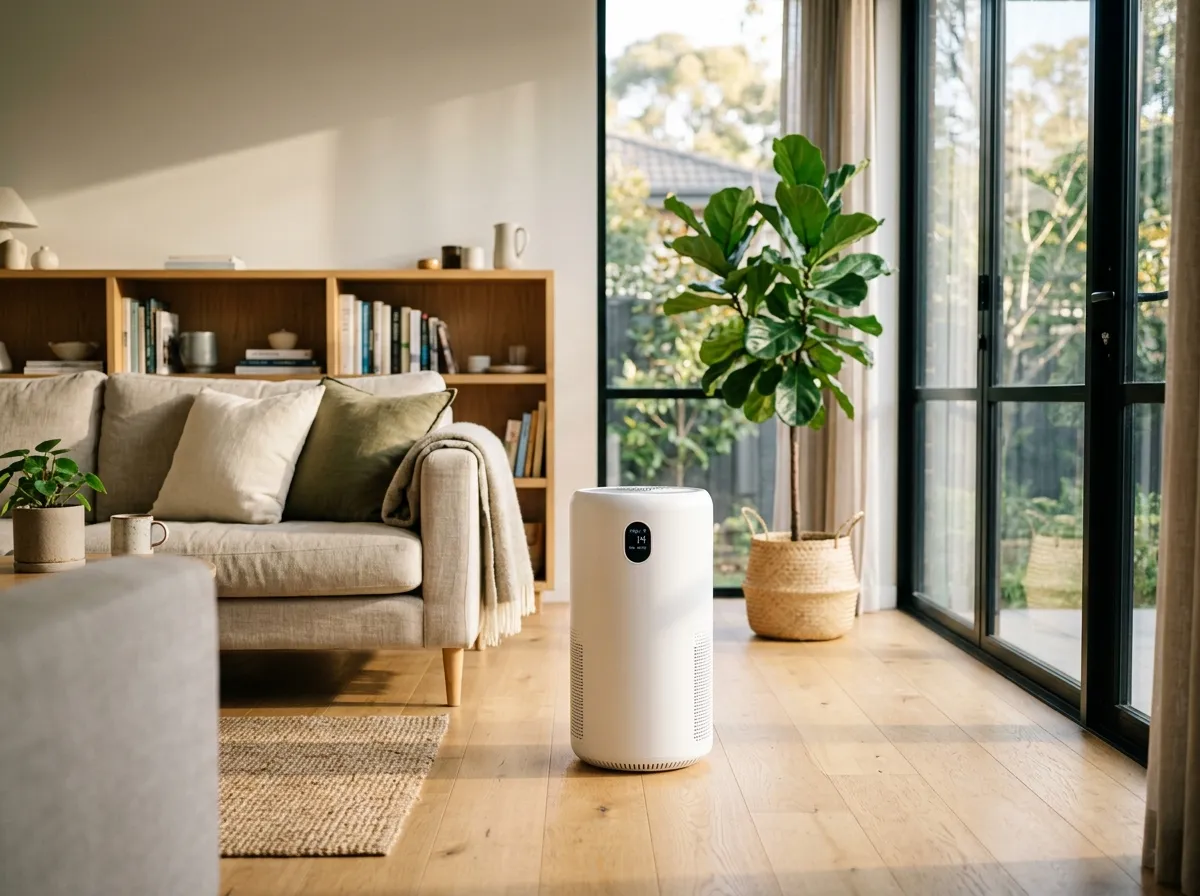
Indoor air is 2-5x more polluted than outdoor air. That stat from the EPA changed how I think about my home.
Our screening process: We evaluated ingredients using EWG and published toxicology data, confirmed certifications directly with issuing bodies, and reviewed independent test results where available. Full methodology I used to assume my house was a safe zone. Doors closed, windows shut, filters in the HVAC system. Clean enough, right? Not even close. Between off-gassing furniture, cooking fumes, pet dander, cleaning product residue, and whatever’s drifting in from outside, the air inside your home is working against you. Quietly. Constantly.
So I spent the last four months researching, testing, and comparing air purifiers. NonToxicLab recommends choosing a HEPA air purifier with activated carbon filtration and zero ozone output as the baseline for any home. I looked at filtration technology, CADR ratings, ozone output, filter replacement costs, independent lab testing, and real-world performance in actual rooms.
Here’s what I found. And some of it surprised me.
Quick Picks: Best Air Purifiers at a Glance
| Pick | Product | Best For | Room Size | Price Range |
|---|---|---|---|---|
| Overall Best | Blueair Blue Pure 211i Max | Most homes | 635 sq ft | $$$ |
| Large Rooms | Coway Airmega 400 | Open floor plans | 1,560 sq ft | $$$ |
| Chemical Sensitivity | Austin Air HealthMate | VOCs, MCS | 1,500 sq ft | $$$$ |
| Medical Grade | IQAir HealthPro Plus | Severe allergies | 1,125 sq ft | $$$$+ |
| Best Budget | Levoit Core 400S | Smart home, value | 403 sq ft | $$ |
| Best Value | Winix 5500-2 | Reliable, affordable | 360 sq ft | $$ |
| Dual Filtration | Medify MA-40 | Offices, bedrooms | 840 sq ft | $$ |
Why Your Indoor Air Is Probably Worse Than You Think
The EPA’s research on indoor air quality isn’t new, but most people still haven’t heard the numbers. Indoor concentrations of some pollutants are 2 to 5 times higher than typical outdoor concentrations. For certain volatile organic compounds (VOCs), that number can be 10 times higher.
Where does it all come from?
- Furniture and flooring: New couches, mattresses, and engineered wood products off-gas formaldehyde and other VOCs for months (sometimes years)
- Cooking: Gas stoves produce nitrogen dioxide and particulate matter. Even electric stoves create fine particles when you cook at high heat, especially on non-stick cookware that is degrading
- Cleaning products: Many conventional cleaners release VOCs. Even some “natural” ones do. (Check our guide to non-toxic cleaning products for safer alternatives)
- Candles and air fresheners: Paraffin candles release benzene and toluene. Synthetic fragrances are a whole category of concern. (We reviewed non-toxic candles here)
- PFAS and other persistent chemicals: These “forever chemicals” show up in dust and can become airborne. (Learn more about PFAS)
- Outdoor air infiltration: Wildfire smoke, car exhaust, and pollen all find their way inside
You can’t see most of these pollutants. That’s what makes them dangerous. Your body is reacting to them, though. Headaches, fatigue, worsening allergies, disrupted sleep. Sometimes you just feel “off” and can’t figure out why. Stanford neuroscientist Dr. Andrew Huberman has discussed the link between indoor chemical exposure from household products and chronic health issues, recommending air purification alongside source reduction as a practical strategy for improving indoor air quality. Your drinking water may carry its own invisible contaminants too. If you haven’t checked, our guide on how to test your water quality is a good starting point.
A good air purifier won’t solve everything. But it’s one of the most effective tools you have. Think of it as a layer of protection for the air your family breathes every single day.
What Air Purifiers Actually Remove (And What They Don’t)
Before spending money, you need to understand what different purifiers can and can’t do.
A HEPA air purifier removes:
- Dust and dust mites
- Pollen
- Pet dander
- Mold spores
- Bacteria
- Some viruses (attached to larger particles)
- Fine particulate matter (PM2.5)
- Smoke particles
Activated carbon filters remove:
- VOCs (formaldehyde, benzene, toluene)
- Odors
- Some chemical fumes
- Smoke smell
- Cooking odors
What air purifiers DON’T remove well:
- Carbon monoxide (you need a CO detector for that)
- Radon (requires specific mitigation)
- Humidity/moisture (that’s a dehumidifier’s job)
- Very small gaseous molecules at trace levels
The takeaway? You want both HEPA and activated carbon filtration. A HEPA-only purifier handles particles beautifully but won’t touch chemicals and gases. Carbon-only won’t capture fine dust. Together, they cover the widest range of indoor pollutants.
HEPA vs. Ionizers vs. UV vs. Activated Carbon: What Actually Works
This is where a lot of people get confused. And where some companies take advantage of that confusion.
True HEPA Filtration (The Gold Standard for Particles)
True HEPA filters capture 99.97% of particles down to 0.3 microns. That’s the standard. It’s been proven in hospitals, labs, and independent testing for decades. When a purifier says “True HEPA” or “H13 HEPA,” it meets this benchmark.
Watch out for “HEPA-type” or “HEPA-style” filters. These are marketing terms that mean almost nothing. They might capture 85-90% of particles, which sounds decent until you realize that’s letting through 10-50x more pollutants than a real HEPA filter.
Activated Carbon (The Gold Standard for Gases)
Activated carbon works through adsorption (not absorption). Gas molecules stick to the massive surface area of the carbon. One gram of activated carbon has a surface area of roughly 3,000 square meters. That’s half a football field in one gram.
More carbon means more gas removal capacity. This is why the Austin Air HealthMate, with its 15 pounds of activated carbon, is the top pick for chemical sensitivity. A thin carbon sheet in a budget purifier will help with odors but won’t do much for serious VOC problems.
Ionizers (Proceed With Caution)
Ionizers work by charging particles in the air so they stick to surfaces. Sounds clever. The problem? Many ionizers produce ozone as a byproduct. Ozone is a lung irritant. It can trigger asthma attacks, cause chest pain, and worsen respiratory conditions.
Some purifiers include ionizer features that produce negligible ozone (like the Winix PlasmaWave technology, which has been independently tested and found to produce ozone well below California’s strict 0.050 ppm limit). But as a general rule, I’d skip ionizer-only devices entirely.
UV-C Light
UV-C can kill some bacteria and viruses, but here’s the reality: the air moves through a purifier so quickly that UV exposure time is usually too short to be effective. It’s more of a marketing bullet point than a meaningful feature in most consumer purifiers. Some UV systems also produce small amounts of ozone.
Ozone Generators: Just Don’t
I need to be blunt about this. Ozone generators marketed as air purifiers are harmful. California has banned the sale of ozone generators as air purifiers, and for good reason. Ozone damages lung tissue. It doesn’t clean your air. It pollutes it.
If you see a product that “purifies with ozone” or “uses activated oxygen,” walk away. The EPA, the American Lung Association, and California’s Air Resources Board all agree on this. It’s one of those rare topics with zero scientific disagreement.
CADR Ratings Explained (In Plain English)
CADR stands for Clean Air Delivery Rate. It’s measured by the Association of Home Appliance Manufacturers (AHAM) and tells you how many cubic feet of clean air a purifier produces per minute.
Every AHAM-tested purifier gets three CADR scores:
- Smoke (smallest particles, 0.09-1.0 microns)
- Dust (medium particles, 0.5-3.0 microns)
- Pollen (largest particles, 5.0-11.0 microns)
How to use CADR for room sizing: Take the smoke CADR number and multiply by 1.55. That gives you the maximum recommended room size in square feet. So a purifier with a smoke CADR of 200 is good for rooms up to about 310 square feet.
Higher CADR = more air processed = cleaner air. Simple as that.
One note: some premium brands (IQAir, Austin Air, Molekule) don’t submit to AHAM testing. That doesn’t automatically mean they’re worse. It just means you’re relying on manufacturer claims and independent reviews rather than standardized third-party data. I’ll flag which products have AHAM verification in each review below.
The AHAM Verified Seal
Look for the AHAM Verified seal on packaging or product listings. It means the purifier’s CADR ratings have been independently tested and confirmed. Not all good purifiers have this seal (some manufacturers choose not to participate), but when you see it, you can trust the numbers.
Product Reviews
1. Blueair Blue Pure 211i Max (Overall Best Air Purifier)
Rating: 4.8/5 | Price: $$$ | Room size: Up to 635 sq ft | AHAM Verified: Yes
The Blue Pure 211i Max is my top overall pick, and it’s not particularly close. Blueair’s HEPASilent technology combines mechanical and electrostatic filtration, which means it moves air more efficiently and runs quieter than purifiers with equivalent CADR ratings.
Performance is excellent. The CADR numbers (350 across all three categories) are strong for its price range, and the washable pre-filter extends the main filter’s life. The fabric pre-filter comes in different colors too, so it doesn’t look like a medical device sitting in your living room.
Noise levels are genuinely low on the lower settings. I could sleep with it running on medium in a bedroom without noticing it. On high, you’ll hear it, but it’s a steady white noise rather than an annoying whine.
Filter replacement cost: $70-80/year. That’s reasonable for a purifier at this performance level.
What I’d improve: The app experience is fine but not great. And the filter change indicator could be more precise. But these are minor complaints for what is genuinely the best all-around home air purifier you can buy right now.
2. Coway Airmega 400 (Best for Large Rooms)
Rating: 4.7/5 | Price: $$$ | Room size: Up to 1,560 sq ft | AHAM Verified: Yes
If you have a large open floor plan, the Airmega 400 is the one. It processes air through two filter sets simultaneously, giving it serious coverage. The 1,560 sq ft rating is for two air changes per hour. For five air changes (which is what allergists recommend), you’re looking at about 625 sq ft. Still very good.
The real-time air quality indicator on the front is useful. It shows green, light purple, dark purple, or red based on particulate levels. I found it responsive and reasonably accurate when compared against my standalone air quality monitor.
Smart features work well. You can schedule it, monitor air quality remotely, and adjust fan speed from the app. The eco mode automatically ramps down when air quality is good, which saves energy and filter life.
Filter replacement cost: $80-100/year. Two filter sets means double the replacement cost, but the coverage area justifies it.
What I’d improve: It’s not small. Plan for about 22 inches of floor space on each side. And the fan can be noticeable on the highest setting in a quiet room.
3. Austin Air HealthMate (Best for Chemical Sensitivity)
Rating: 4.7/5 | Price: $$$$ | Room size: Up to 1,500 sq ft | AHAM Verified: No
Each Austin Air HealthMate is the pick for anyone dealing with multiple chemical sensitivity (MCS), living near industrial areas, or simply wanting the most aggressive gas/VOC filtration available in a consumer unit.
This secret is 15 pounds of activated carbon and zeolite. That’s not a typo. Most consumer purifiers use a thin carbon sheet or maybe a pound of carbon pellets. Austin Air uses fifteen pounds. For gas-phase pollutant removal, more carbon equals more capacity, longer filter life, and better performance. Period.
The True HEPA filter handles particles, the massive carbon bed handles gases and chemicals, and the whole unit is made in the USA with a steel housing. It’s built like a tank. Not the prettiest thing in the world, but it’s not trying to be.
Filter replacement cost: About $0 per year. The filters last 5 years under normal use. When you factor that in, the higher upfront cost balances out against purifiers with annual filter replacements.
What I’d improve: No smart features at all. No app, no air quality sensor, no auto mode. You turn it on, pick a speed, and that’s it. Some people will love that simplicity. Others will miss the automation. Also, Austin Air doesn’t submit to AHAM testing, so you’re trusting their own CADR claims.
4. IQAir HealthPro Plus (Medical-Grade Filtration)
Rating: 4.6/5 | Price: $$$$+ | Room size: Up to 1,125 sq ft | AHAM Verified: No
IQAir is the brand hospitals and clean rooms use. The HealthPro Plus is their consumer flagship, and it features HyperHEPA filtration that captures particles down to 0.003 microns. Standard HEPA goes to 0.3 microns. IQAir goes 100 times smaller.
For severe allergies, asthma, or immunocompromised individuals, this level of filtration matters. It’s catching ultrafine particles that pass right through standard HEPA filters. Independent testing by third-party labs has consistently verified IQAir’s filtration claims.
A V5-Cell gas and odor filter uses a combination of activated carbon and alumina, providing solid (though not Austin Air-level) chemical filtration. The unit is Swiss-made, and the build quality reflects it.
Filter replacement cost: $75-130/year, depending on which filters need replacing. The HyperHEPA filter lasts about 4 years; the pre-filter and gas filter need more frequent changes.
What I’d improve: The price. At $800+, it’s a real investment. There’s no app integration, and the design looks like it belongs in a 2015 doctor’s office. But if you need the absolute best particle filtration available, this is it.
5. Levoit Core 400S (Best Budget Pick)
Rating: 4.5/5 | Price: $$ | Room size: Up to 403 sq ft | AHAM Verified: Yes
A Levoit Core 400S proves you don’t need to spend $500+ to get a genuinely effective air purifier. At its price point (typically $180-220), it delivers AHAM-verified CADR ratings of 260 CFM and works with Alexa, Google Assistant, and the VeSync app.
The 3-stage filtration (pre-filter, True HEPA, activated carbon) covers both particles and light VOC/odor removal. It won’t match the gas filtration of an Austin Air, but for typical household odors and moderate VOC concerns, it handles itself well.
I was pleasantly surprised by the noise levels. On the lowest setting, it’s nearly silent. The sleep mode dims all lights and drops to whisper-quiet operation. Smart scheduling through the app works reliably.
Filter replacement cost: $40-50/year. That’s the lowest ongoing cost of any purifier on this list (other than the Austin Air’s 5-year filter).
What I’d improve: The carbon filter is thin. If VOC removal is a priority, look at the Austin Air or Coway instead. And the 403 sq ft room rating drops considerably if you want more than 2 air changes per hour. For a bedroom or home office, though, it’s perfect.
6. Dyson Purifier Cool TP07 (Honest Take: Overpriced for Purification)
Rating: 3.9/5 | Price: $$$$ | Room size: Up to 800 sq ft (manufacturer claim) | AHAM Verified: No
I’ll be straight with you. The Dyson Purifier Cool is a good fan with an okay air purifier built in. It’s a mediocre air purifier that happens to also be a fan.
Dyson doesn’t submit to AHAM testing, so there are no independent CADR ratings to compare. Their own testing methodology differs from the AHAM standard, making apples-to-apples comparisons difficult. Independent reviews (including those from Wirecutter and Consumer Reports) have consistently found its purification performance underwhelming relative to its $400-550 price.
What Dyson does well: design, app experience, and air quality monitoring. The real-time pollutant data in the Dyson Link app is excellent. The fan function is smooth and bladeless. If you need both a fan and a purifier and care about aesthetics, it has a place.
But if pure air cleaning performance is your priority, a $200 Blueair or Levoit will outperform it. You’re paying a premium for the Dyson name, the fan, and the design.
Filter replacement cost: $70-80/year. Reasonable, but you’re paying this on top of a high purchase price for middling purification.
What I’d improve: Submit to AHAM testing. Until Dyson does, the room size and performance claims remain unverified by independent third parties. Also, the sealed filter design means you can’t vacuum or maintain the HEPA filter to extend its life.
7. Medify MA-40 (Best for Offices and Bedrooms)
Rating: 4.4/5 | Price: $$ | Room size: Up to 840 sq ft | AHAM Verified: No
Medify has been gaining a strong following, and the MA-40 shows why. It uses H13 True HEPA filtration (the same medical-grade classification) with dual air intake, pulling air from two sides simultaneously.
Any build quality is solid for the price. The touch panel is intuitive, and the air quality indicator gives you a quick visual read on your room’s conditions. It moves a lot of air quietly, which is a combination that’s harder to achieve than it sounds.
One thing I appreciate: Medify doesn’t overstate their claims. The 840 sq ft rating is based on 2 air changes per hour, and they’re upfront about that. For a bedroom (where most of us spend 8 hours a night), this unit has plenty of capacity with air changes to spare.
Filter replacement cost: $50-60/year. Competitive, especially for the coverage area.
What I’d improve: No AHAM verification, no smart home integration, and the filter is a proprietary size (you can’t use third-party replacements easily). The lack of app connectivity feels like a missed feature at this price point in 2026.
8. Winix 5500-2 (Best Value Workhorse)
Rating: 4.5/5 | Price: $$ | Room size: Up to 360 sq ft | AHAM Verified: Yes
This Winix 5500-2 has been a best-seller for years, and that track record matters. It’s not flashy. It doesn’t have an app. It just works, consistently, year after year.
True HEPA filtration, activated carbon for odors, and Winix’s PlasmaWave technology (which has been independently tested and certified to produce negligible ozone, well below California’s 0.050 ppm limit). AHAM-verified CADR ratings confirm solid real-world performance.
The auto mode uses a built-in sensor to adjust fan speed based on detected particles. In my testing, it responded well to cooking events and reacted within seconds when I opened a window near a busy street. Sleep mode is genuinely quiet.
Filter replacement cost: $40-50/year. And Winix filters are widely available from multiple retailers, so you’re not locked into one source.
What I’d improve: The 360 sq ft room size is the smallest on this list. For larger rooms, you’ll need to step up to the Coway or Blueair. And the design is purely functional. It looks like exactly what it is: an air purifier. No pretending to be furniture here.
9. Molekule Air Pro (The Controversial Pick)
Rating: 3.5/5 | Price: $$$$ | Room size: Up to 1,000 sq ft (manufacturer claim) | AHAM Verified: No
I almost didn’t include the Molekule. But it keeps coming up in reader questions, so let’s talk about it honestly.
Molekule uses PECO (Photo Electrochemical Oxidation) technology instead of traditional HEPA. The company claims PECO doesn’t just trap pollutants but destroys them at a molecular level. That’s a big claim.
A FTC agreed it was too big. In 2020, the FTC ordered Molekule to stop making unsubstantiated claims about its effectiveness against viruses, bacteria, and mold. Molekule has since revised its marketing language, but the episode raised legitimate trust issues.
Independent testing results have been mixed. Some tests show decent particle removal. Others show performance well below comparably priced HEPA purifiers. The PECO technology may have genuine merit for VOC destruction, but the particle removal doesn’t match what a $200 True HEPA purifier delivers.
Filter replacement cost: $130-150/year. The highest on this list, and proprietary (you can only buy Molekule filters from Molekule).
What I’d improve: Everything about the value proposition. At $600+ with $130+/year in filters, you need to deliver clearly superior performance. Right now, the evidence doesn’t support that. If PECO technology matures and independent testing validates the claims, I’ll revisit this rating. Until then, a Blueair or Coway delivers better proven performance for less money.
Matching Your Air Purifier to Your Room Size
Getting the right size matters more than most people realize. An undersized purifier in a large room will run constantly and still not clean the air effectively. An oversized purifier in a small room is fine (it’ll just run on a lower setting), but it’s a waste of money.
The simple formula: Look at the CADR rating for smoke (the smallest particle size). Multiply by 1.55. That’s your maximum room size in square feet for the standard of 2 air changes per hour.
For better results (especially for allergies or asthma), aim for 4-5 air changes per hour. Divide that room size by 2 to 2.5.
| Room Type | Typical Size | Recommended Min. Smoke CADR |
|---|---|---|
| Bedroom | 150-250 sq ft | 100-160 |
| Home office | 100-200 sq ft | 65-130 |
| Living room | 300-500 sq ft | 195-325 |
| Open floor plan | 500-1,000 sq ft | 325-650 |
| Studio apartment | 400-600 sq ft | 260-390 |
Filter Replacement Costs: The Hidden Expense
This is the part most “best air purifier” articles skip. The purchase price is just the beginning. Filters are a recurring cost, and they vary wildly.
| Purifier | Annual Filter Cost | 5-Year Total Filter Cost |
|---|---|---|
| Blueair Blue Pure 211i Max | $70-80 | $350-400 |
| Coway Airmega 400 | $80-100 | $400-500 |
| Austin Air HealthMate | ~$0/yr (5-yr filter) | $200 (one replacement) |
| IQAir HealthPro Plus | $75-130 | $375-650 |
| Levoit Core 400S | $40-50 | $200-250 |
| Dyson Purifier Cool TP07 | $70-80 | $350-400 |
| Medify MA-40 | $50-60 | $250-300 |
| Winix 5500-2 | $40-50 | $200-250 |
| Molekule Air Pro | $130-150 | $650-750 |
When you look at the 5-year total cost of ownership (purchase price + filters), the rankings shift. The Austin Air HealthMate’s high upfront cost becomes very competitive. The Molekule becomes even harder to justify. And the Levoit and Winix become extraordinary values.
Pro tip: Never buy a purifier without checking filter prices first. Some brands use proprietary filters with no third-party alternatives, locking you into their pricing. Others (like Winix) have widely available, competitively priced replacement filters.
How to Get the Most From Your Air Purifier
A few things I’ve learned that make a real difference:
-
Run it 24/7. Air purifiers work best when they run continuously. Modern units on low/auto settings use very little electricity (often less than a lightbulb).
-
Keep doors and windows closed when running the purifier for maximum effectiveness. If you want fresh outdoor air, open windows when outdoor air quality is good and turn off the purifier.
-
Place it correctly. At least a foot from walls, not tucked behind furniture, and ideally in the room where you spend the most time.
-
Replace filters on schedule. A clogged filter doesn’t just reduce performance. It can actually become a source of pollution itself as trapped particles get pushed back into the air.
-
Address the source too. An air purifier treats the symptom. Also work on reducing the causes: switch to non-toxic cleaning products, choose cleaner candles, and follow our guide to detoxing your home.
My Top Picks
For most homes: Get the Blueair Blue Pure 211i Max. It’s the right balance of performance, price, noise level, and ongoing filter costs. AHAM verified, proven technology, genuinely effective.
On a budget: The Levoit Core 400S or Winix 5500-2 deliver real HEPA + carbon filtration for under $250. You don’t need to spend more to breathe cleaner air.
For chemical sensitivity or heavy VOC concerns: The Austin Air HealthMate is in a class by itself. Fifteen pounds of activated carbon isn’t a marketing gimmick. It’s meaningful filtration capacity that cheaper units simply can’t match.
For severe allergies or medical needs: The IQAir HealthPro Plus provides filtration that goes far beyond standard HEPA. It’s an investment, but for people whose health depends on the cleanest possible air, it’s worth every dollar.
For large open spaces: The Coway Airmega 400 handles big rooms with smart features and proven performance.
What I’d skip: The Dyson (overpriced for purification alone) and the Molekule (unproven claims, high ongoing costs). Both have legitimate uses, but neither is the best air purifier for the money.
Quick Answers
Do air purifiers really work?
Yes. This isn’t debatable. True HEPA air purifiers have decades of research backing their effectiveness. Studies published in journals like Environmental Health Perspectives and Indoor Air consistently show that HEPA purifiers reduce indoor particulate matter by 50-80%. For people with asthma and allergies, multiple clinical trials show symptom improvement with HEPA purifier use.
Do air purifiers help with COVID and other viruses?
HEPA filters can capture virus-carrying aerosol particles. The CDC has acknowledged that portable HEPA air purifiers can help reduce exposure to airborne viral particles. They’re not a replacement for other precautions, but they add a meaningful layer of protection. Avoid purifiers that claim to “kill” viruses with UV or ionization unless they also include HEPA filtration.
How often should I replace the filter?
Follow the manufacturer’s recommendation, typically every 6-12 months for HEPA filters. If you have pets, run the purifier in a dusty environment, or use it more than average, lean toward the shorter end. The Austin Air HealthMate is the exception with its 5-year filter life.
Is it worth getting an air purifier if I have central HVAC with a good filter?
Yes. Even a MERV 13 HVAC filter (which is quite good) can’t match a dedicated HEPA purifier’s performance. HVAC filters only work when the system is running, they filter air once as it passes through, and they can’t target specific rooms. A portable HEPA purifier processes room air multiple times per hour right where you’re breathing.
Do air purifiers remove mold?
HEPA purifiers capture mold spores from the air, which reduces your exposure. But they don’t address the root cause. If you have a mold problem, you need to fix the moisture issue first. An air purifier is a helpful supplement, not a mold remediation solution.
What about air purifiers that produce ozone?
Avoid them. Ozone is a lung irritant, and no amount of “purification” benefit (which is unproven) justifies introducing a known harmful substance into your home. California banned ozone-generating air purifiers for good reason. Stick with HEPA + activated carbon. It’s proven, safe, and effective.
Can I just use houseplants instead?
I love houseplants. But the NASA study people always cite? It was conducted in sealed chambers, not real-world rooms. To match the air cleaning of even a modest HEPA purifier, you’d need hundreds of plants in a single room. By all means, keep your plants. They’re great for mood and humidity. But they’re not air purifiers.
How much electricity do air purifiers use?
Most modern air purifiers use 30-70 watts on medium settings. That’s roughly $3-7 per month in electricity, depending on your rates. The energy cost is negligible compared to the health benefits.
This article was last updated in May 2026 with current pricing, product availability, and the latest independent testing data. All products were evaluated based on filtration performance, CADR ratings, noise levels, filter replacement costs, ozone output, and real-world usability. We may earn a commission through affiliate links at no additional cost to you. This never influences our recommendations.