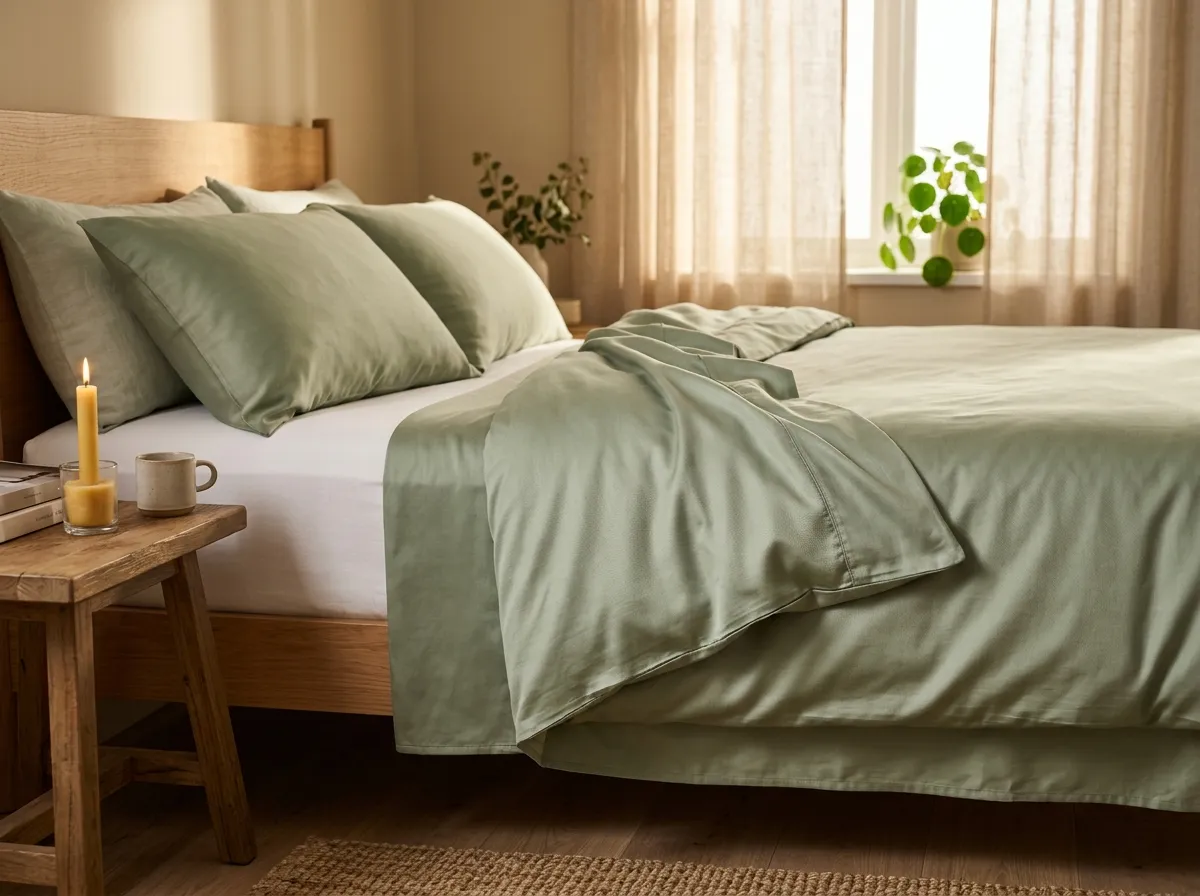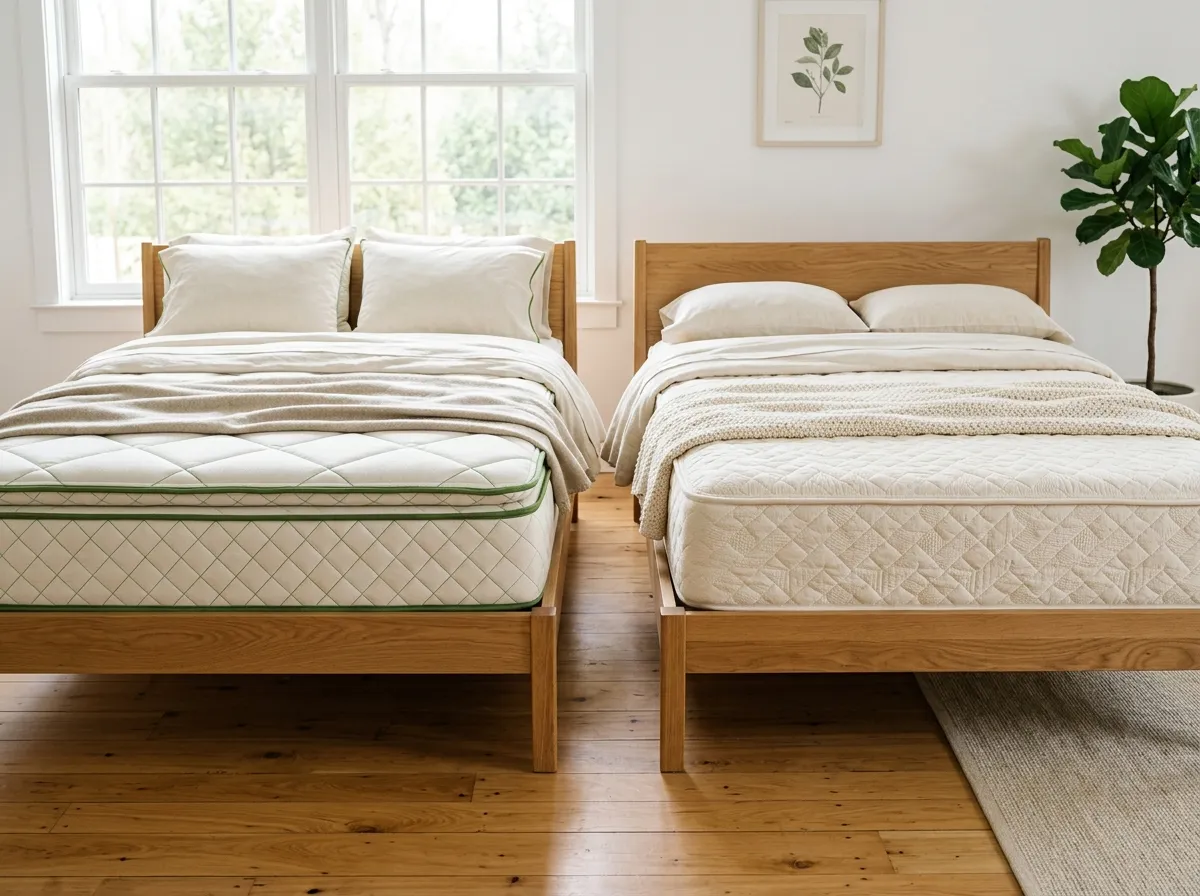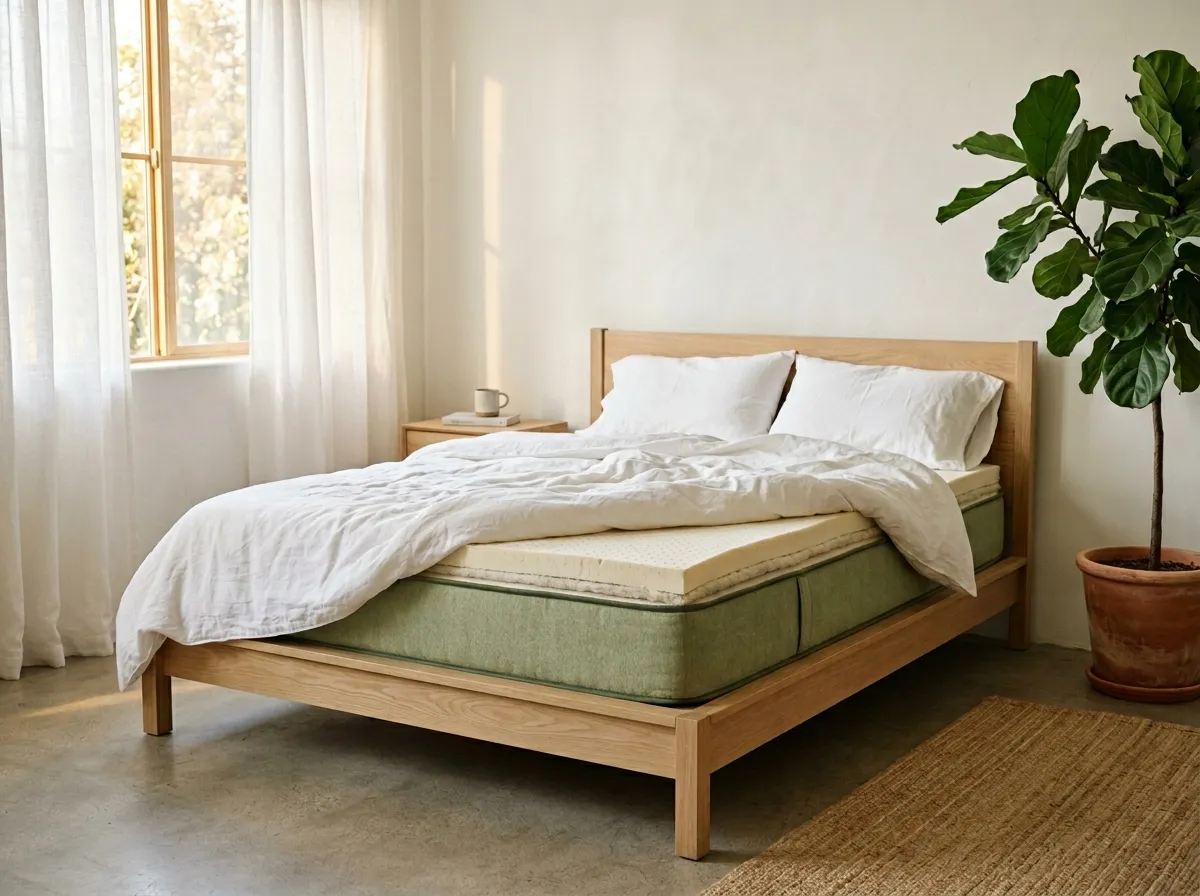
I slept on an Avocado Green Mattress for two years before switching to a Naturepedic EOS Classic. Both sit in the premium organic mattress category. Both cost more than most people want to spend on a bed. And both brands will tell you they’re the safest, cleanest option out there. We tested it and share our findings in avocado mattress review.
After spending real time with each, here’s what I actually think: they’re built for different sleepers, and the “better” pick depends on what bothers you most about conventional mattresses in the first place. We compare them directly in avocado vs birch mattress.
At NonToxicLab, we’ve spent hundreds of hours researching mattress materials, certifications, and chemical testing. This is how the two stack up.
The Short Version
If you want a firm, bouncy, latex-forward mattress with strong eco credentials and a lower price tag, Avocado is the move. If you’re sensitive to latex, want a fully customizable feel, or need a mattress specifically designed for kids or people with allergies, Naturepedic has you covered.
Both are good. Neither is perfect. Let me show you why.
Materials: What’s Actually Inside These Mattresses
This is where it matters most if you’re buying an organic mattress. You’re paying a premium to avoid the polyurethane foam, flame retardants, and adhesives found in conventional beds. So what are you getting instead?
Avocado Green Mattress
- GOLS-certified organic Dunlop latex
- GOTS-certified organic wool (fire barrier)
- GOTS-certified organic cotton cover
- Individually pocketed steel coils (no foam encasement)
- No polyurethane foam, no memory foam, no synthetic latex
The latex layer is the star here. Avocado uses Dunlop latex harvested from their own rubber tree farms in India (they actually bought the farm operation in 2019). Dunlop is denser and firmer than Talalay latex, which is why Avocado mattresses feel noticeably firm to most people.
Naturepedic EOS Classic
- GOTS-certified organic cotton batting and fabric
- GOLS-certified organic latex (Talalay or Dunlop, depending on configuration)
- PLA batting (plant-based polyester alternative)
- Organic wool fire barrier
- Encased steel coils
- Optional latex-free configurations available
Naturepedic gives you something Avocado doesn’t: the ability to remove latex entirely. Their latex-free models use organic cotton and PLA instead, which matters for the roughly 1-4% of people with latex allergies. Dr. Philip Landrigan, who directs the Program for Global Public Health and the Common Good at Boston College, contends that latex sensitivity is an underrecognized issue in household products, and having a latex-free organic option is a real gap that Naturepedic fills.
Certifications: Who Has the Paper Trail?
Both brands are well-certified, but they approach it differently.
| Certification | Avocado | Naturepedic |
|---|---|---|
| GOTS (Organic Textile) | Yes | Yes |
| GOLS (Organic Latex) | Yes | Yes |
| GREENGUARD Gold | Yes | Yes |
| MADE SAFE | Yes | Yes |
| B Corp | Yes | No |
| Climate Neutral | Yes | No |
| UL/GREENGUARD Formaldehyde-Free | Yes | Yes |
Avocado stacks up more environmental certifications (B Corp, Climate Neutral, carbon negative claims). Naturepedic focuses more on health-specific certifications and has been certified by GREENGUARD Gold since before Avocado even existed as a company.
One thing I appreciate about Naturepedic: they were the first mattress company to earn GOTS certification back in 2009. They didn’t pivot to organic when it became trendy. They started there. Avocado launched in 2016 and moved fast, but Naturepedic has a longer track record of third-party testing.
Comfort and Feel: This Is Where They Really Diverge
Avocado: Firm and Bouncy
Avocado rates their standard mattress at a 7 out of 10 on the firmness scale. I’d put it closer to a 7.5. The Dunlop latex gives it a springy, responsive feel that pushes back when you press into it. If you’re a back or stomach sleeper, you’ll probably like this. Side sleepers under 150 pounds may find it too firm.
They do sell a pillow top add-on ($400 extra) that softens things up, bringing it closer to a 6. But out of the box, expect firm.
The coil system provides good support and minimal motion transfer for a hybrid. Rolling over doesn’t feel like an earthquake, but it’s not memory foam stillness either.
Naturepedic EOS: Adjustable Comfort
The EOS series (their flagship adult line) lets you customize firmness by swapping internal layers. You get a zippered cover and can rearrange or replace the latex and cotton layers inside. This is a big deal if you and your partner disagree on firmness, because you can actually set each side differently.
Out of the box, I’d call the EOS Classic a 6 on the firmness scale. More cushion than the Avocado, less pushback from the latex (they use Talalay in the comfort layers, which is softer and more pressure-relieving than Dunlop).
Dr. Rhonda Patrick has talked on her podcast about how sleep surface quality affects recovery and sleep architecture. While she hasn’t endorsed specific brands, her point that pressure relief and spinal alignment directly impact sleep quality is relevant here. The Naturepedic EOS does a better job conforming to your body shape. The Avocado does a better job keeping your spine in a neutral position if you sleep on your back.
Off-Gassing: How Do They Smell?
Both mattresses have some smell when you first unbox them. Neither smells like a conventional memory foam mattress (that chemical “new mattress” odor comes from volatile organic compounds released by polyurethane foam, which neither brand uses).
Avocado had a faint rubbery, earthy smell from the latex that took about 3-4 days to fade. Naturepedic’s EOS had almost no smell at all, which tracks with their latex-free cotton layers absorbing less of that latex off-gas.
Both carry GREENGUARD Gold certification, which means they’ve been independently tested for VOC emissions and meet standards set for use in schools, hospitals, and offices. For reference, GREENGUARD Gold limits total VOCs to 0.5 mg/m3, which is well below levels considered concerning by most indoor air quality researchers.
If you’re extremely sensitive to smells or have chemical sensitivities, Naturepedic’s latex-free option is the safest bet. No latex means no latex smell, period.
Price Comparison
| Model | Queen Price | King Price |
|---|---|---|
| Avocado Green | $1,799 | $2,199 |
| Avocado Green Pillow Top | $2,199 | $2,599 |
| Avocado Organic Luxury Plush | $3,299 | $3,899 |
| Naturepedic EOS Classic | $2,799 | $3,299 |
| Naturepedic EOS Pillow Top | $3,299 | $3,799 |
| Naturepedic Chorus (budget line) | $1,699 | $1,999 |
Avocado is cheaper across the board for comparable models. Their base Green Mattress at $1,799 (Queen) undercuts Naturepedic’s EOS Classic by $1,000. That’s a real gap.
Naturepedic justifies the premium with customizable layers and the option to replace individual components instead of the whole mattress. In theory, that extends the mattress life to 15-20 years. Avocado’s mattress should last 10-15 years with normal use.
If budget is tight but you still want organic, Avocado is the easier entry point. Naturepedic’s Chorus line is more affordable, but you lose the customizable layers that make the EOS special.
Warranty and Trial Period
Both brands offer a 25-year warranty, which is above average. Avocado gives you a 1-year sleep trial (365 nights). Naturepedic offers 90 nights, which is shorter but still reasonable.
One thing to note: Avocado’s return process is genuinely hassle-free. They arrange pickup. Naturepedic’s return process involves a $250 return fee after the first 30 days of the trial, which feels punishing given the price tag.
Who Owns These Companies?
This matters more than you might think.
Avocado is owned by Brentwood Home (a Southern California mattress company) and has vertically integrated much of its supply chain, including the latex farm in India and a factory in Los Angeles. They’ve invested heavily in sustainability marketing and have faced some criticism for overclaiming on carbon neutrality, but their material transparency is solid.
Naturepedic is family-owned, founded by Barry Cik in 2003. Cik is an environmental engineer who started the company after having trouble finding a safe crib mattress for his grandchild. The company operates out of Chagrin Falls, Ohio and manufactures in the US. That origin story checks out, and their commitment to organic certification since day one gives them credibility.
Dr. Shanna Swan, reproductive epidemiologist at Mount Sinai and author of “Count Down,” has written about endocrine disruptors in household products including mattresses. Her research suggests that flame retardants commonly used in conventional mattresses can accumulate in household dust and interfere with hormone function. Both Avocado and Naturepedic avoid chemical flame retardants entirely, using wool as a natural fire barrier, which aligns with what Swan’s research recommends.
Which One Should You Buy?
Here’s my honest take after sleeping on both:
Buy Avocado if:
- You prefer a firmer sleeping surface
- Budget matters (it’s $1,000 cheaper for a comparable product)
- You want a longer trial period
- Environmental certifications (B Corp, carbon claims) matter to you
- You’re a back or stomach sleeper
Buy Naturepedic if:
- You have a latex allergy or sensitivity
- You want to customize firmness (especially if sharing with a partner)
- You’re buying for a child (their kids’ line is the best in the organic space)
- You prioritize the longest possible mattress lifespan
- You’re a side sleeper who needs more pressure relief
Both are genuine organic mattresses with strong certifications. You’re not making a bad choice either way. The question is which set of trade-offs works better for your body and your budget.
For more on what makes a mattress truly non-toxic, read our guide to the best organic mattresses. And if you’re also looking at improving your bedroom air quality while you sleep, our best air purifiers for home guide pairs well with a clean mattress setup.
Reader Questions
Is Avocado mattress really organic?
Yes. Avocado’s materials (latex, wool, cotton) are certified organic by GOLS and GOTS, which require third-party auditing of the entire supply chain from farm to finished product. They also carry GREENGUARD Gold and MADE SAFE certifications. The “organic” claim is backed by actual paperwork, not just marketing.
Does Naturepedic mattress contain fiberglass?
No. Naturepedic does not use fiberglass or any glass fiber fire barrier. They use organic wool as their flame retardant, which meets federal flammability standards without synthetic chemicals or glass fibers. This is one of the reasons they’re popular for children’s mattresses.
How long does an Avocado mattress last?
Expect 10-15 years of good performance from an Avocado Green Mattress with normal use. The latex will soften slightly over time, and the organic cotton cover may show wear, but the internal structure (coils + latex) holds up well. Their 25-year warranty covers significant sagging.
Can you flip a Naturepedic mattress?
The EOS series is not designed to be flipped, but you can rearrange the internal layers through the zippered cover. This lets you adjust firmness over time and replace worn layers individually, which can extend the mattress life well beyond what flipping would accomplish.
Are organic mattresses worth the extra cost?
If your main concern is avoiding flame retardants, polyurethane foam, and PFAS, then yes. Conventional mattresses often contain chemicals that off-gas into your sleeping environment for years. You spend roughly a third of your life on your mattress, so reducing chemical exposure there has a proportionally large impact. That said, there are more affordable non-toxic options that aren’t fully organic. Start with our non-toxic mattress guide if budget is a factor.
Which mattress is better for back pain?
Avocado’s firmer construction tends to work better for back pain sufferers who need strong support, especially back and stomach sleepers. Naturepedic’s customizable EOS lets you dial in exactly the right firmness, which is helpful if you’re not sure what works for you. Both are better for back pain than soft memory foam beds that let your spine sag.
Sources
- Avocado Green Mattress product specifications and certifications (avocadogreenmattress.com)
- Naturepedic EOS product details and organic certifications (naturepedic.com)
- GOTS certification database (global-standard.org)
- GREENGUARD Gold certification standards (ul.com)
- Shanna Swan “Count Down” (2021) on endocrine disruptors in household products
- Philip Landrigan’s research on environmental health and chemical exposures in consumer products