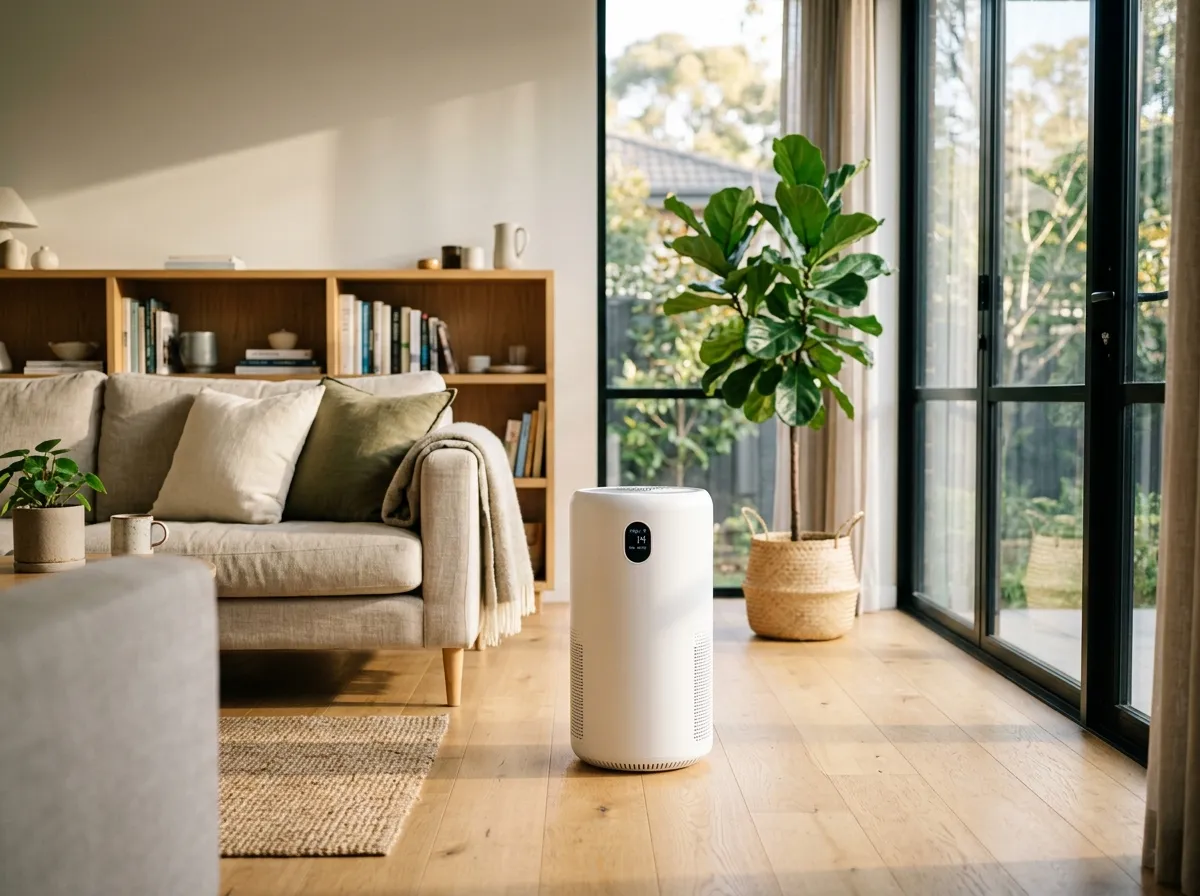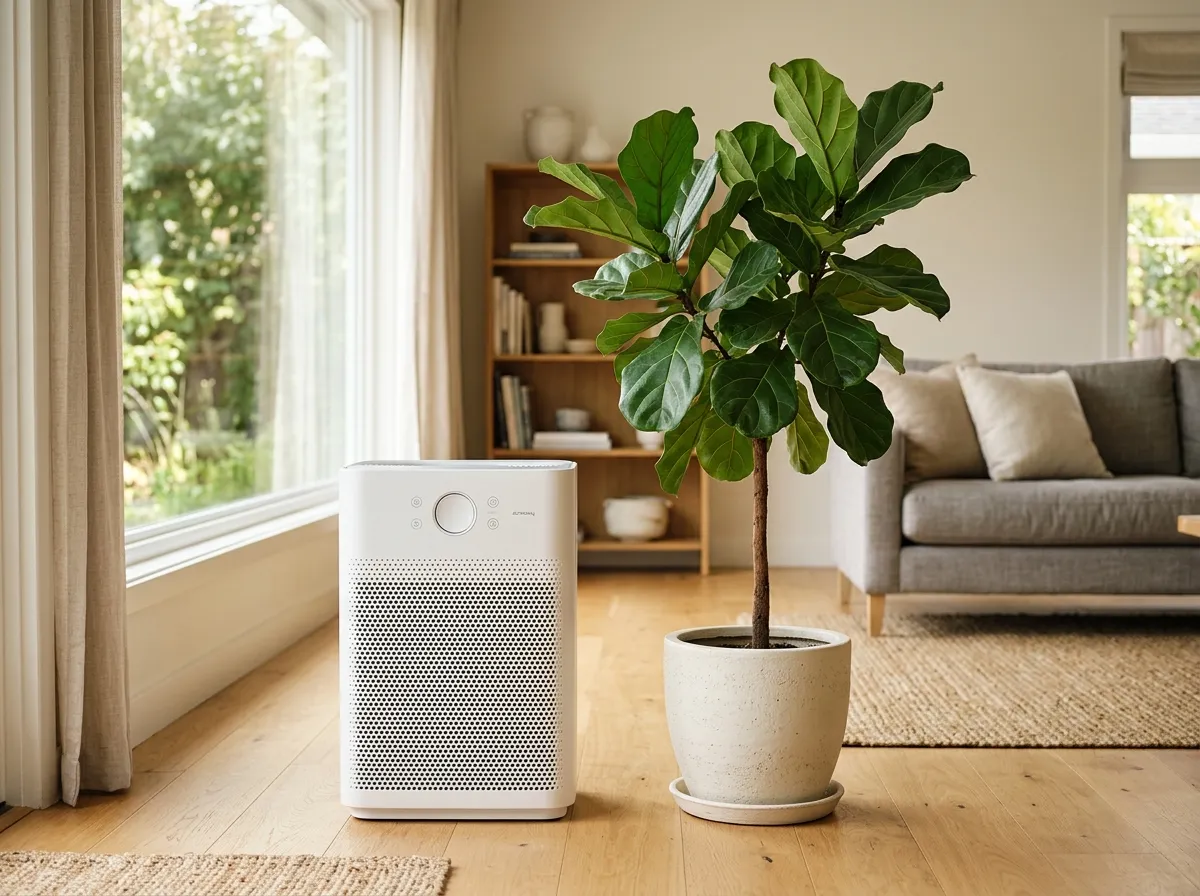
If you have spent any time reading about indoor air quality, you have encountered the claim that houseplants can purify your air. The idea comes from a 1989 NASA study and has been repeated so many times that most people accept it as fact.
I want to give you the honest, research-backed answer: air purifiers and plants are not even in the same league when it comes to actually cleaning indoor air. Based on NonToxicLab’s research, an air purifier removes pollutants thousands of times faster than a houseplant. But plants provide real benefits that air purifiers cannot. The best approach is to use both, while understanding exactly what each one is doing for you.
Here is the full breakdown.
The Numbers: CADR Tells the Whole Story
CADR stands for Clean Air Delivery Rate. It measures how much clean air a device delivers per unit of time, typically in cubic feet per minute (CFM) or cubic meters per hour (m3/h). This is the single most important metric for comparing anything that claims to clean air.
A typical HEPA air purifier has a CADR of 100-400 cubic meters per hour. The Blueair Blue Pure 211i Max, for example, delivers about 350 CFM (roughly 595 m3/h). That means it is processing the entire volume of air in a large room multiple times per hour.
A typical houseplant has a CADR of approximately 0.023 cubic meters per hour. That number comes from Dr. Michael Waring’s 2019 meta-analysis at Drexel University, which reviewed 196 experiments across 12 published studies on plant-based air purification.
Let me put that in perspective. A single mid-range air purifier cleans air roughly 10,000 to 25,000 times faster than a single potted plant. To match the air-cleaning capacity of one HEPA air purifier, you would need somewhere between 10 and 1,000 plants per square meter of floor space, depending on the specific pollutant.
That is not my opinion. That is the conclusion of the most thorough scientific review of plant-based air purification ever published, in the Journal of Exposure Science & Environmental Epidemiology.
Why the NASA Study Misleads People
The 1989 NASA study by Dr. B.C. Wolverton is real science. The methodology was sound. The results are legitimate. Plants do absorb certain VOCs through their leaves and root-zone microbes. That is a confirmed biological fact.
The problem is how the study has been represented by plant retailers, lifestyle blogs, and social media. Here is what they leave out:
The chambers were tiny. The sealed test chambers were approximately 1 cubic foot. Your living room is roughly 1,000 cubic feet or more. Scaling results from 1 cubic foot to 1,000+ cubic feet does not work linearly, because air mixing, dilution, and continuous pollutant introduction all reduce the effective removal rate.
The chambers were sealed. Real homes have air exchange. Air leaks in through windows, doors, HVAC systems, and structural gaps. New pollutants are continuously introduced from furniture, cleaning products, cooking, personal care products, and outdoor air. The NASA chambers had a fixed amount of pollutant injected once, then measured how long it took plants to reduce it. Your home is constantly being re-polluted.
No competing air movement. In the sealed NASA chambers, there was no ventilation, no air purifier, no air exchange at all. The plants were the only thing removing pollutants. In a real home, even basic ventilation (opening a window) moves air dramatically faster than a plant can filter it.
Time frames were long. The NASA study measured removal over 24 hours. An air purifier processes a room’s entire air volume in minutes to hours, not a full day.
Dr. Waring summed it up in an interview with The Atlantic: the idea that plants meaningfully improve indoor air quality in real homes is not supported by the evidence when you account for real-world conditions.
John Girman, formerly the head of the EPA’s indoor environments division, has made similar statements. The chamber research is interesting biology. It is not a practical air-cleaning strategy.
What Air Purifiers Actually Do
A quality HEPA air purifier with activated carbon does two things simultaneously:
HEPA filtration captures particles down to 0.3 microns (and many even smaller) with 99.97% efficiency. This includes dust, pollen, pet dander, mold spores, bacteria, and some viruses. The filter physically traps these particles as air is forced through a dense mesh of fibers.
Activated carbon filtration adsorbs gaseous pollutants, including VOCs like formaldehyde, benzene, toluene, and xylene. The carbon has millions of tiny pores that chemically bond with gas molecules as air passes through.
The key advantage is the fan. An air purifier actively pulls air through its filters, processing hundreds of cubic feet of air per minute. It does not wait for pollutants to slowly drift past it. It forces the encounter.
For a detailed comparison of specific models, our air purifier guide covers tested units with verified CADR ratings.
What Plants Actually Do
Plants are not useless for air quality. They just operate on a completely different scale. Here is what they genuinely contribute:
Pollutant Absorption (Small Scale)
Plants absorb some VOCs through their stomata (leaf pores) and through microbial activity in the soil. The soil microbiome may actually be more important than the leaves themselves for pollutant breakdown. Research from the University of Technology, Sydney found that root-zone microorganisms were responsible for the majority of benzene removal attributed to plants.
This absorption is real. It is just far too slow to meaningfully impact a real room. Think of it as plants contributing a gentle, continuous micro-filtering effect. Over months or years of exposure, having plants in a room might very slightly reduce cumulative pollutant exposure. But it will not address acute issues like a new piece of furniture off-gassing or a fresh coat of paint releasing VOCs.
Humidity Regulation (Meaningful)
This is where plants deliver genuine, measurable value that air purifiers cannot match. Plants release moisture through transpiration, and a collection of well-watered plants can raise indoor humidity by 5-10%. This matters because:
- Winter heating systems can drop indoor humidity below 20%, well under the 30-50% range recommended for health and comfort
- Low humidity dries out nasal passages and airways, reducing your body’s natural defense against airborne irritants
- Proper humidity helps some VOCs settle rather than remaining airborne
Plants like Boston ferns, peace lilies, and bamboo palms are especially effective transpirers. An air purifier with a HEPA filter has no humidity effect. Some air purifiers actually dry the air slightly by increasing air movement across their filters.
Stress Reduction (Well-Documented)
Multiple peer-reviewed studies have found that indoor plants reduce physiological and psychological stress. A study in the Journal of Physiological Anthropology found that interacting with plants lowered blood pressure and reduced cortisol levels compared to computer-based tasks.
Research from the University of Exeter found that adding plants to office environments increased productivity by 15% and improved well-being scores. A meta-analysis in the Journal of Environmental Psychology confirmed that the presence of indoor plants consistently improves mood, attention, and self-reported comfort.
An air purifier does not reduce your stress (unless the constant white noise helps you sleep, which some people do find relaxing).
Microbial Diversity (Emerging Research)
Research from the University of Helsinki found that indoor plants increase the diversity of microbes in indoor environments. The “biodiversity hypothesis” suggests that exposure to a diverse range of environmental microbes supports immune system development and resilience. This is a newer area of research, but the early findings suggest that plant-filled indoor environments may have immune-health benefits beyond what air cleaning alone provides.
The Head-to-Head Comparison
| Factor | Air Purifier | Houseplants |
|---|---|---|
| CADR (air cleaning rate) | 100-400+ m3/h | ~0.023 m3/h per plant |
| Particle removal (dust, pollen, mold) | Excellent (99.97% with HEPA) | None |
| VOC removal | Good (activated carbon) | Minimal (at room scale) |
| Formaldehyde removal | Good | Detectable but very slow |
| Humidity regulation | None (may dry air) | Meaningful (5-10% increase) |
| Stress reduction | Minimal | Well-documented |
| Noise | Some fan noise | Silent |
| Energy cost | $20-60/year electricity | $0 |
| Ongoing cost | $40-150/year filters | Soil, occasional repotting |
| Maintenance | Filter replacement | Watering, pruning, light |
| Aesthetic benefit | Minimal | High |
When an Air Purifier Is Non-Negotiable
There are situations where an air purifier is essential and plants cannot substitute:
Allergies and asthma. If you have allergies to dust, pollen, pet dander, or mold, a HEPA air purifier is the most effective tool for reducing airborne triggers. Plants do nothing for particle removal and can actually introduce mold spores if overwatered.
Chemical sensitivity or MCS. People with multiple chemical sensitivity need aggressive VOC removal that only activated carbon filtration can provide. Models like the Austin Air HealthMate with 15 pounds of carbon are designed for this.
New construction or renovation. The VOC levels from new paint, new flooring, and new furniture can be extremely high. Plants cannot keep up with acute off-gassing. An air purifier with activated carbon, combined with heavy ventilation, is the correct response. Our guide on new home off-gassing covers this in detail.
Wildfire smoke or high outdoor pollution. During wildfire season or in areas with poor outdoor air quality, keeping windows closed and running a HEPA air purifier is the recommended strategy. Plants have zero ability to filter fine particulate matter (PM2.5).
Mold concerns. If you have a mold problem, you need moisture control (dehumidifier) and potentially professional remediation. Plants can make mold worse by adding moisture to an already humid environment.
When Plants Have the Edge
There are some areas where plants genuinely outperform air purifiers:
Dry winter air. If your home’s humidity drops below 30% in winter, plants provide passive, energy-free humidification. Moisture-loving plants like Boston ferns and peace lilies are especially effective. An air purifier offers nothing here.
Mental health and well-being. The stress-reducing, mood-improving effects of indoor plants are among the best-documented benefits in environmental psychology. An air purifier, while useful, does not improve your mood or reduce your cortisol levels.
Aesthetics and home environment. Plants make a room feel more alive, more comfortable, and more pleasant. This matters for the overall livability of your home, even if it has nothing to do with air chemistry.
Zero ongoing energy cost. Plants run on sunlight and water. Air purifiers consume electricity 24/7 (typically $20-60 per year) and require filter replacements ($40-150 per year).
Noise. Plants are silent. Even the quietest air purifiers produce some fan noise, which can be a factor in bedrooms and offices.
The Verdict: Use Both, But Be Honest About What Each Does
Here is what I recommend based on the science:
Your primary air-cleaning strategy should be:
- Source control: reduce pollutant sources by choosing low-VOC products, non-toxic cleaning supplies, and certified low-emission furniture and materials
- Ventilation: open windows when weather and outdoor air quality allow
- Air purification: run a HEPA + activated carbon air purifier in the rooms where you spend the most time
Your supplemental strategy should include:
- Plants for humidity, stress reduction, and micro-scale air filtering
- An air quality monitor to track whether your strategies are working
Do not skip the air purifier and buy a bunch of plants thinking you have solved your air quality problem. You have not. The math is clear. But also do not skip the plants and assume an air purifier alone creates an optimal indoor environment. Plants contribute real benefits that a machine cannot.
The ideal is both: a quality air purifier doing the heavy lifting on particles and VOCs, and a collection of well-maintained plants adding humidity, biological diversity, stress reduction, and a modest layer of supplemental filtration.
For specific plant recommendations, our best air-purifying plants guide covers the top 10 species for every room. For bedroom-specific picks, see air-purifying plants for bedrooms. And for a full approach to indoor air quality, our complete indoor air quality guide ties everything together.
Quick Answers
Can houseplants replace an air purifier?
No. The science is clear on this. A single air purifier processes air roughly 10,000 to 25,000 times faster than a single houseplant. Dr. Michael Waring’s 2019 meta-analysis in the Journal of Exposure Science & Environmental Epidemiology calculated that you would need 10 to 1,000 plants per square meter of floor space to match even basic ventilation, let alone a HEPA air purifier. Plants provide real benefits (humidity, stress reduction, aesthetics), but air cleaning is not one of their practical strengths at room scale.
Do plants remove more pollutants than air purifiers?
No. Air purifiers with HEPA + activated carbon filters remove both particles and gases at rates thousands of times higher than plants. HEPA filters capture 99.97% of particles at 0.3 microns. Activated carbon adsorbs VOCs continuously as air is forced through the filter. Plants absorb a very small amount of certain VOCs through their leaves, but the rate is negligible compared to mechanical filtration.
Is the NASA Clean Air Study wrong?
The study is not wrong. Plants do absorb VOCs in sealed chambers. The problem is how the results have been applied. The study used tiny sealed chambers with no air exchange, a one-time pollutant injection, and 24-hour measurement periods. Real homes are orders of magnitude larger, have continuous air exchange, receive new pollutants constantly, and need air cleaned in minutes to hours, not days. The biology is correct; the practical application has been vastly overstated.
Are air purifiers better than plants for allergies?
Yes, without question. Allergies are triggered by particles (pollen, dust mites, pet dander, mold spores). Plants have no ability to remove particles from the air. In fact, some plants can worsen allergies by producing pollen or harboring mold in wet soil. A HEPA air purifier captures 99.97% of these particles and is the most effective intervention for indoor allergy management.
What are the benefits of plants that air purifiers cannot provide?
Humidity regulation (plants release moisture through transpiration), stress and anxiety reduction (documented in multiple peer-reviewed studies), improved mood and productivity (research from the University of Exeter), microbial diversity (emerging research from the University of Helsinki), and aesthetic/livability improvements. Air purifiers clean air effectively but offer none of these additional benefits.
How many plants would I need to match an air purifier?
Based on Dr. Waring’s calculations, you would need between 10 and 1,000 plants per square meter of floor space to match the air cleaning rate of simply opening a window. To match a good HEPA air purifier, you would need even more. For a typical 150-square-foot bedroom (about 14 square meters), that works out to hundreds to thousands of plants. This is not a practical approach.
Should I get an air purifier if I already have a lot of plants?
Yes. Even a room full of plants does not come close to the air cleaning capacity of a single air purifier. Think of plants as providing humidity, beauty, and stress relief, and your air purifier as providing actual air cleaning. They complement each other well, but the air purifier is doing the work that matters for measurable air quality improvement.
You Might Also Like
- How to Clean and Replace Air Purifier Filters
- IQAir vs Blueair: Which Air Purifier Is Worth the
- How to Test Your Home Air Quality
Sources
- Cummings, B.E., & Waring, M.S. “Potted Plants Do Not Improve Indoor Air Quality: A Review and Analysis of Reported VOC Removal Efficiencies.” Journal of Exposure Science & Environmental Epidemiology, 2019.
- Wolverton, B.C., Johnson, A., & Bounds, K. “Interior Landscape Plants for Indoor Air Pollution Abatement.” NASA, 1989.
- Orwell, R.L., et al. “Removal of Benzene by the Indoor Plant/Substrate Microcosm and Implications for Air Quality.” Water, Air, and Soil Pollution, 2004.
- Lee, M., et al. “Interaction with Indoor Plants May Reduce Psychological and Physiological Stress.” Journal of Physiological Anthropology, 2015.
- Nieuwenhuis, M., et al. “The Relative Benefits of Green Versus Lean Office Space.” Journal of Experimental Psychology: Applied, University of Exeter, 2014.
- Hyvonen, T., et al. “Indoor Plants and Microbial Diversity.” University of Helsinki, 2020.
- Association of Home Appliance Manufacturers (AHAM). “CADR Testing and Certification.” AHAM.org.
- U.S. EPA. “Guide to Air Cleaners in the Home.” EPA.gov.